We just returned from spending a few days in the Southern California area for my best friend’s wedding. It was a beautiful and joyous occasion, and I’m so happy for her and her new husband. May God grant them many years.
It was delightful to catch up with college friends I hadn’t seen in quite a while. Although so much had happened and changed since I last saw most of them, we laughed together and discussed topics in typical Torrey fashion (if you know, you know) just like old times. And just like old times, we owned the dance floor, singing along to the music at the top of our lungs.
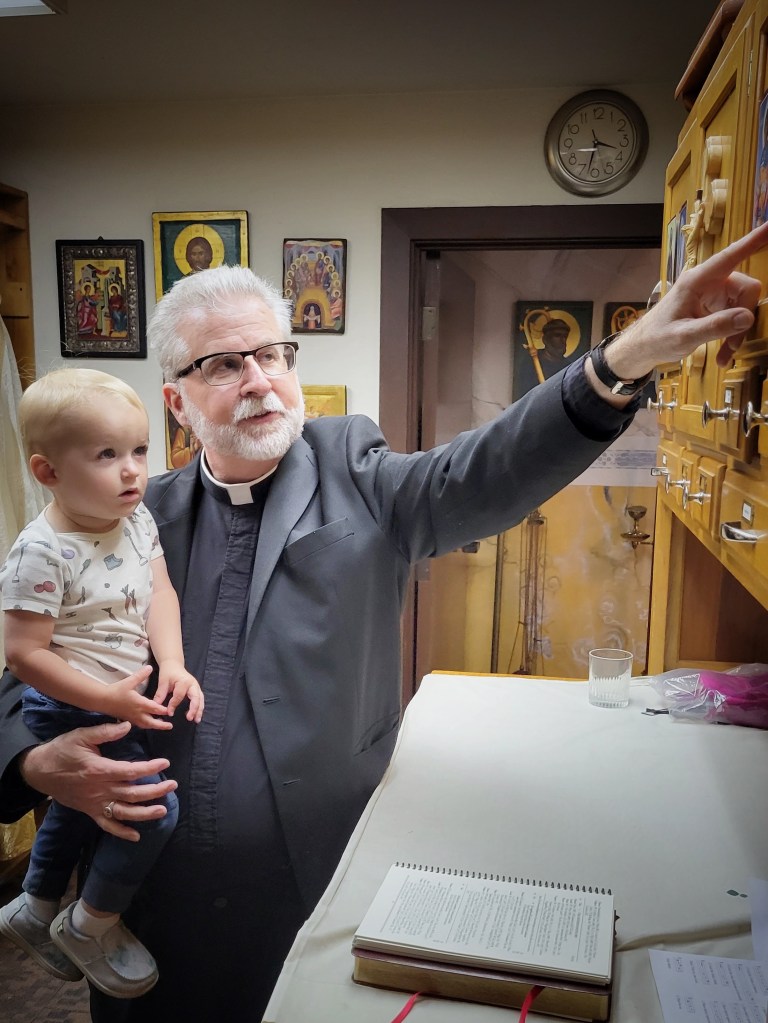
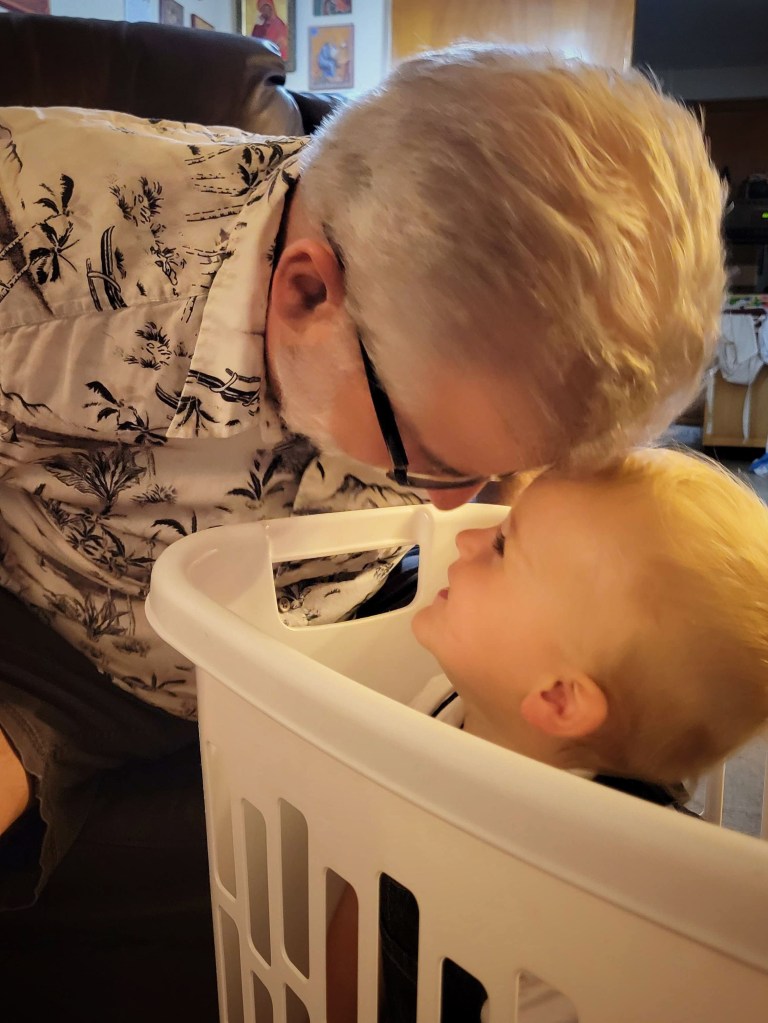
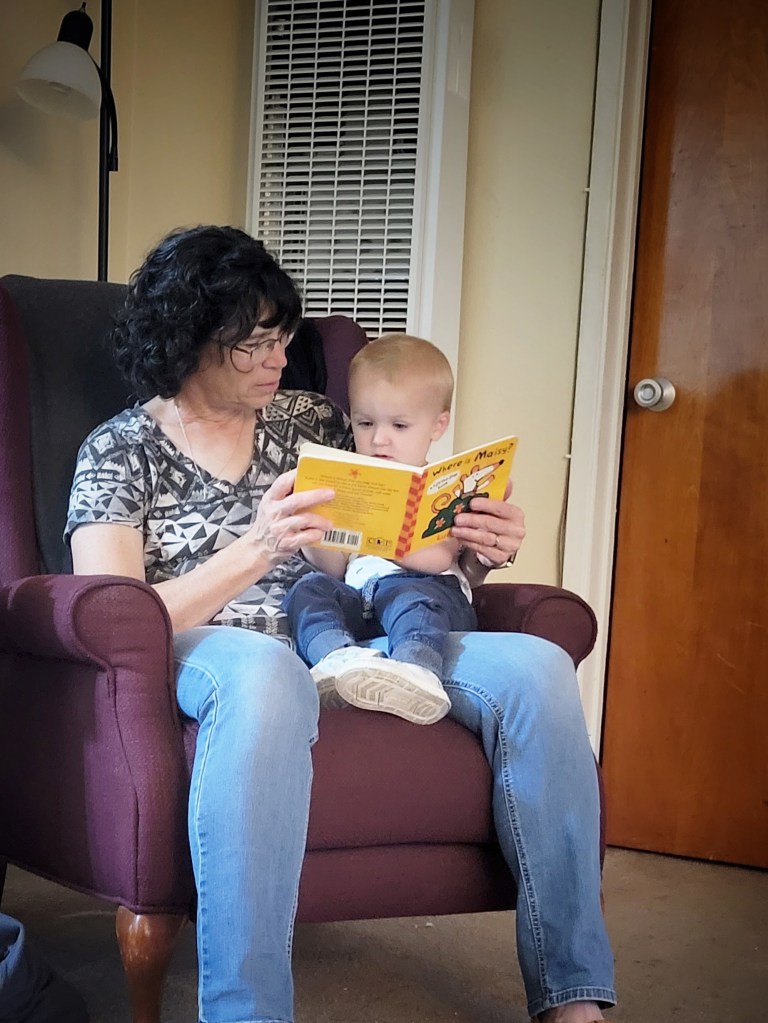
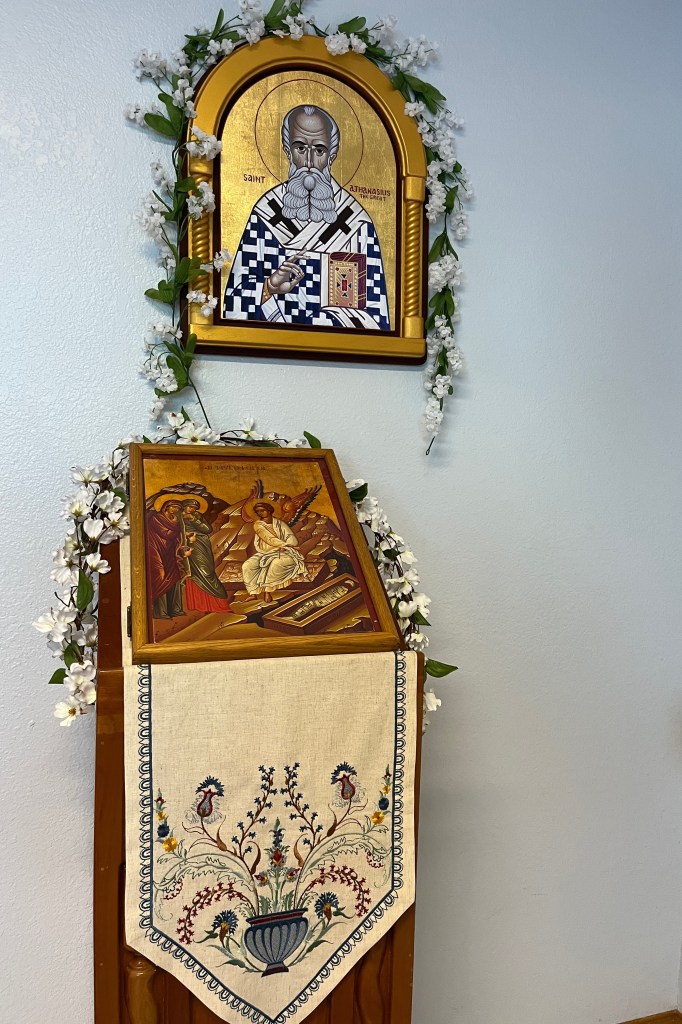
We were able to see family friends for dinner on Friday, and we stayed with my in-laws: Michael had so much fun playing with Oma and Opa. He loved reading the “knock knock” book with Oma, and playing with the dryer balls and looking at icons with Opa.
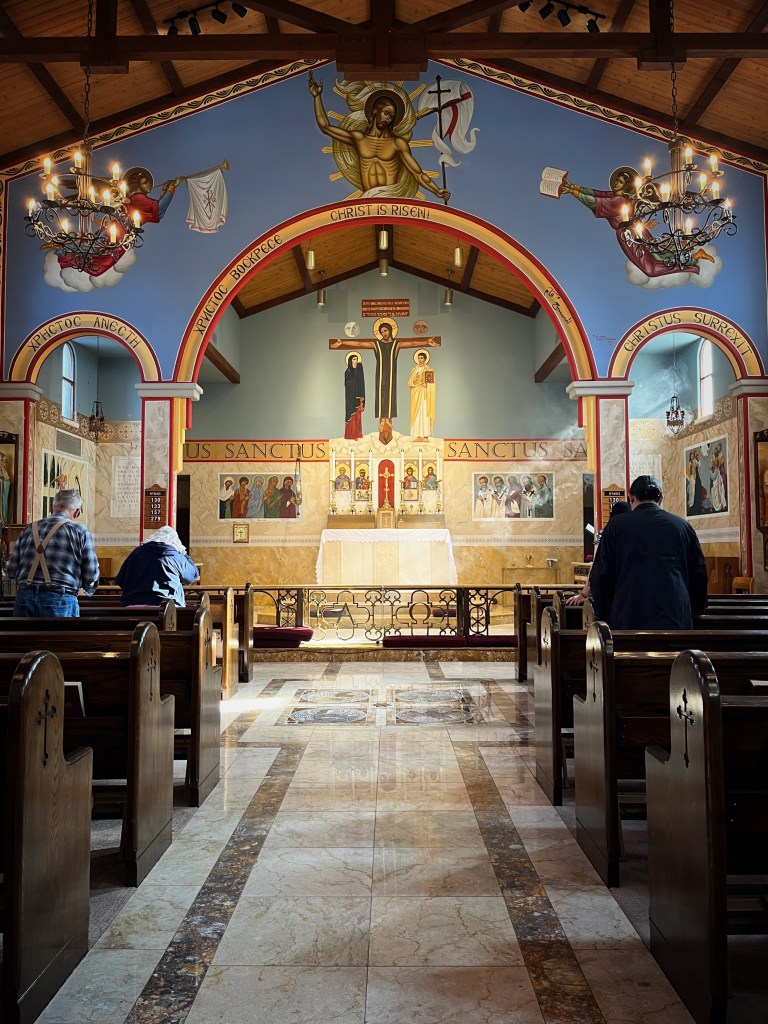
I also was blessed to attend Saturday Vespers at St Michael’s in Whittier. It was here I first discovered my home in Orthodoxy. As much as I love the Eastern Rite, the Western Rite is where my heart is at home.
It was beautiful to see Michael running in the courtyard of the church where I met his father five years prior (almost to the day!), and playing by the statue of his patron saint.
It’s always difficult for me the day after a trip like this. Distance is a hard thing. I don’t like being far away from the people we love, and our visits are limited by time and resources and logistics. Reunions are joyful, but parting is difficult. Our family and friends are scattered across the state, the country; the globe.
In our spread-out, disconnected society, distance is a fact of life. I would argue technology has played a large role in increasing distance between people. There’s a reason our age, the most technological, is also the most lonely. Even with the benefits of technology to bridge distance, nothing replaces being in person together: sharing a meal, or a hug, or a laugh.
And in a fallen world, distance is unavoidable. Until Christ comes again, there will always be distance to traverse. Distance between us and our loved ones, between us and our family; between us and God.
I find it helpful to dwell on the journeying instead of the distance. Instead of thinking on how long it’ll be until my next visit, I consider every call or text or letter as a small step towards my friends or family before we’re reunited in person. Instead of thinking about how far away I am from the holy person I want to be, I consider what my next step should be: morning prayer? Attending to my rule of life?
When having dinner on our journey with dear family friends, we sang Dona Nobis Pacem in a round. Older voices, younger voices, confident voices, quiet voices: all taking part in the music. For a moment, it felt like the music had drawn together those who were not with us because of distance or death. It was a foretaste of the meal and the music that await us in the next life, by God’s mercy.
Give us peace, Lord, and be with us on our journeys until all distance is behind us.
This tech detox is kicking my butt. I didn’t realize how addicted I was to social media until I deleted it from my phone and realized how restless that made me. I must admit, I’ve fallen away a few times, finding myself scrolling or mindlessly watching things. Each time, however, I’ve pulled myself back on track.
But man. It’s been hard. If you see me liking your Instagram post or watching your stories, feel free to yell at me to get back on track.
Anyway.
I’ve been reading a lot during the in-between times of the day when my son is playing quietly or distracted by something else. It’s my alternative to staring at my phone, and it’s worked well. I’ve been surprised by how quickly a few pages here and there add up. So far, I’ve read eight books of varying lengths and topics. I’m also currently working through two books, one fiction and one non-fiction and both by Wendell Berry: Jayber Crow, and The Unsettling of America: Culture and Agriculture.
I was deeply struck by what Berry said in the very first chapter of Unsettling America, outlining the difference between those with an exploitative mindset and a nurturing mindset.
The exploiter is a specialist, an expert; the nurturer is not. The standard of the exploiter is efficiency; the standard of the nurturer is care. The exploiter’s goal is money, profit; the nurturer’s goal is health — his land’s health, his own, his family’s, his community’s, his country’s…the competence of the exploiter is in organization; that of the nurtuerer is in order — a human order, that is, that accommodates itself to both other order and to mystery.
Wendell Berry
Berry describes modern agriculture as dominated by this exploiter’s mindset, using technology to take all it can from the land and pouring in chemicals and fertilizers to make up for the depleted nutrients in the soil. I can’t help but see the similarity between this and our love of expediency and productivity. As a culture, don’t we do the same with our lives and our time? Sleep deprivation is a badge of honor, as is overtime. We constantly are told to look for ways to improve our performance and utilization. We live through to-do lists and measure our days by the tasks completed. We take all we can from every second we are given and pour in coffee or alcohol or pornography or social media to make up for the depletion we feel.
But what else does that remove from our lives without us noticing?
In the same chapter, after he speaks about the difference between the exploiter and the nurturer, Wendell Berry addresses our attitude towards work.
But is work something that we have a right to escape? And can we escape it with impunity? We are probably the first entire people ever to think so. All the ancient wisdom that has come down to us counsels otherwise. It tells us that work is necessary to us, as much a part of our condition as mortality; that good work is our salvation and our joy; that shoddy or dishonest or self-serving work is our curse and our doom. We have tried to escape the sweat and sorrow promised in Genesis — only to find that, in order to do so, we must forswear love and excellence, health and joy.
Wendell Berry
We are a culture obsessed with work and yet, ironically, we are also a culture that abhors labor. We look for faster, easier, “better” ways to do things, turning our noses up at once-sacred professions that often refuse the shortcuts: farming, parenting, and the list goes on.
As people who’ve grown up in a society full of an exploitative mindset, perseverance is hard. It’s easy to feel like something’s wrong if we run into difficulty (I touched on this idea in my last post). We have grown accustomed to instantaneous results available at the push of a button or exchange of a dollar: clothes, food, entertainment, etc. We’re used to technology removing discomfort and wait times and inconvenience.
We have produced much comfort and convenience, but at what cost? What has been leeched from our lives by technology?
Cultivating a nurturer’s mindset in an exploiter’s society is not easy, and Berry doesn’t mince words when he describes the the cost of our complacency and the difficulties it entails. But humans are made for a nurturing life. We can restore the goodness and virtues that have been sucked from our lives while we were blinded by the charm of the exploiter.
What does this look like?
We must ask the questions of the nurturer, looking to health and wholeness over expediency and profit. Practicing resurrection, as Berry says in his poem Manifesto: The Mad Farmer’s Liberation Front. Learning to labor and to wait, as Wordsworth says in his poem A Psalm Of Life. Servingby only standing and waiting, as John Milton says in Sonnet 19. The list goes on — the importance of nurturing, of patience, of embracing slowness without visible progress — all themes which show up time and time again in poetry. Perhaps because poetry itself fights the exploiter’s mindset.
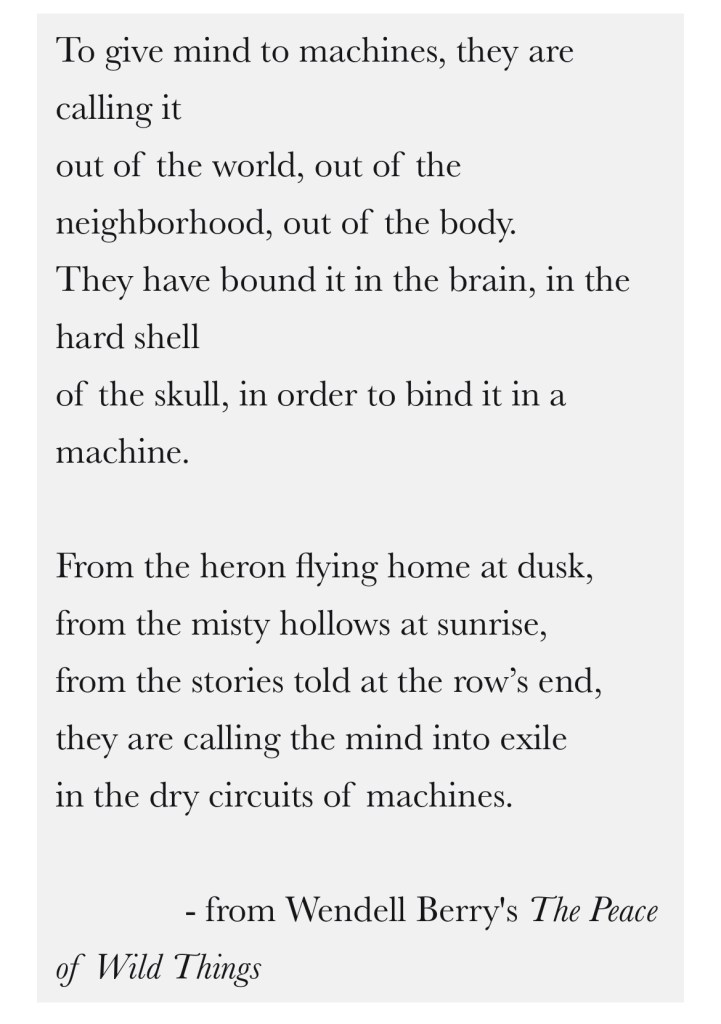
(I take comfort in the fact that is one thing AI still cannot do, and may never be able to do: write real, good poetry.)
I have been impatient to get our front yard perfectly cultivated, exasperated by how unfinished it looked. But as I read Wendell Berry, I realized how backward that approach is. Now, I’m working on embracing the slow, messy process. Yes, our front yard looks like a weed-infested patch of barren land. That’s what it was until we built our house. Life and beauty and order don’t come at the push of a button. They come with sweat and labor and love. With watering and weeding and shaping.
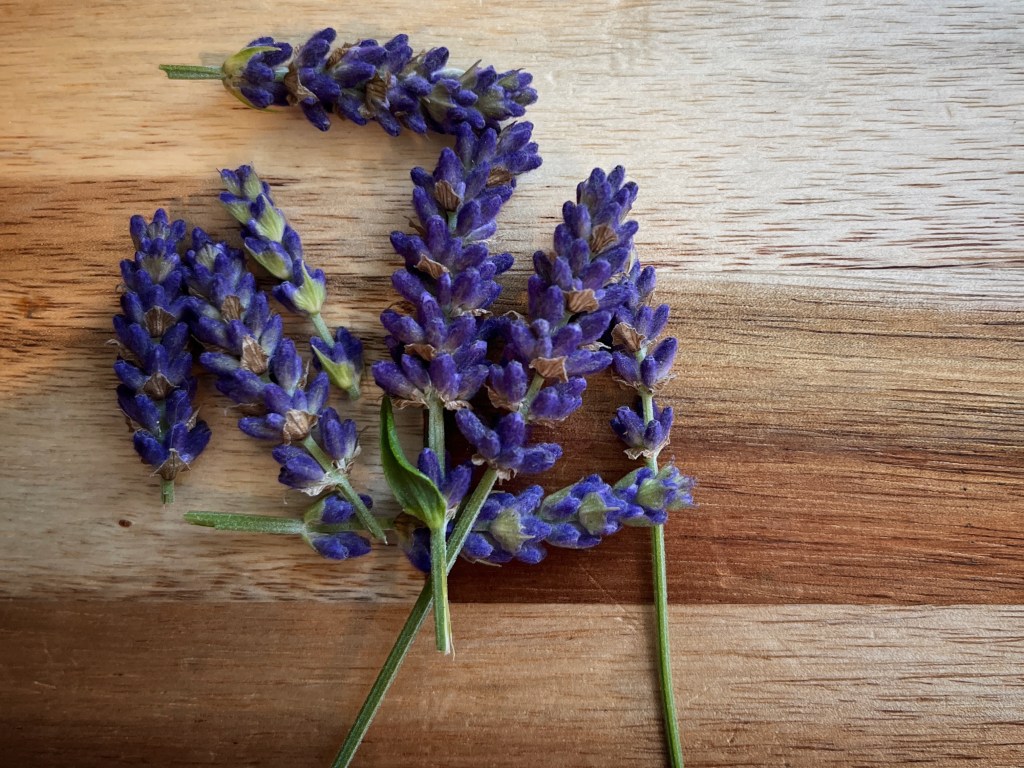
And slowly, life and beauty and order are taking shape. My garden boxes are alive and verdant with herbs and vegetables. My zucchini and tomatoes are both growing well. My peppers are flowering. My chamomile and roses and marigolds and lavender are all blooming and fragrant.
This approach to gardening should translate over my approach to my life, too. I am nowhere near the person I aspire to be, in holiness or intelligence or skill. It’s easy to get frustrated and beat myself up for where I’m at, telling myself I should be better. Yet that will get me nowhere, just like looking at the weeds and uneven dirt of our yard and getting impatient will accomplish nothing.
Yes, I’m not as patient or disciplined or holy as I’d like to be. But instead of getting impatient and shrugging off the idea of growth and change, or wasting time and money on the latest self-help fad, the only thing that will produce life and beauty and order in my life is the same as what cultivates that in my garden. I should approach myself with the same nurturer’s mindset of wholeness and health.
The only way forward is to put on my gloves and pick up the shovel.
P.S: for those who may be interested, I also started a Substack. It feels a little redundant given this blog, but I enjoy the ad-free, creator-centric nature of Substack and see it as friendlier than WordPress when it comes to owning and distributing my work and my words in the future, with the way social media is changing.
I currently plan to publish the same posts on my Substack as I do my WordPress blog. However, eventually, I’ll probably post some a few extra essays on Substack with my *spicier* takes on Orthodoxy, gardening, technology, parenting, and other varied topics.
It’s been a busy time: both my siblings graduated from the University of Dallas this weekend, and we flew out to be there with them and cheer them on. It was so wonderful to see them again.
They both have awesome jobs in Texas, and the beginnings of flourishing adult lives. I’m so proud of them, and all that they’ve accomplished and the ways they have grown in wisdom and virtue. They are both truly remarkable human beings. I’m delighted to call them my brother and sister.
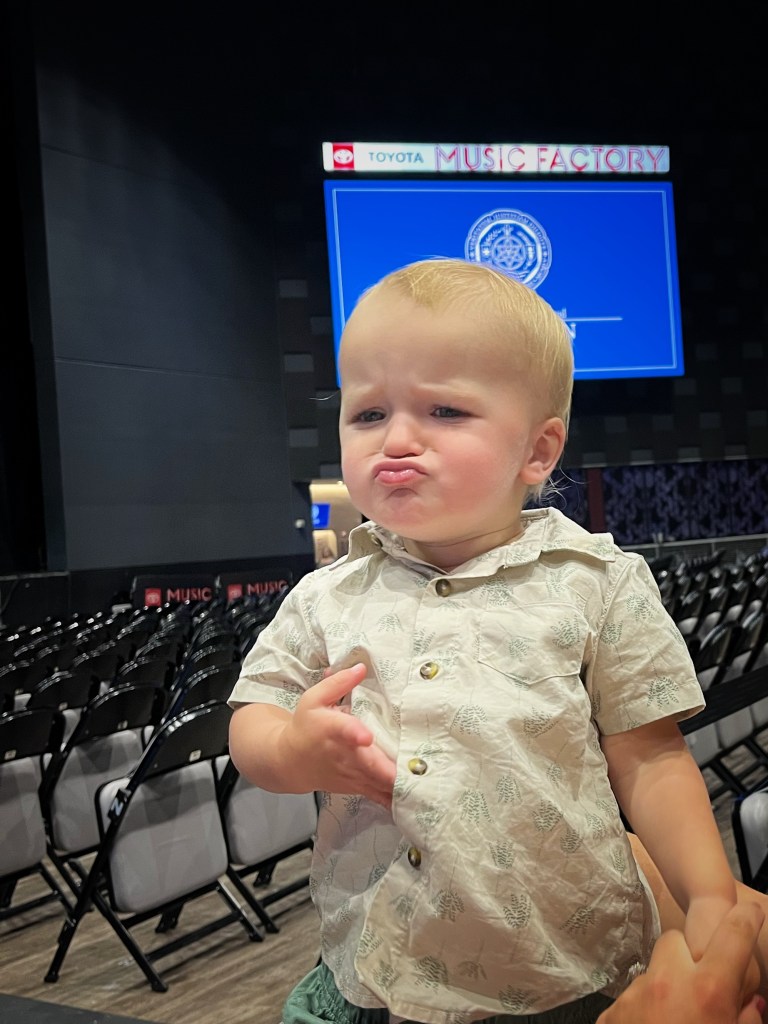
Michael did amazingly well during the graduation, and my incredible husband wrangled him the entire time so I could watch my siblings graduate. However, my mom did snap a pretty hilarious picture of his grumpy face I had to share:
I felt something bittersweet as I watched them walk across that stage. It seems like only a little while ago I was graduating college and they were graduating high school. It seems like only a little while ago I was moving into my dorm freshman year and they were helping me carry boxes from the car. It seems like only a little while ago we were all kids running around outside and building fairy houses and jumping on the trampoline.
It’s a new chapter of life for them, and for us. Things are changing. For the first time in decades, none of us will have the rhythm of the school semester woven throughout our year. Now we are all adjusting our concept of home, and strengthening our concept of family.
Michael with his godfather and uncle
The twins’ graduation made me realize just how much Michael has grown too, with another pang of bittersweetness. He turned sixteen months over the weekend, and it made me think of all the ways he’s changed and grown over the past month.
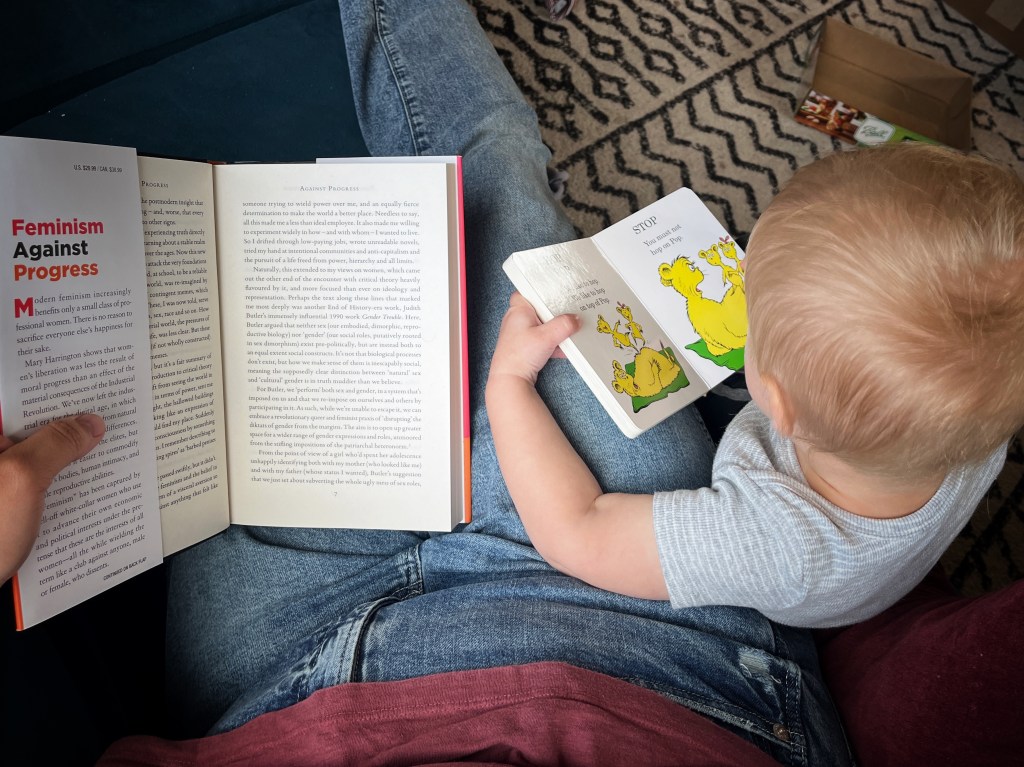
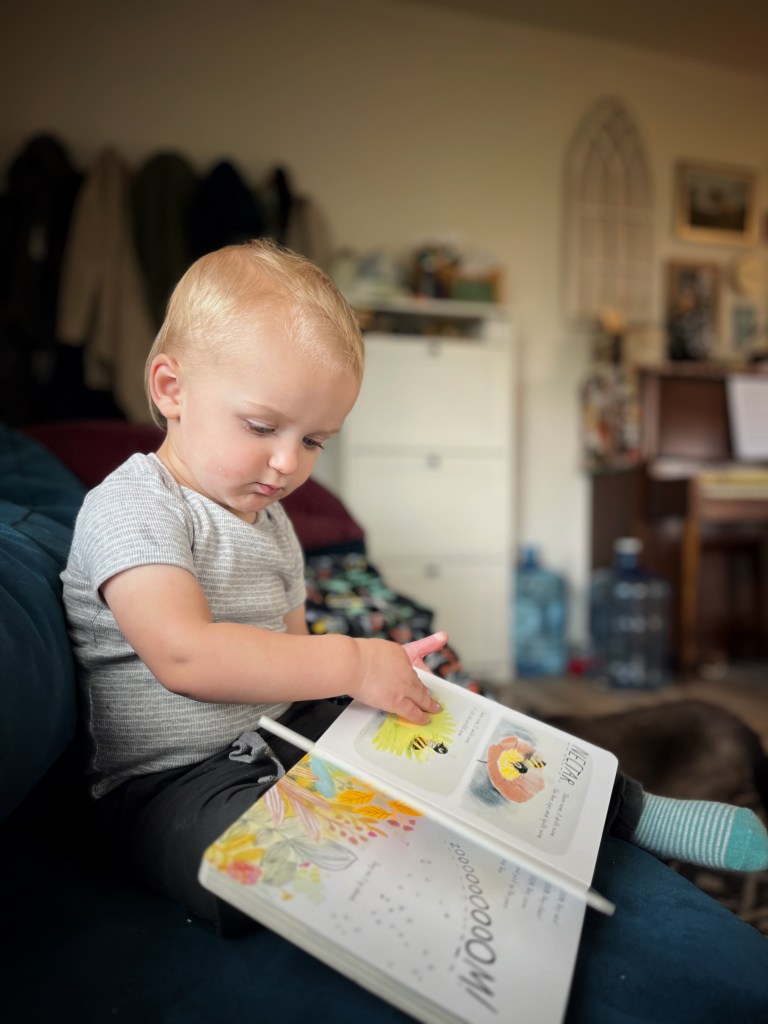
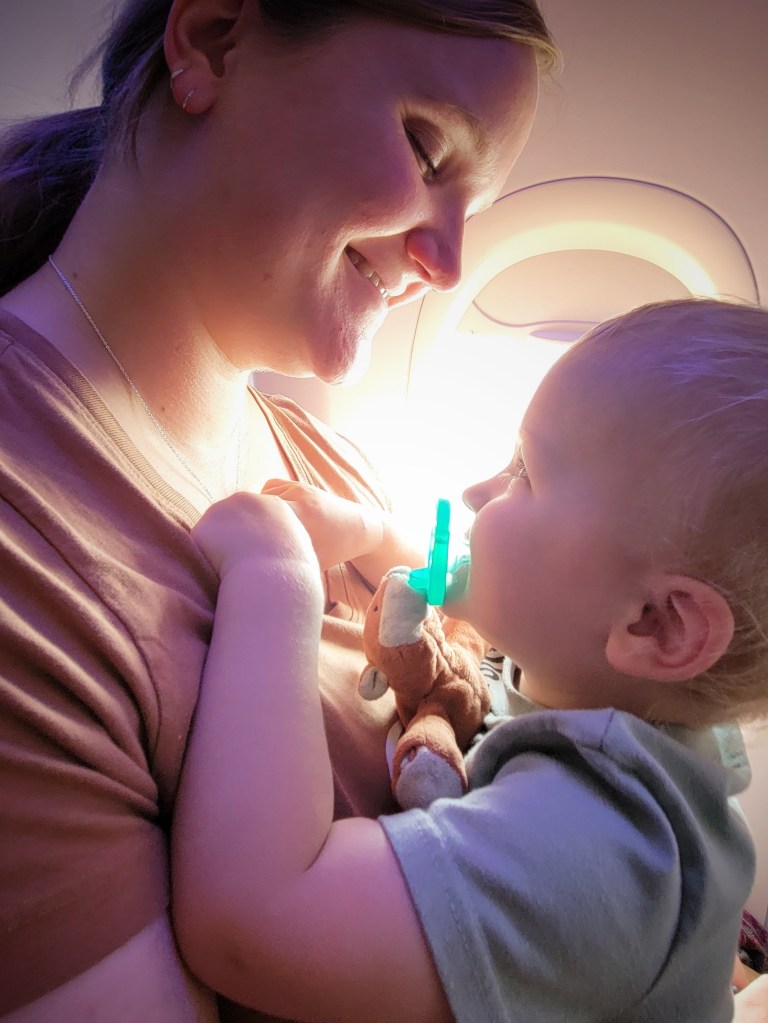
This tech detox has extended to the whole family: he has had no screen time (except for during the plane ride, which was a necessary exception for all of us). Instead we’ve been reading a lot of books. While parenting without screens has been much harder, it’s been delightful. He usually brings me a stack of books and snuggles next to me on the couch, turning pages for me and echoing his favorite words.
His favorite books are currently Little Blue Truck and Brown Bear Brown Bear What Do You See? We read them several times a day, and we have them memorized. He loves chiming along with “beep” or pointing to “brown bear”.
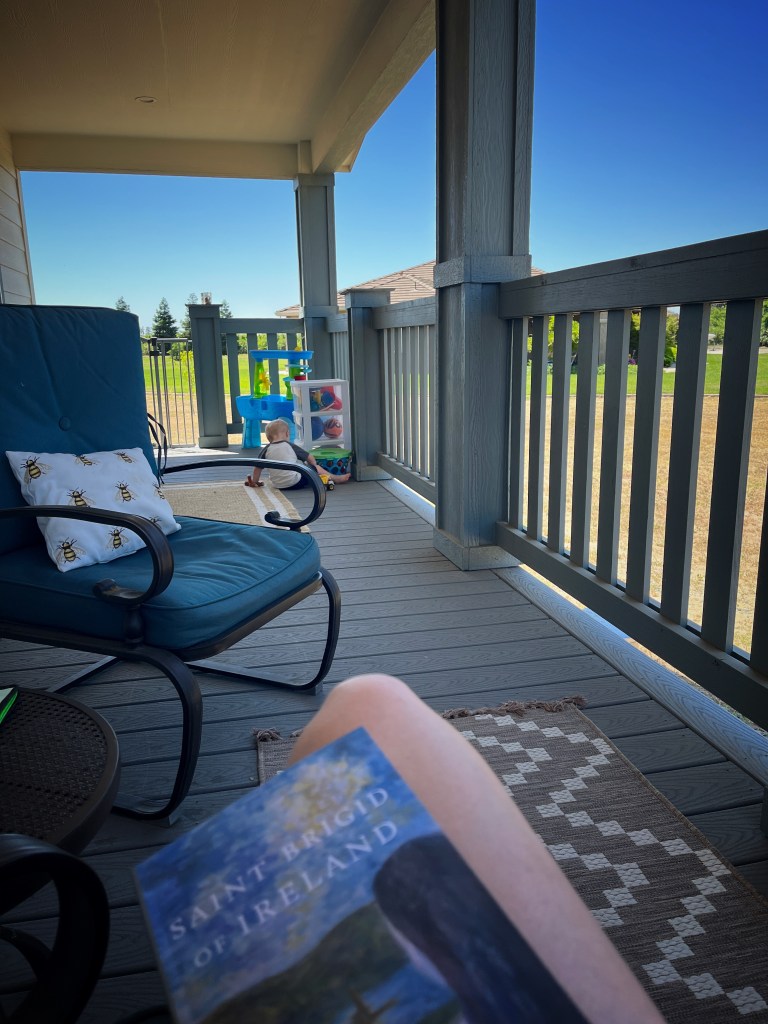
Another thing the tech detox has helped: instead of seeing me stare at my phone, he has been seeing me read much more often. During the in-between times, I sit with my book instead of my phone as he plays with his trucks or kicks his ball around our porch. Now, if he sees me sitting with a book, he often comes over with a book of his own.
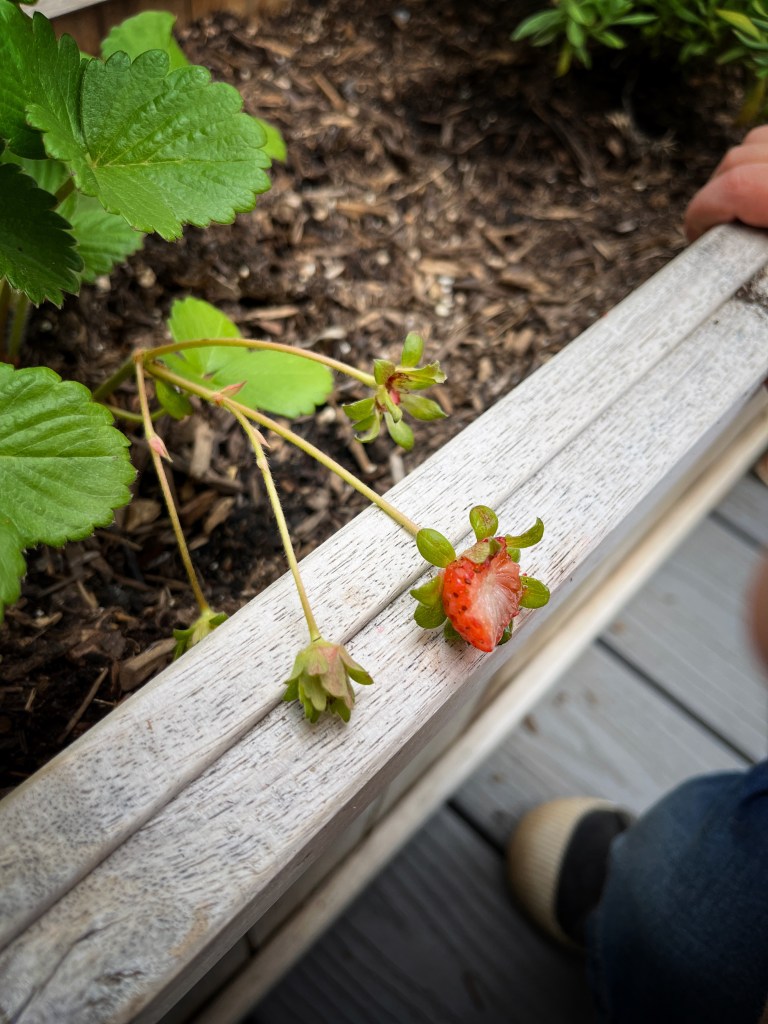
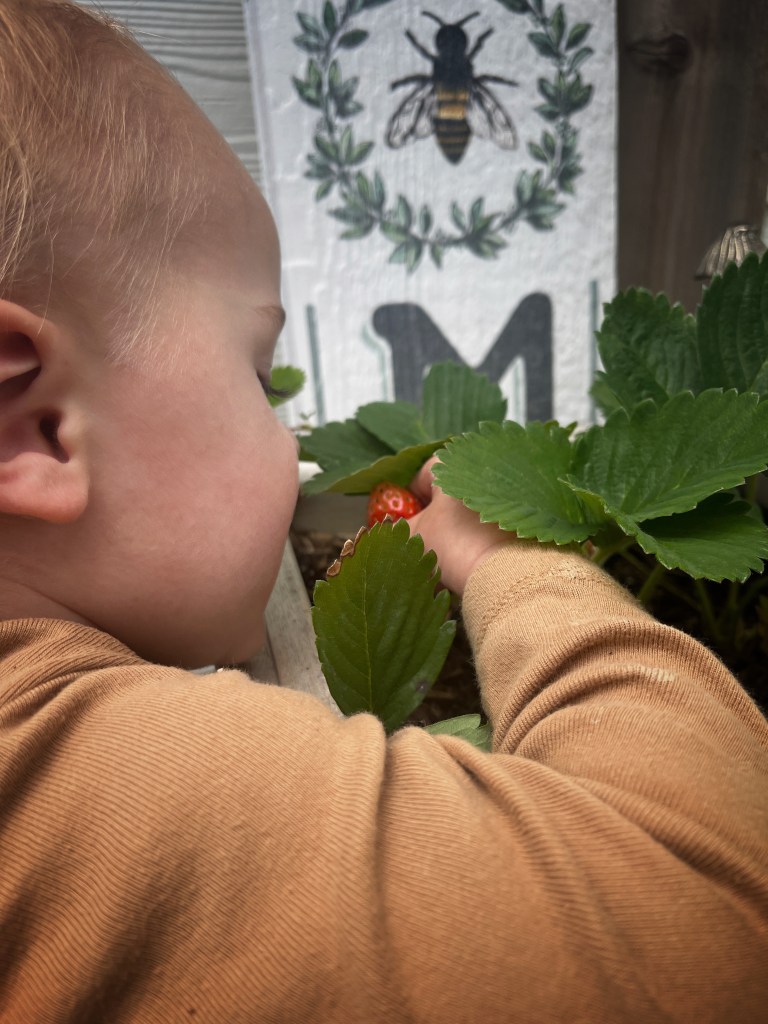
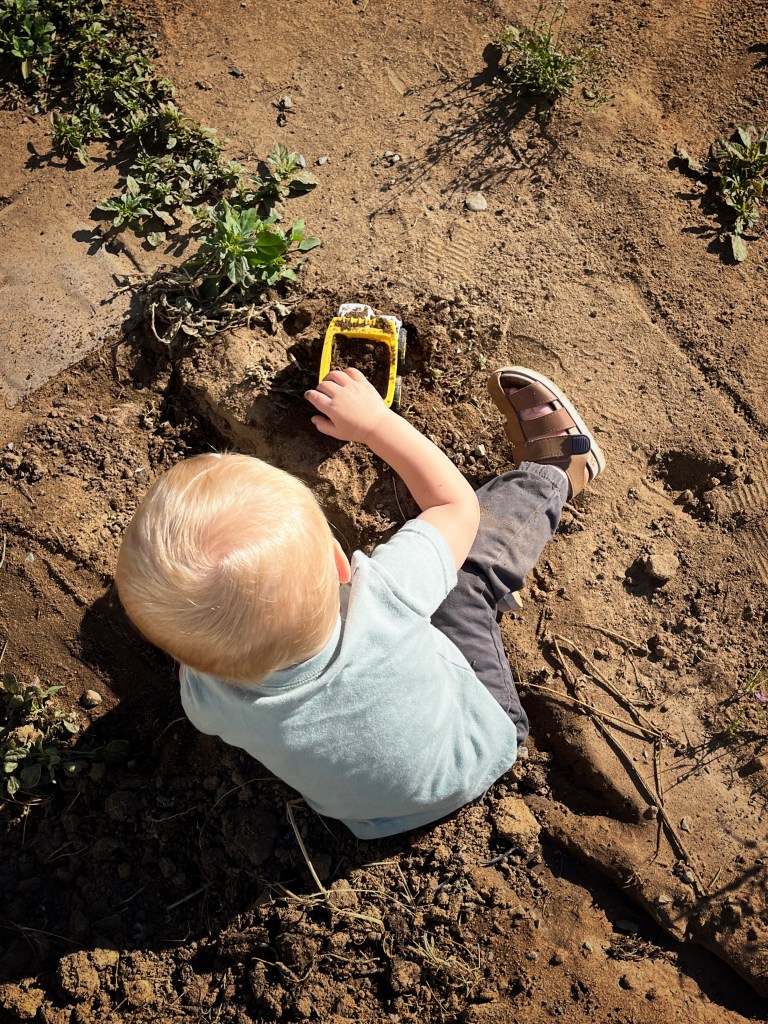
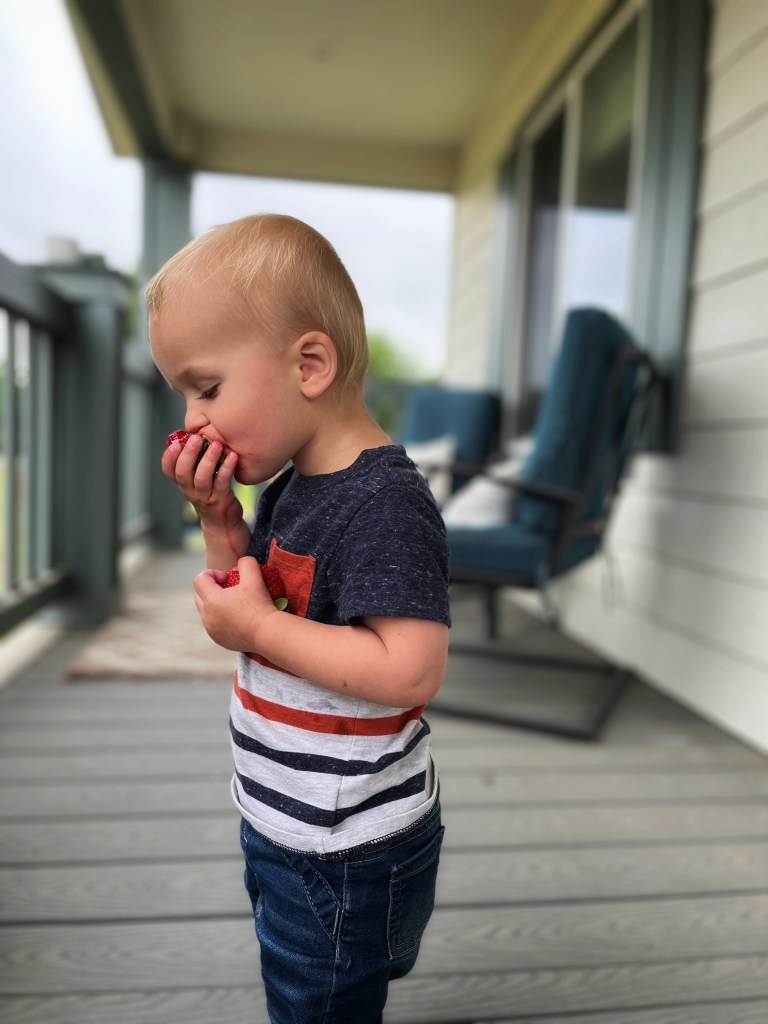
We’ve also been playing in the garden quite a bit. He loves stacking planting containers, and putting dirt in his dump truck. He found out he can eat strawberries straight from the plant, and promptly consumed all ripe berries (and unripe ones too, when I wasn’t looking).
His language and comprehension has exploded. He’s fascinated by the names of body parts and loves to point out eyes and noses and mouths and toes, on us and on himself and on pictures in books. His newest favorite is “belly”, which means I have to keep an eye out when we’re in public, because he might decide to suddenly lift my shirt and triumphantly shout BELLY! for all the world to hear (and see).
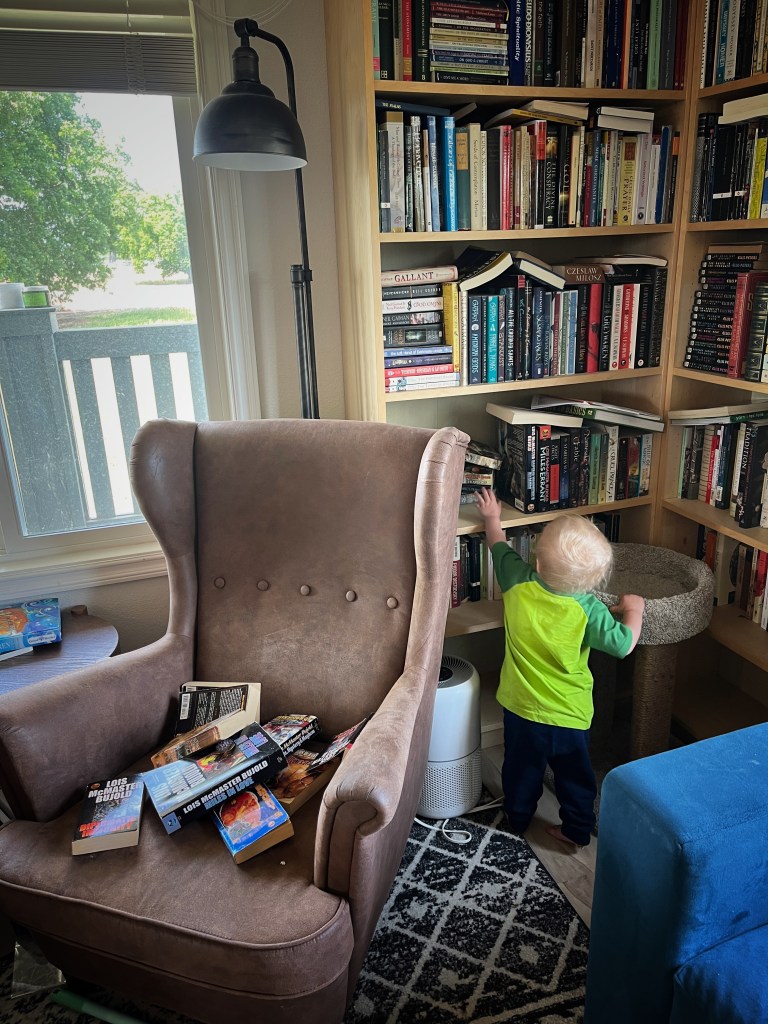
He’s tall enough to reach things on the table, and has started using chairs to climb onto the table and reach the countertops. Nothing is safe. He also discovered the fun game of emptying bookshelves.
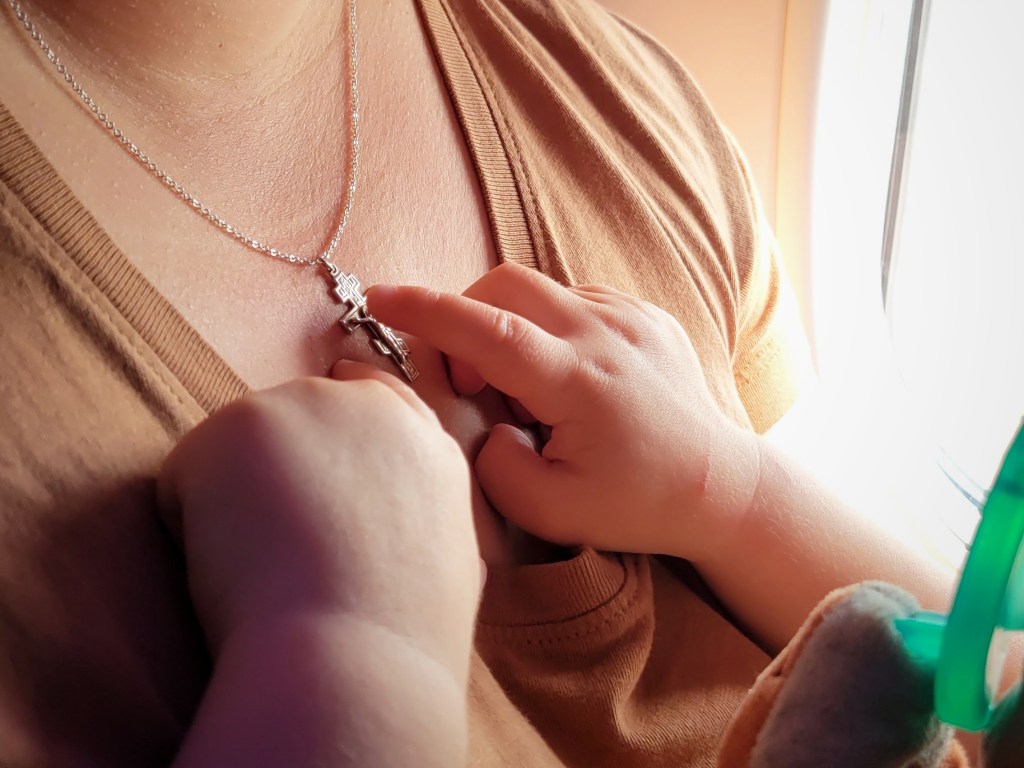
On the flight to Dallas, I was touched by my son’s tender heart and sensitivity to Christ. While we were sitting on the tarmac for almost an hour waiting to deplane, everyone’s patience was thin. Michael, sitting still on my lap for a few rare seconds, suddenly saw my cross necklace and with a big smile leaned forward and kissed the cross with a resounding mwah! He did this several times, pausing in between to look at me, or look at the figure of Jesus on the cross. We kiss the priest’s hand cross every Sunday at the end of Liturgy, and I hadn’t realized how deeply that had become engrained in him.
I forget how often I fall into the trap of equating hard with bad. It’s so easy to let comfort and ease dictate my choices. However, parenting has helped me veer away from this tendency. It is the hardest and most exhausting and difficult thing I have ever done, and it is the most delightful and fulfilling and rewarding thing I have ever done.
Sometimes the hard, difficult thing truly is what’s best and good and makes us holier people: tech detoxes, or working out, or life changes, or growing up.
This homestead update will be a little different than usual. First, I wanted to share an article that unsettled me and pierced me with conviction regarding my technology usage.
I strongly encourage you to read it. The statistics she quotes are harrowing: enough to make me look at my toddler and realize he watches me stare into my phone much more than I would like. I think of the technological landscape he’ll have to navigate as he gets older, and I realized my modeling isn’t setting him up to deal with it well.
It also reminded me that our use of technology is not spiritually neutral. It either hinders us in becoming more Christ-like, or aids us on our path to sanctification. And my passive scrolling has not helped me become holier.
So I’m on a tech detox, and it’s been great. I’ve felt more present, more grounded, more whole than I have in a long time. I have many thoughts that will probably make their way into a future blog post. But until then, I simply encourage you to read the article above, and put your phone down a bit more.
I recognize the irony of writing about tech detoxing on an online platform, where it’ll be linked across social media. I’m not quite anti-technology, but I do believe its insidious presence in every facet of our lives is not as harmless as it may appear. The older I get, and the more I see the effects of technology on my generation and the generations after, the more I understand the Luddite movement and agree with Wendell Berry.
I have been filling my reclaimed hours with reading and gardening and music and making. We’re all still on the very end of our colds, but thankfully the brain fog has lifted.
My dear friend from college was in the area for a work conference, and spent Friday through Saturday with us. It was lovely to catch up, eat good food, play board games, go to thrift stores, and laugh together after nearly 6 years of being apart.
I found a wooden sword at the thrift store for $4. Michael is thrilled.
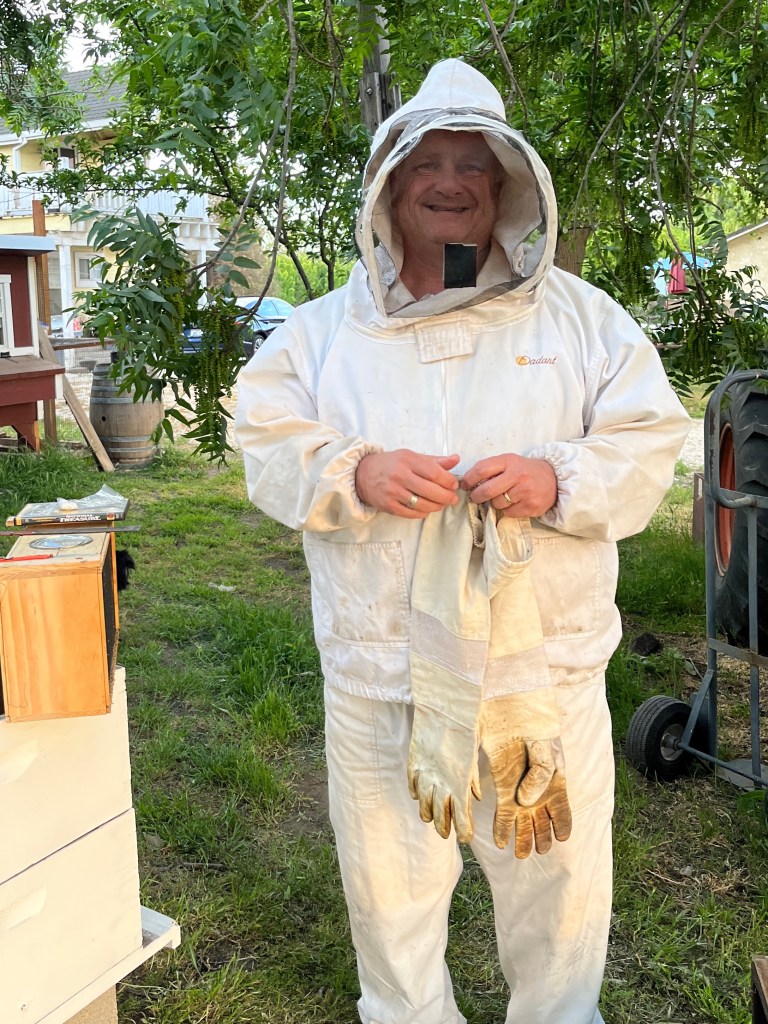
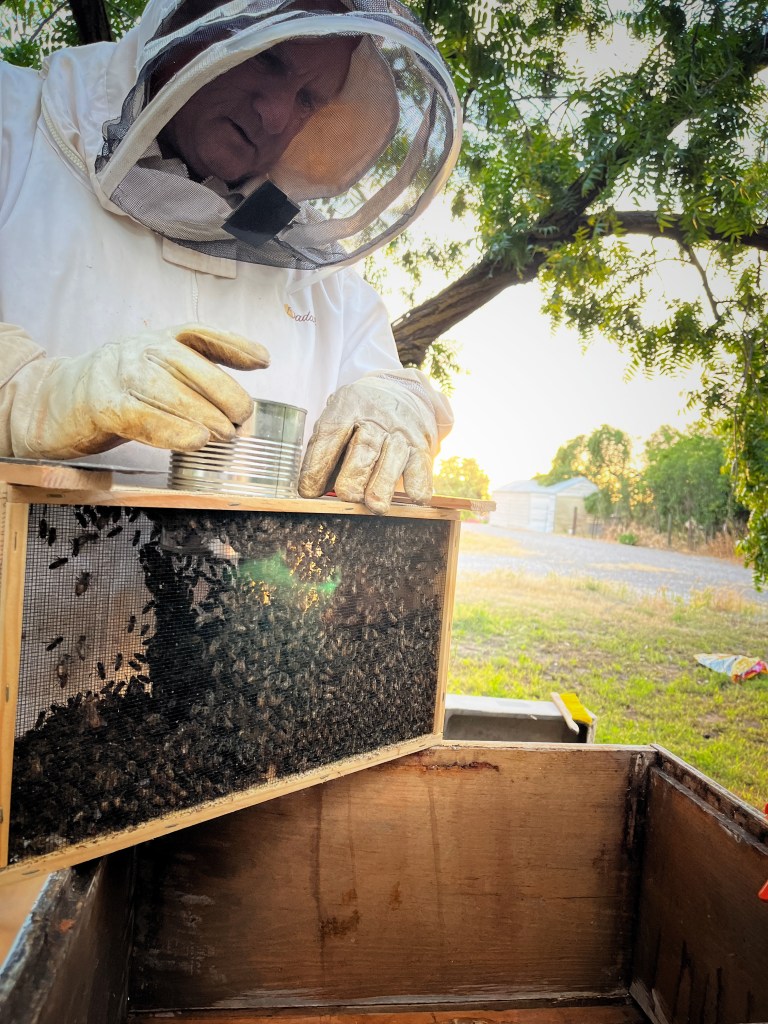
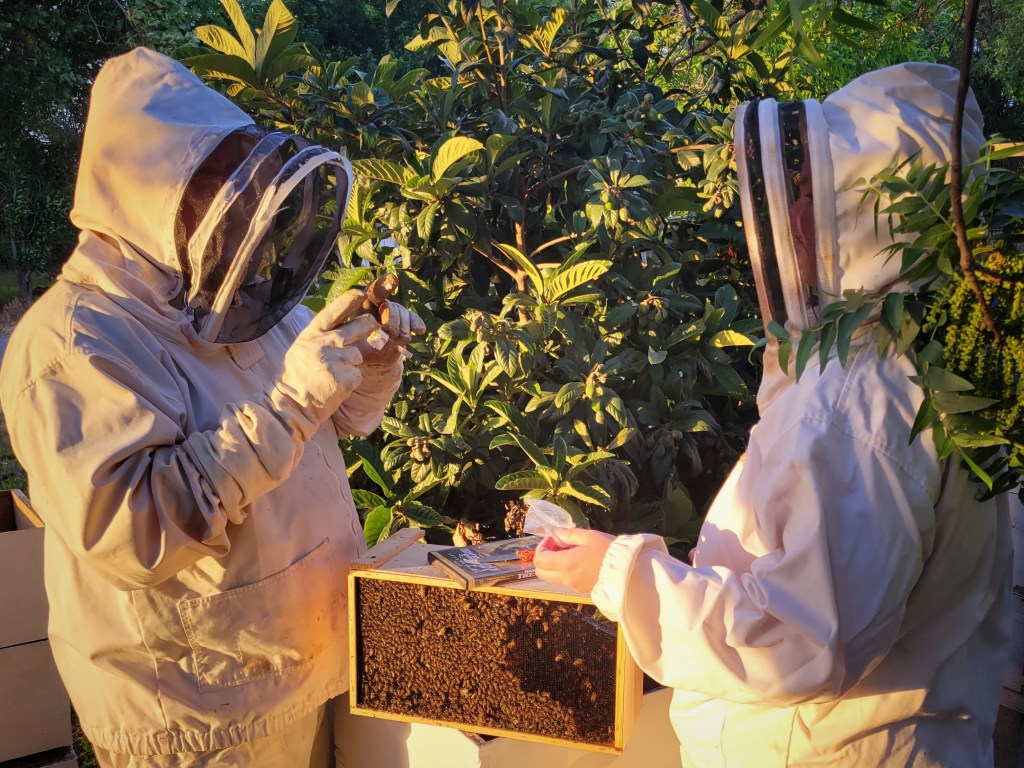
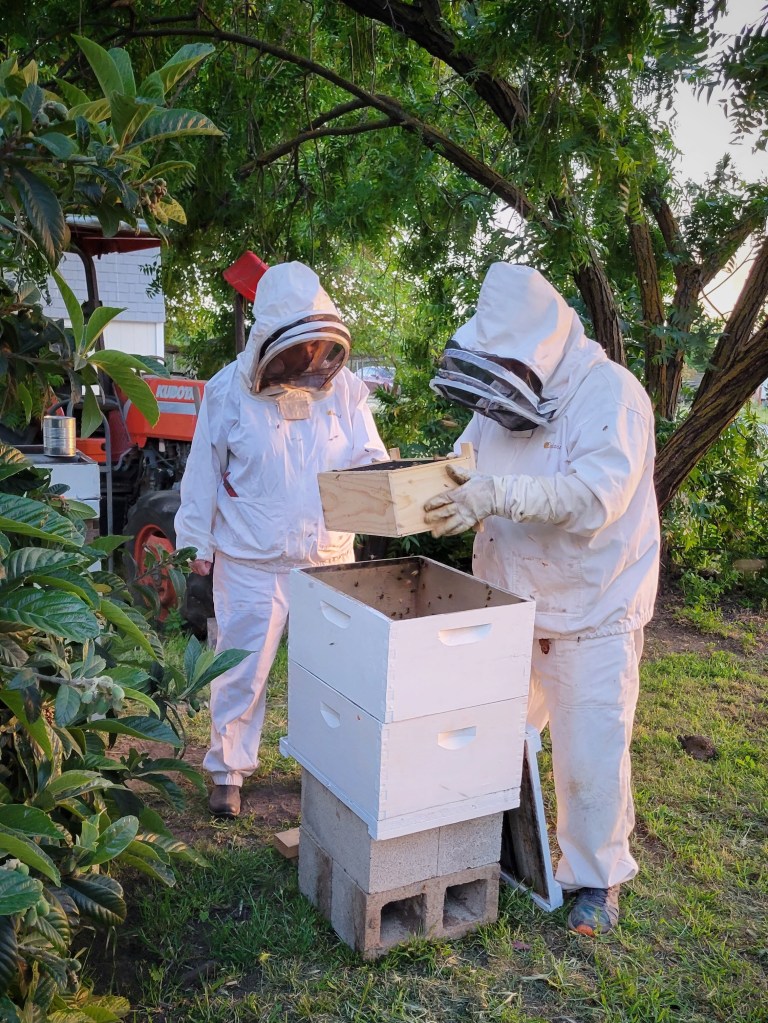
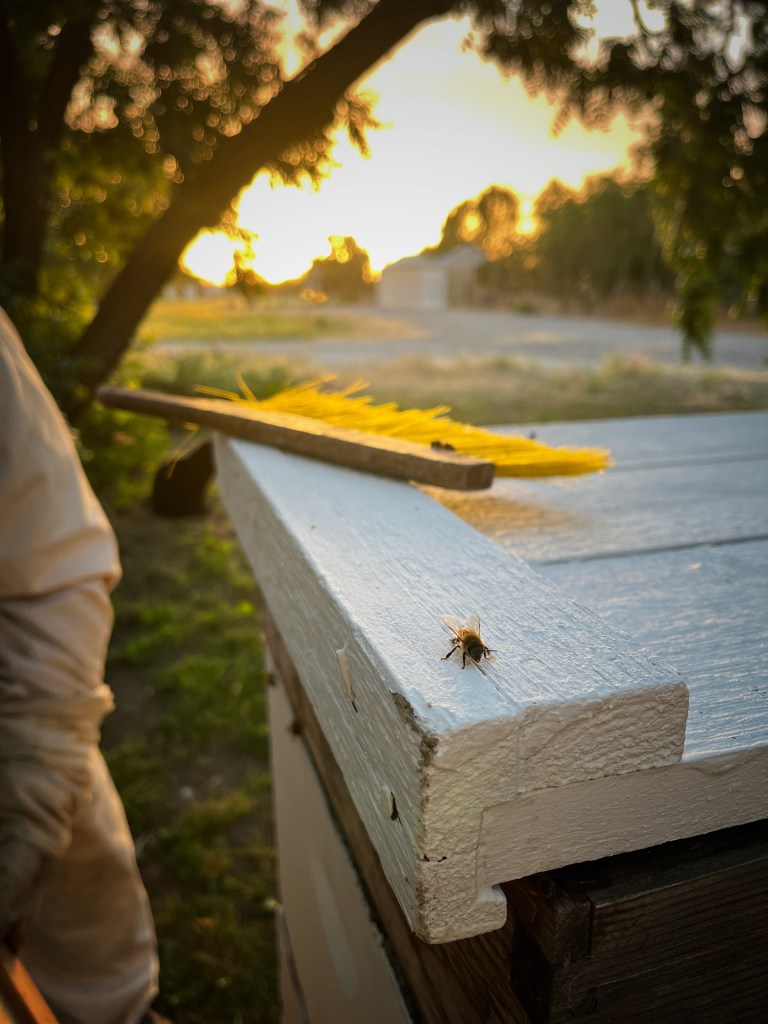
Our two shipments of bees came in, and my dad and I did the “bee drop” to put them into their new hives on Sunday evening. Jake was amazing and took photos for me.
The bees come in wooden boxes with the queen in a separate compartment. We prep the new hives and carefully remove the queen compartment from the wooden box without letting the other bees out.
We replace the cork stopper in the queen compartment with a marshmallow and set her in the new hive. Then, we open the wooden box and gently shake the bees out into their new home.
The bees quickly get to work exploring their new home and eating through the marshmallow to free their queen, while my dad and I put the finishing touches on their hive and make sure they’re nice and comfortable.
This brings our total number of hives to four. They seem to be healthy and thriving, and we’re hoping for a robust honey harvest this year. Bees are such fascinating, beautiful creatures…I could sit in front of the hives and watch them dance forever.
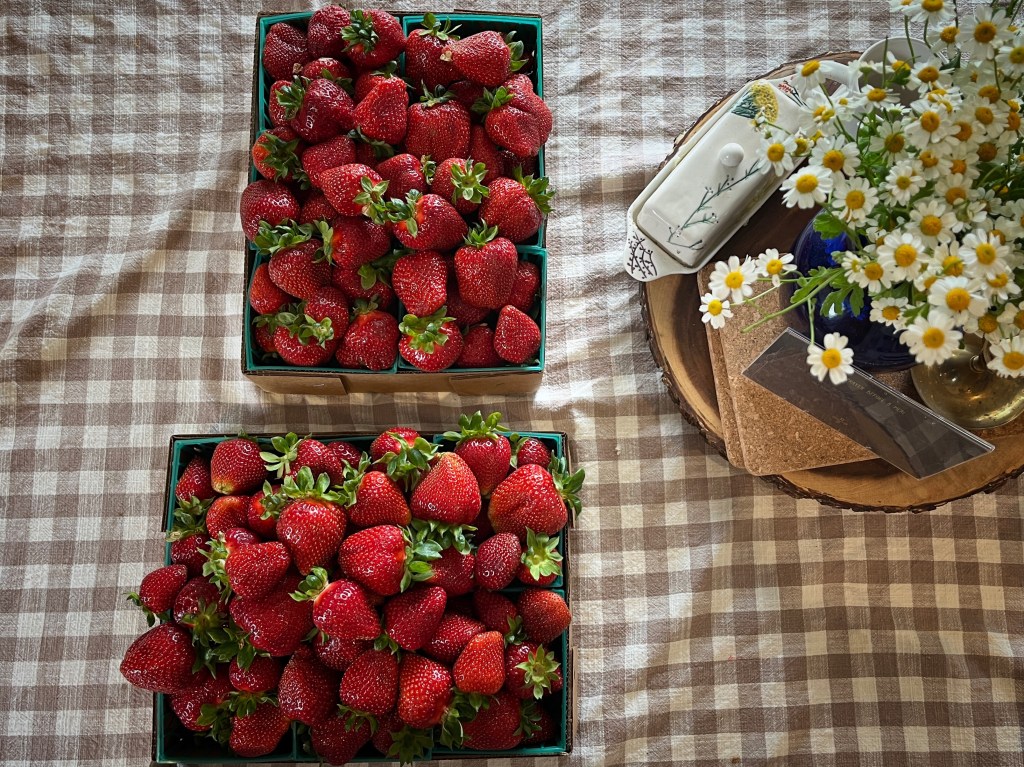
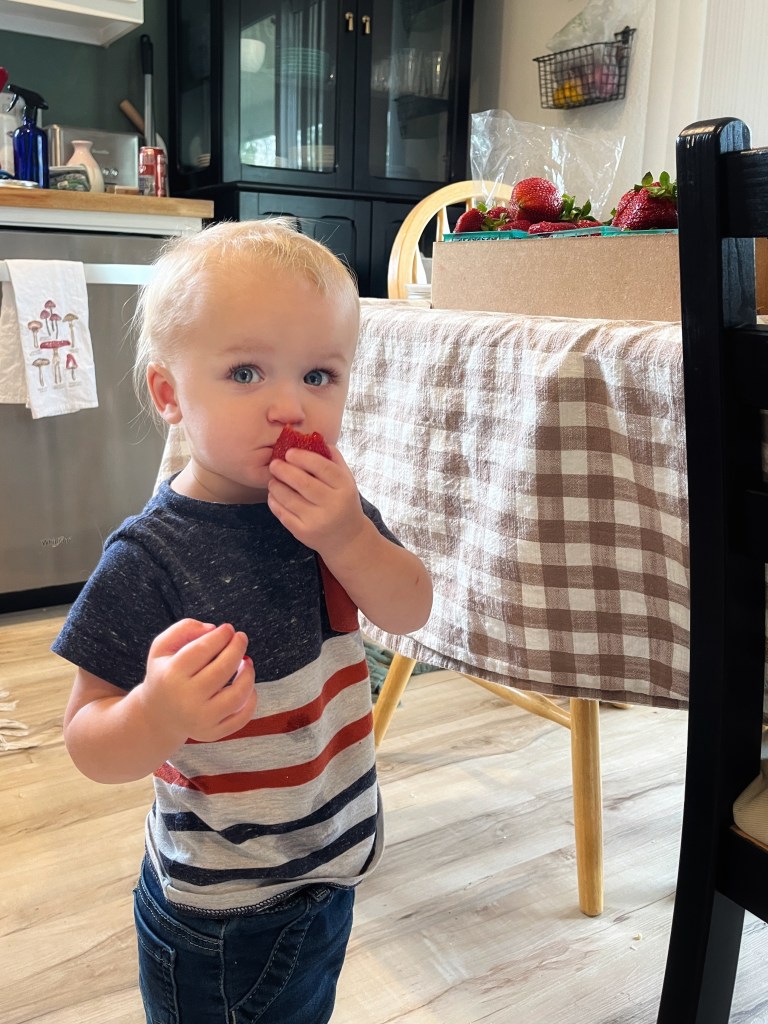
Michael and I picked up a flat of fresh strawberries from our local stand and canned eight half-pints of strawberry jam. As I hulled the berries, he stood next to me with his head tilted back and mouth open, waiting for me to feed him pieces of strawberry.
As I was cooking down the berries, he was being awfully quiet. I then realized the table is no longer a safe place out of his reach.
We still have quite a few berries, and for our next batch I may try out an alternative pectin that requires less sugar.
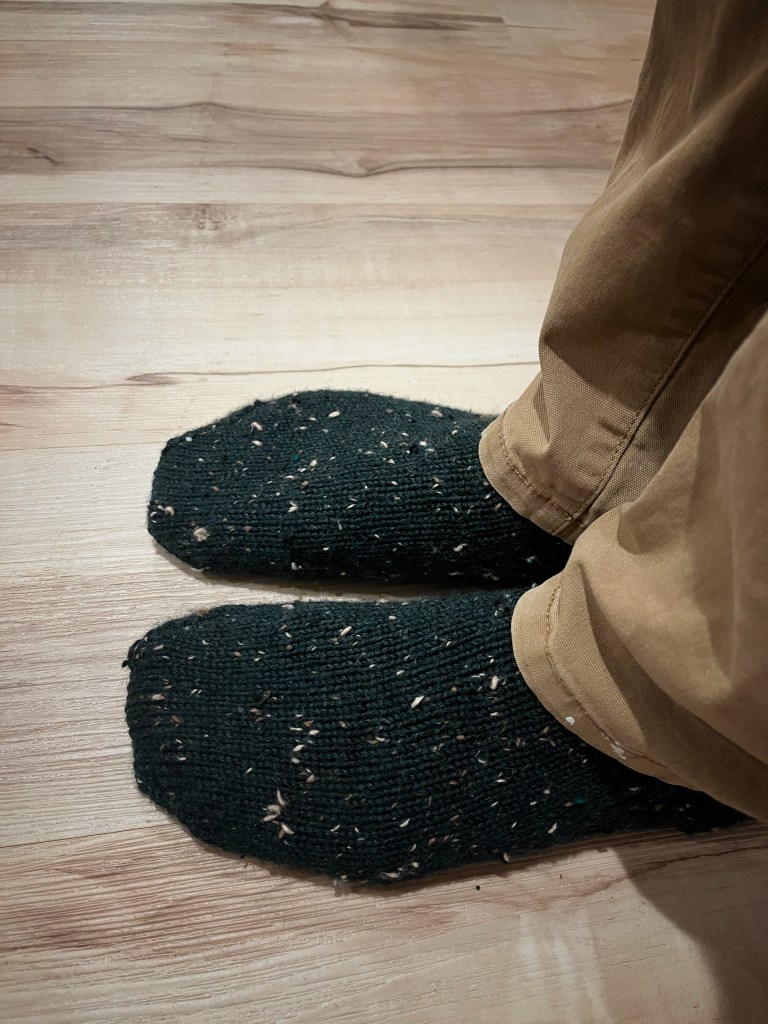
In knitting news, I’m enjoying this simple DK sock pattern by A Wooden Nest. I needed something simple and practical and easy on my hands as I continued to recover from this cold. I finished a pair for Jake, and now I’m starting my own pair. For Jake’s, I used KnitPick’s Stroll Tweed held double in Sequoia colorway.
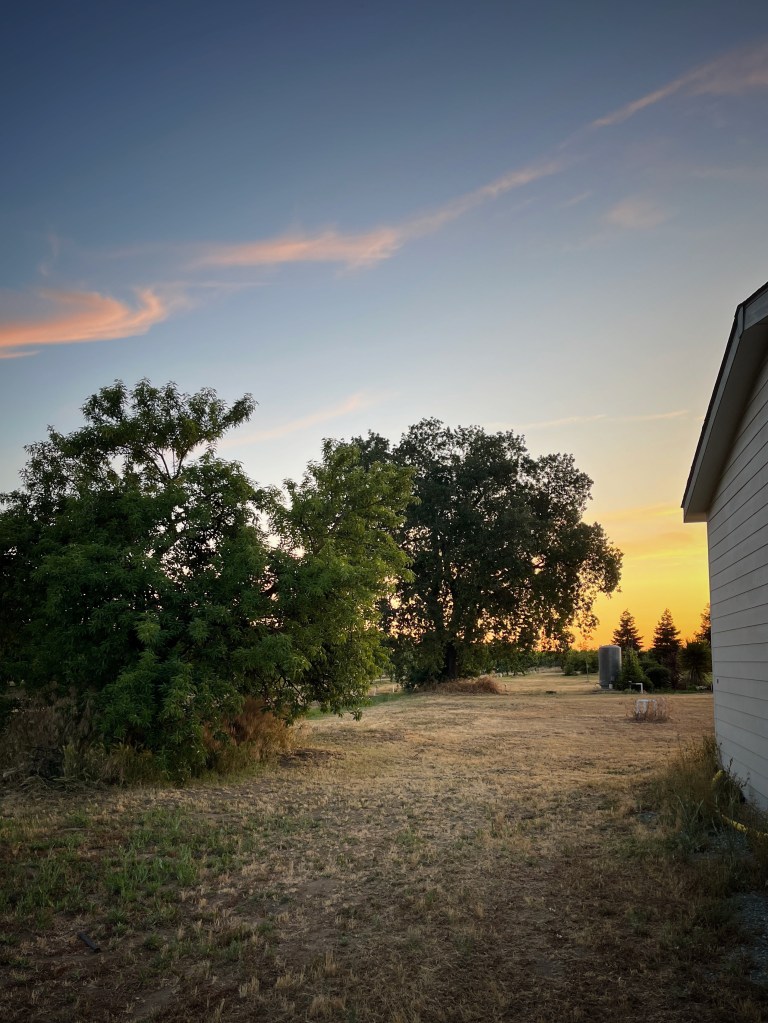
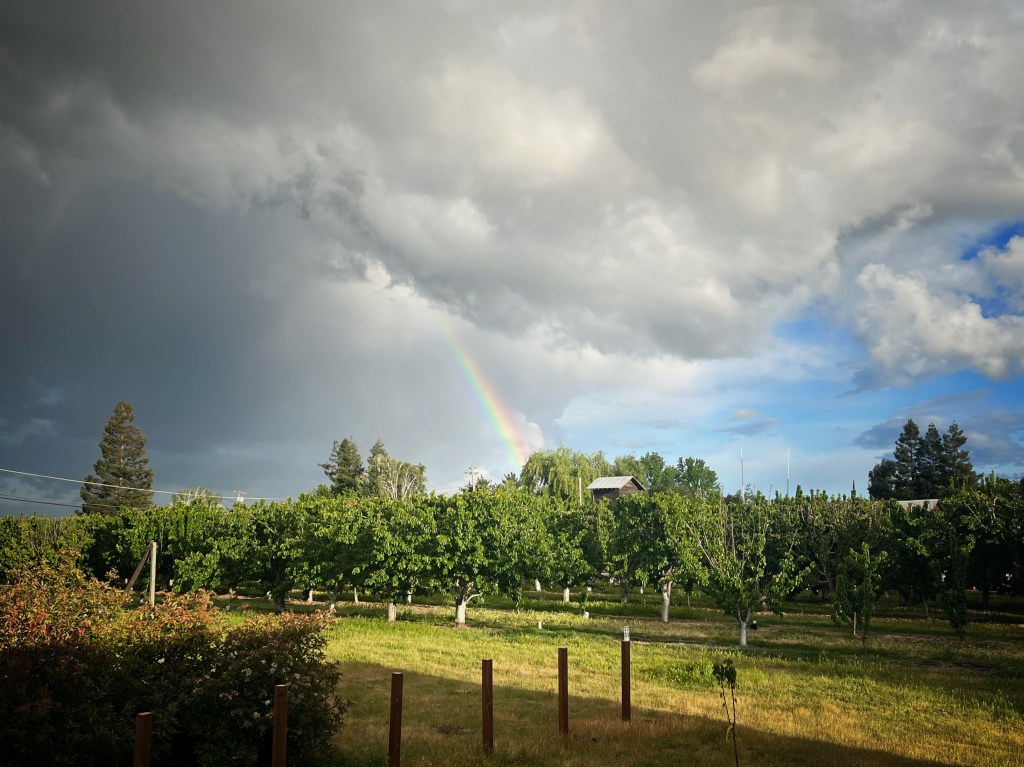
I’ve taken to sitting on the porch in the mornings while I drink my coffee and Michael plays. The oak tree sways in the breeze, and the killdeer hops across the driveway, and the red tail hawk calls in the distance, and the morning sun crawls across my lap with its Midas touch. It brings to mind one of my favorite poems: the Peace of Wild Things, by Wendell Berry.
When despair for the world grows in me and I wake in the night at the least sound in fear of what my life and my children’s lives may be, I go and lie down where the wood drake rests in his beauty on the water, and the great heron feeds. I come into the peace of wild things who do not tax their lives with forethought of grief. I come into the presence of still water. And I feel above me the day-blind stars waiting with their light. For a time I rest in the grace of the world, and am free.














 five acres four generations