small mercies

We survived Lent and made it to Holy Week! It’s always a challenge to make it to evening services with young kids, but Jake and Michael were able to go on Monday, and all of us were able to go on Tuesday. We will see how many more we can make it to this week.

I was stunned at how well Tuesday went — the kids did really well despite being exhausted. My new trick is to pack pajamas and blankets to change into after church, and call it a “car sleepover”. Both kids fell asleep halfway through the drive home and transferred to bed relatively seamlessly, which never happens. Praise God for His small mercies!
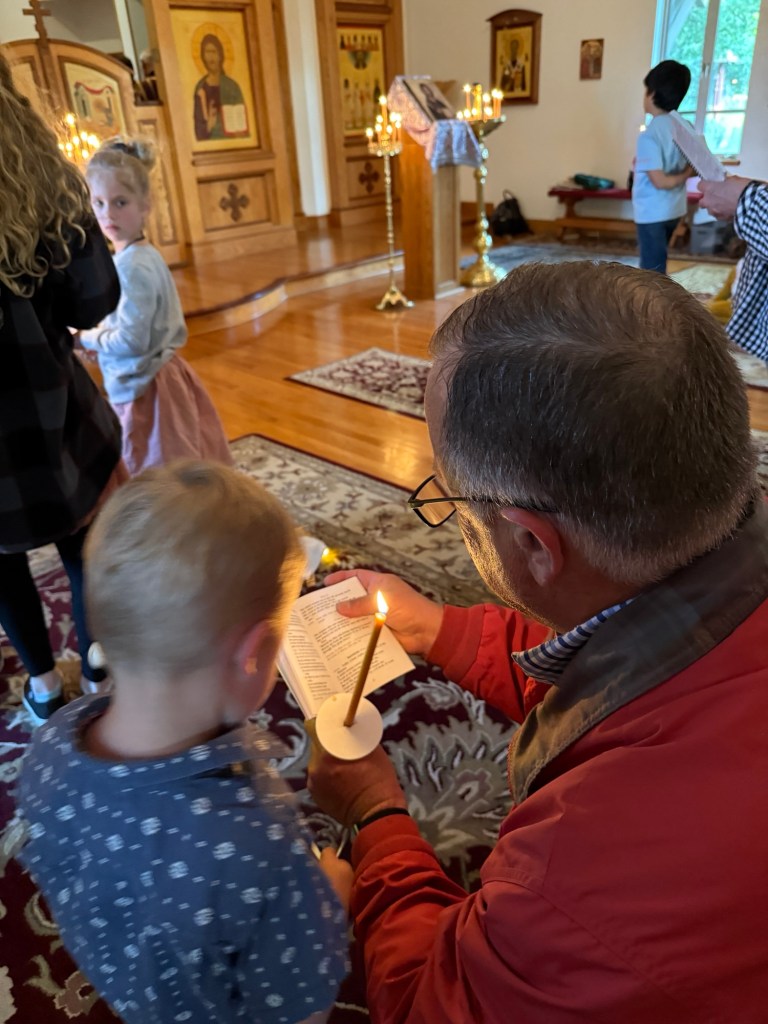
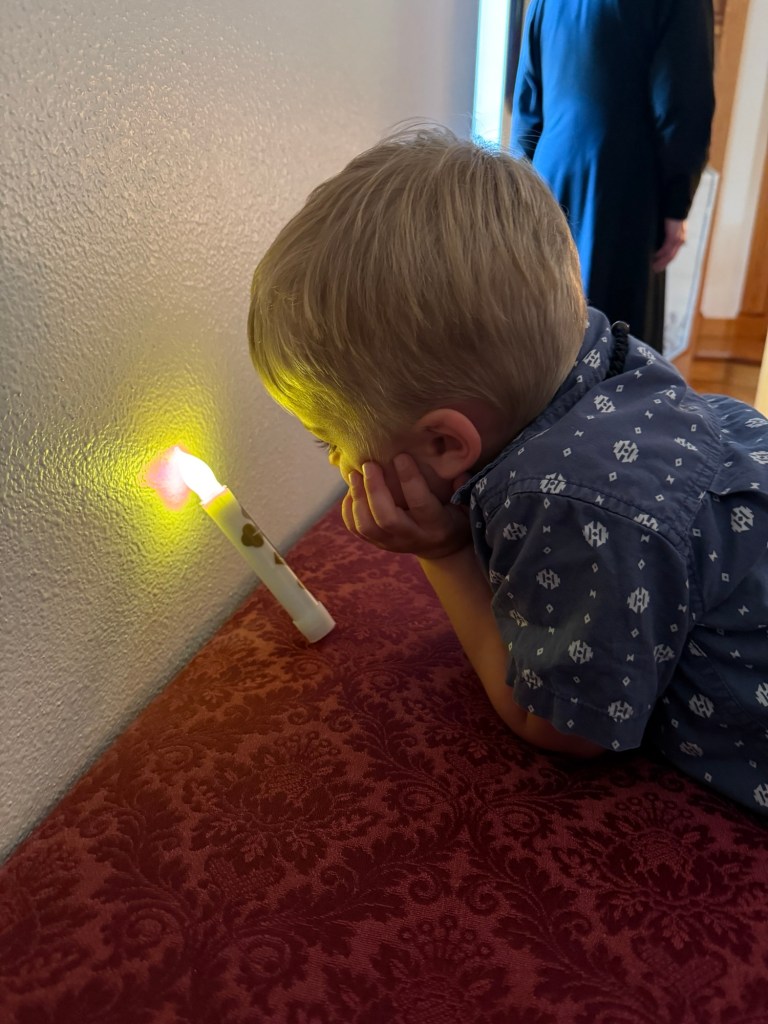
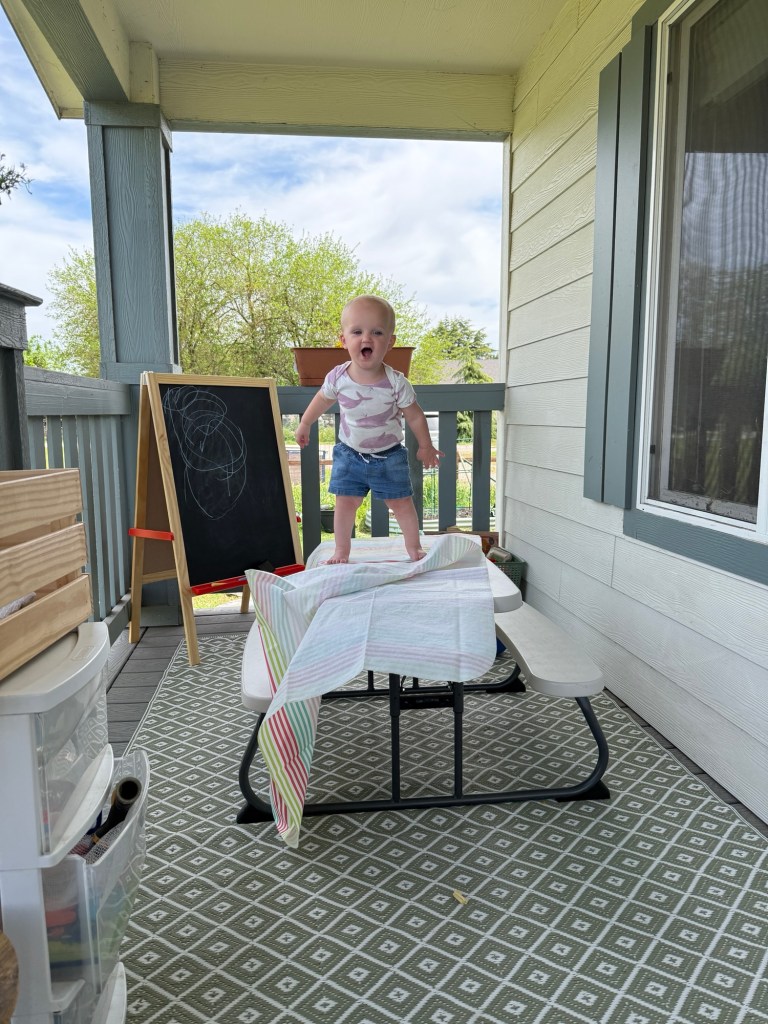
I’ve had a bit of a cleaning bug the past week or so. I spent a day rearranging our large side porch so we could spend more time playing on it. I wish I had a “before” picture because it’s a rather dramatic transformation. It had become a storage area and catch-all for recycling and boxes. Now, half of it is a play area for the kids and half of it is a place for adults to sit and watch the kids play. It’s been really nice to play there in the shade while the temps are in the high 70s and 80s.

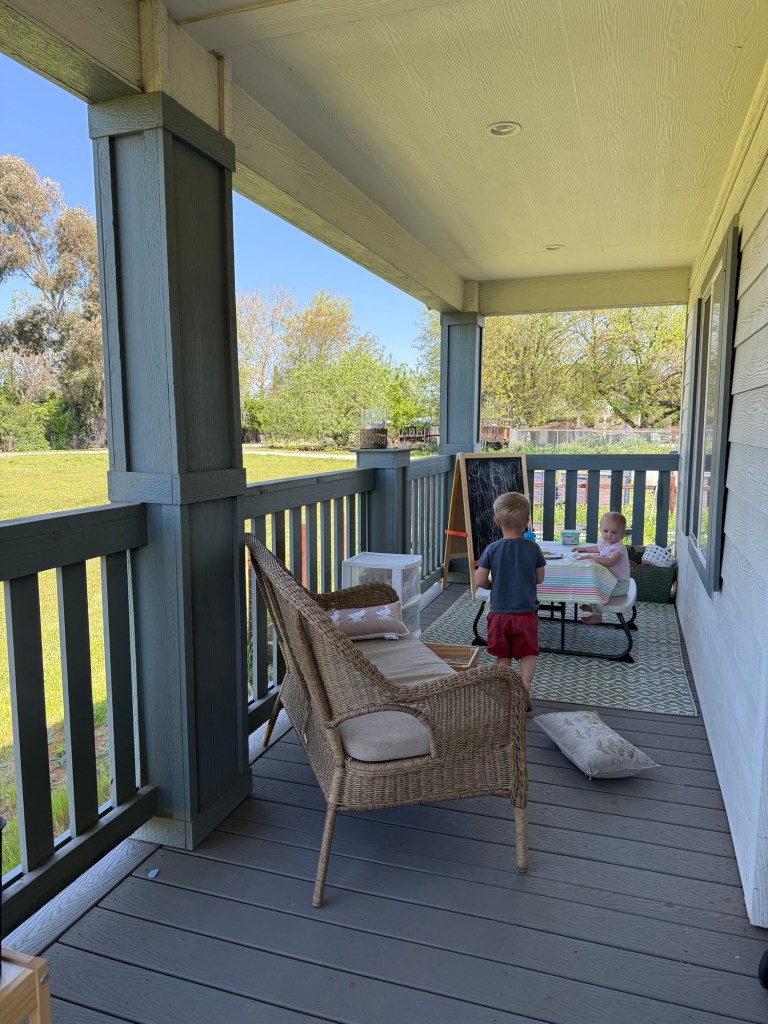
We even have had some “picnics” out there. Beatrice found out she can stand on the kid picnic table and has been unstoppable ever since.
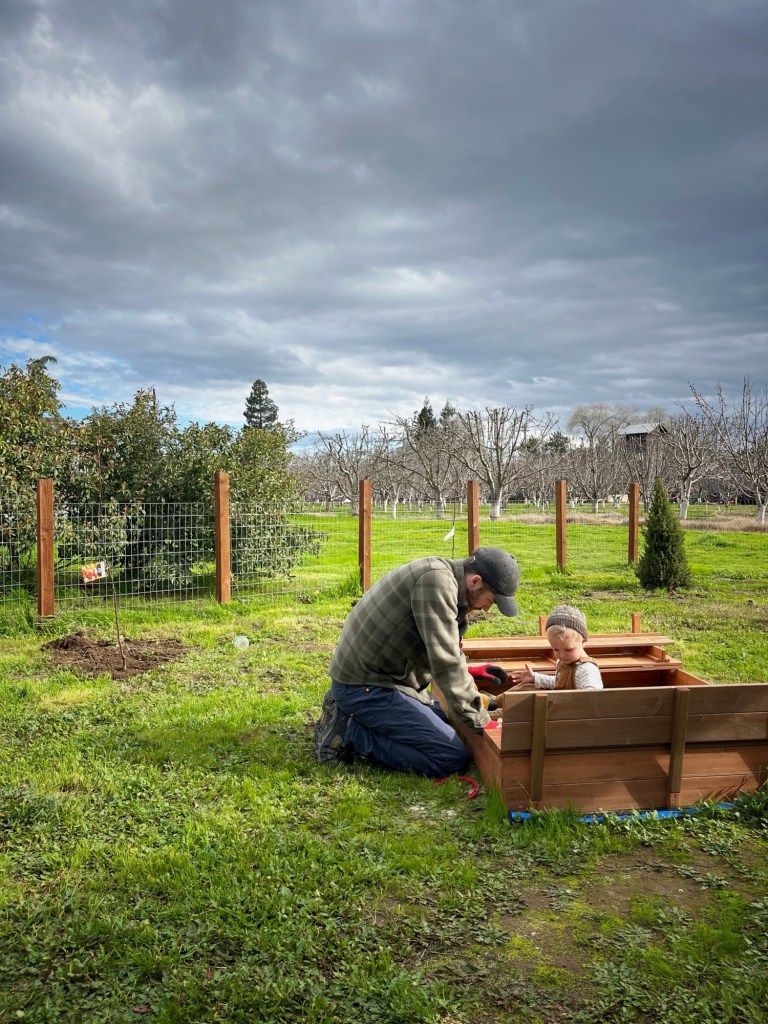
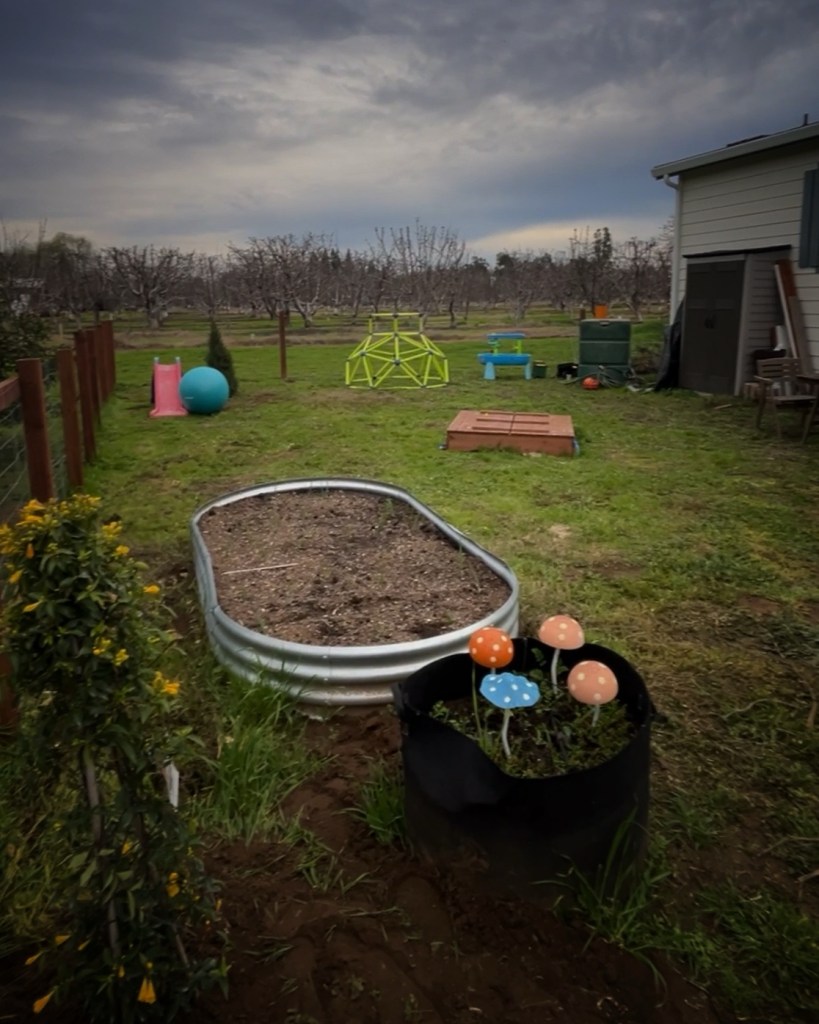
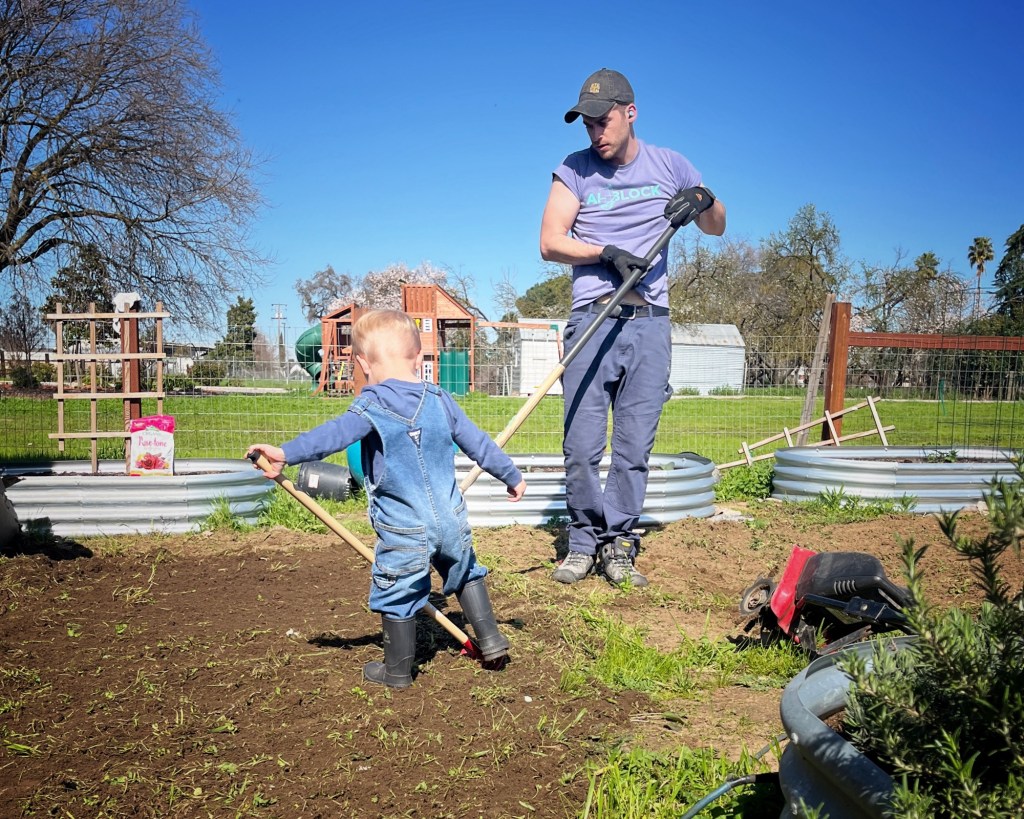
We’ve done some gardening as well, planting tomatoes, basil, peppers, and a handful of other flowers and plants. Michael now has a pair of gardening gloves just his size, and he loves helping me weed and water. I got him a watering can of his own after he used the hose to water his sister…it helps mitigate the damage he can cause.
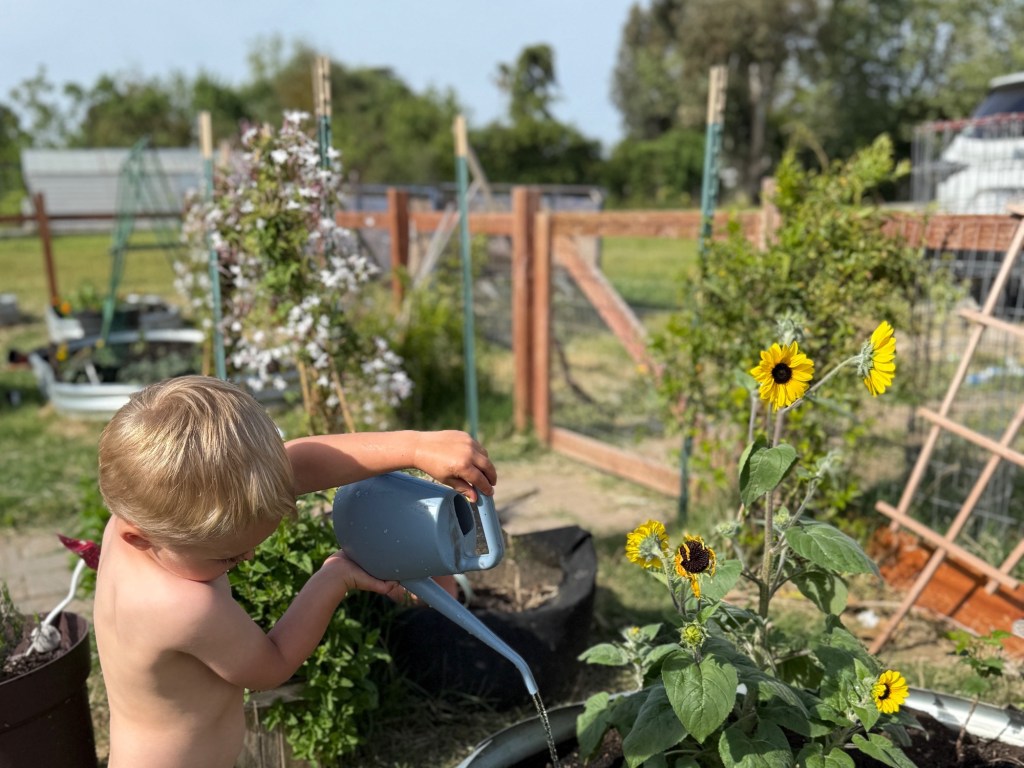
I’m hoping to get a picnic table for our garden too, and lay down bark mulch in between the garden beds for easier weed control. Eventually, we will have a trellis over our walkway/garden gate for the jasmine to climb, and string lights around our gravel pad…I have lots of grand plans, but we shall see what we accomplish this year. It’s ever a balance between ideals and reality.

I sewed Michael the Sunny Hat (free pattern!) by Twig & Tale, using some scrap linen from my stash and tractor quilting cotton he picked out himself. He loves wearing it while he’s running around outside — I must admit, I’m tickled by how much he loves wearing anything I make him.

Beatrice has gotten more verbal: she now says “bye bye” very clearly, and blows raspberries as she plays with toy cars. She also says “grandpa” with Michael’s exact intonation, which is pretty funny. Whenever anyone’s speaking loudly or shouting across distances, she has to shout too. She has a handful of other words like Mama, Dada, cat, dog, and others I’m having trouble remembering right now. And she’s discovered she can pick strawberries and eat them fresh from the vine.

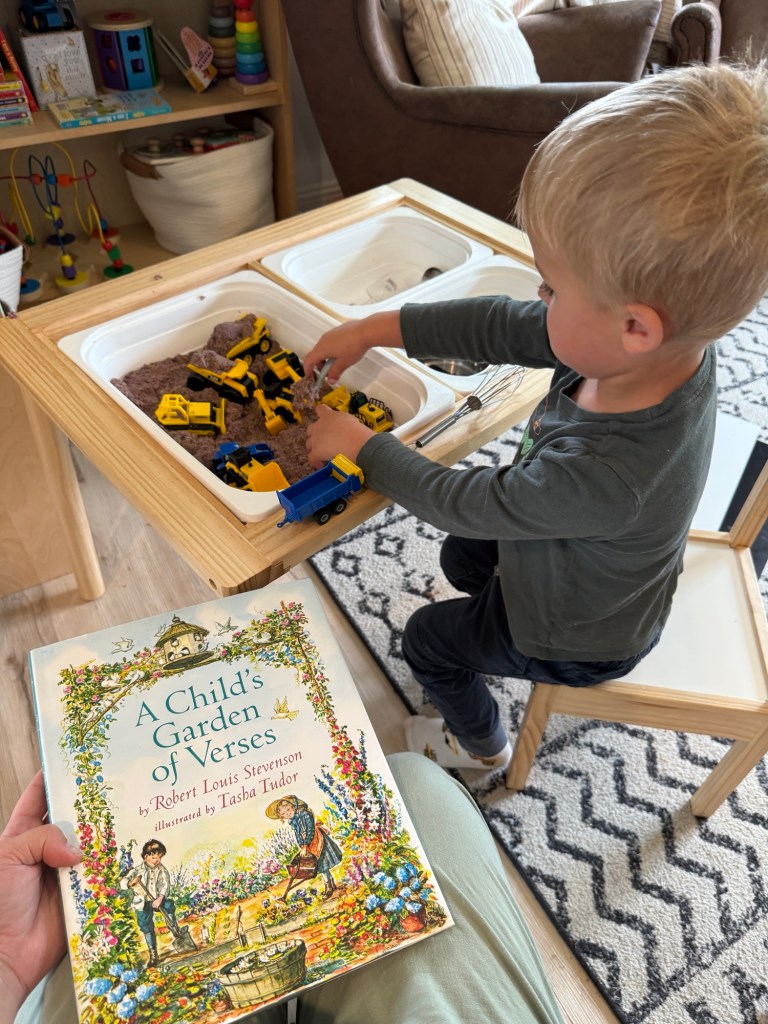
Michael and I have been reading A Children’s Garden of Verses (illustrated by Tasha Tudor — a glorious book) while Bea has her midday nap. He plays with his “magic sand” or watercolors or play dough while I read aloud. We played around with repeating back lines of the poems to each other too. Eventually we’ll do morning memorization time, when Bea is a bit older and less demanding of my attention.

I grew up learning poems and Scripture around the breakfast table, and I can still recite them 20 years later. While I didn’t quite appreciate it at the time, I’m so grateful to my parents for prioritizing memorization at a young age. It’s something I’m determined to pass on to my kids.
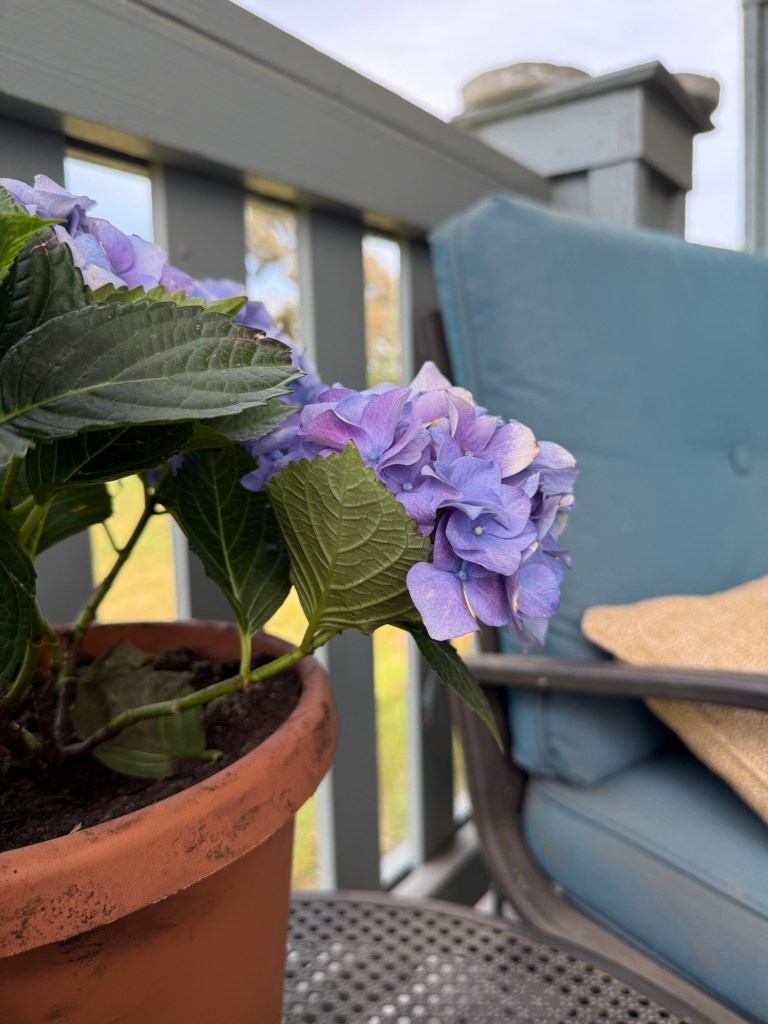
The phrase “praise God for His small mercies” has fallen into my daily vocabulary lately. When I say it, I don’t mean “small” in a diminutive sense. It reminds me of one of my favorite quotes by Therese of Lisieux:

The splendor of the rose and the whiteness of the lily do not rob the little violet of its scent nor the daisy of its simple charm.
If every tiny flower wanted to be a rose, spring would lose its loveliness.

Therese of Lisieux

The small mercies, like small flowers, are absolutely lovely. And I cherish them.

That’s where I’m at this Holy Week: very aware of my smallness, and very grateful for our God who sees and loves the smallest parts of His creation.

Right now, I’m taking each day as it comes and doing the work set before me with the energy I have available. I’ve said the same before in times of stress with resignation, head down and teeth gritted. But that’s not where I’m at right now. I’m in a place of peace. I look forward to the day ahead. I’m excited about the work set before me. I enjoy the beautiful little moments, and with God’s help, recover from the difficult ones.

Praise God for His small mercies.
holy week & pascha

Holy Week somehow creeps up on me every year. I feel like we scramble for the next few days, then accept with exhaustion the fact that we won’t get everything done we want to get done. I think it crept up on us faster than usual this year because of Beatrice’s arrival at the start of Lent.

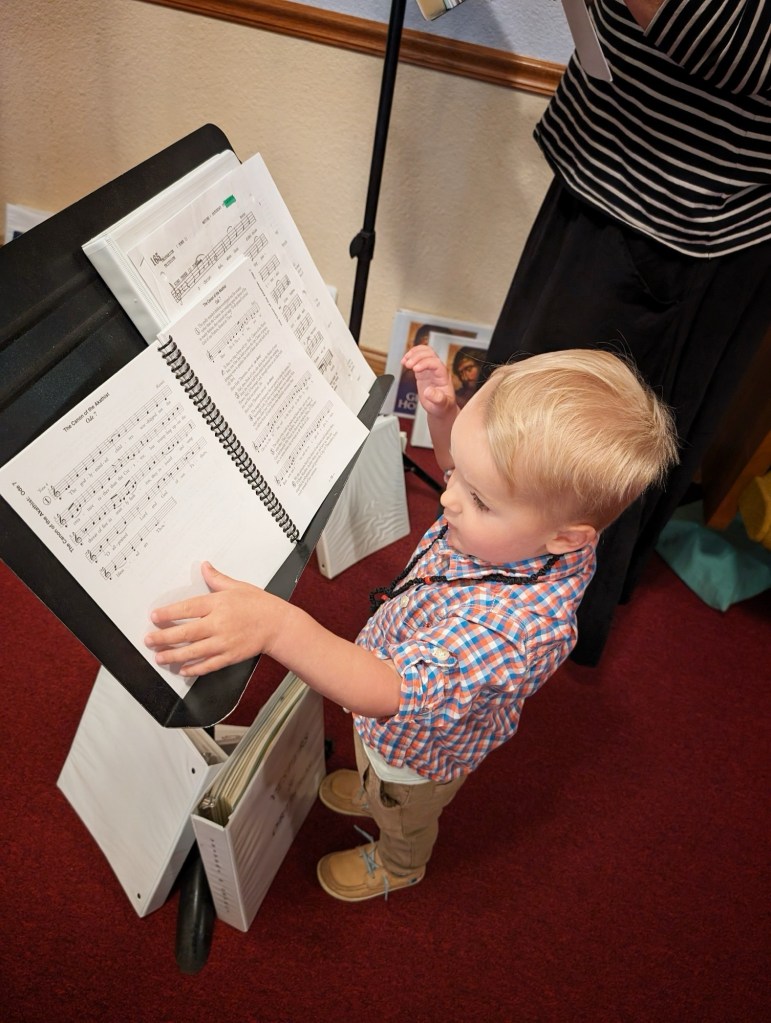
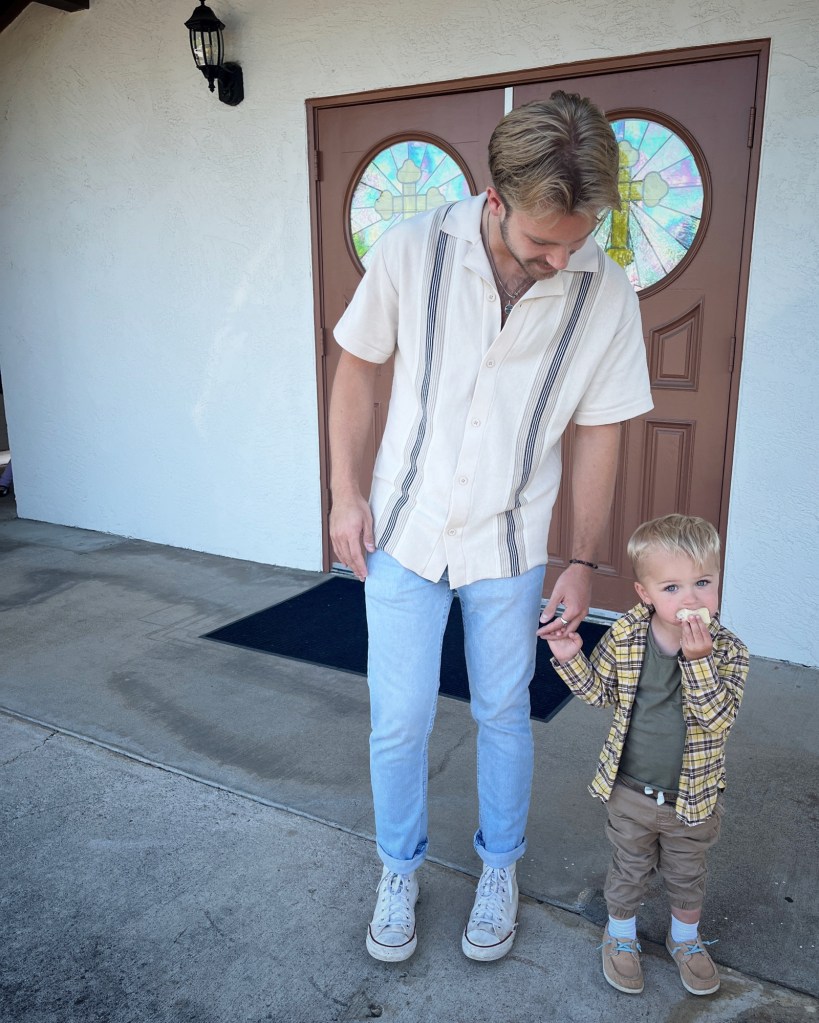
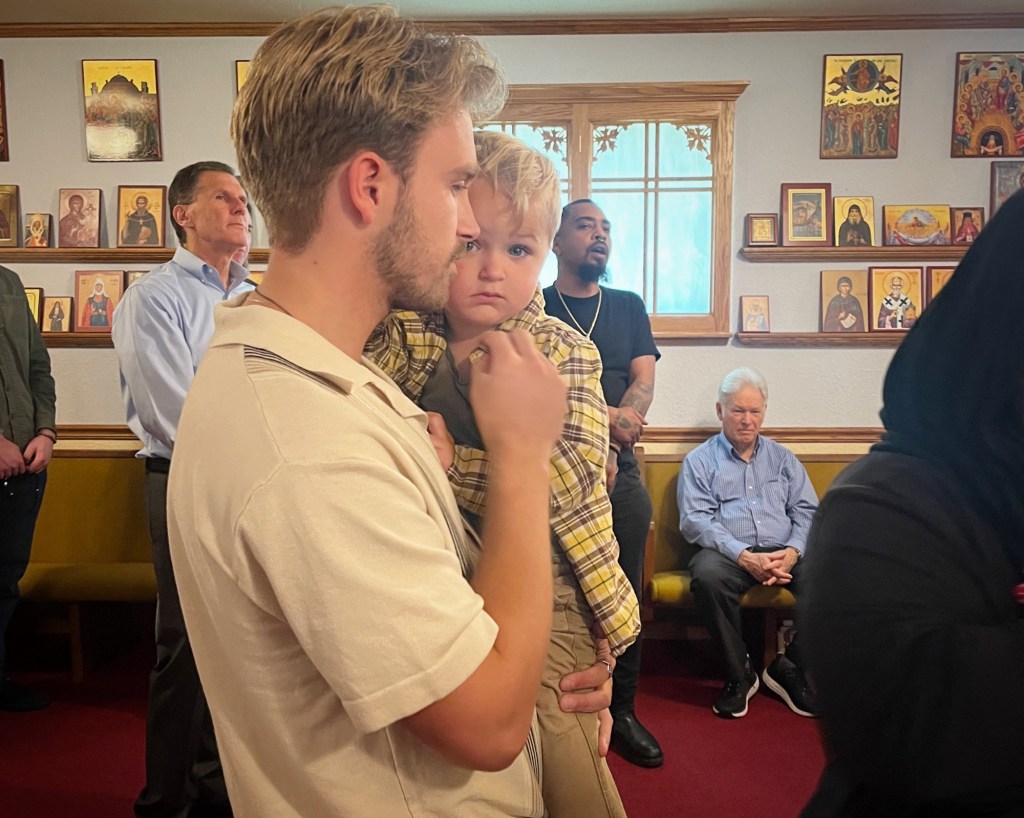
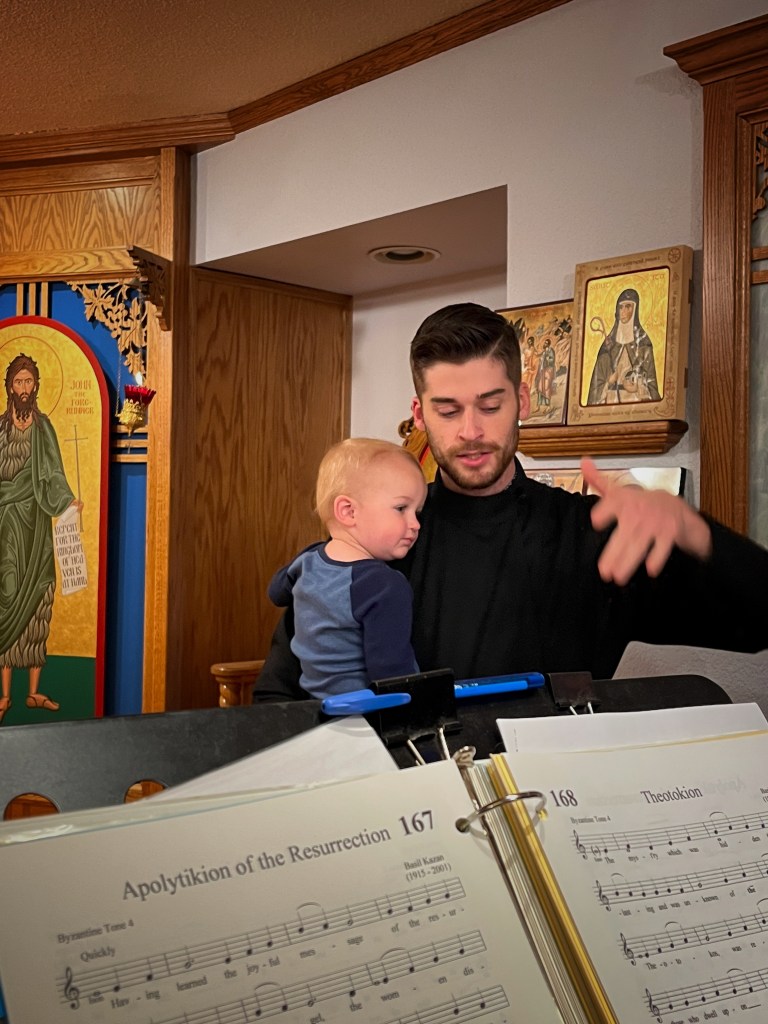
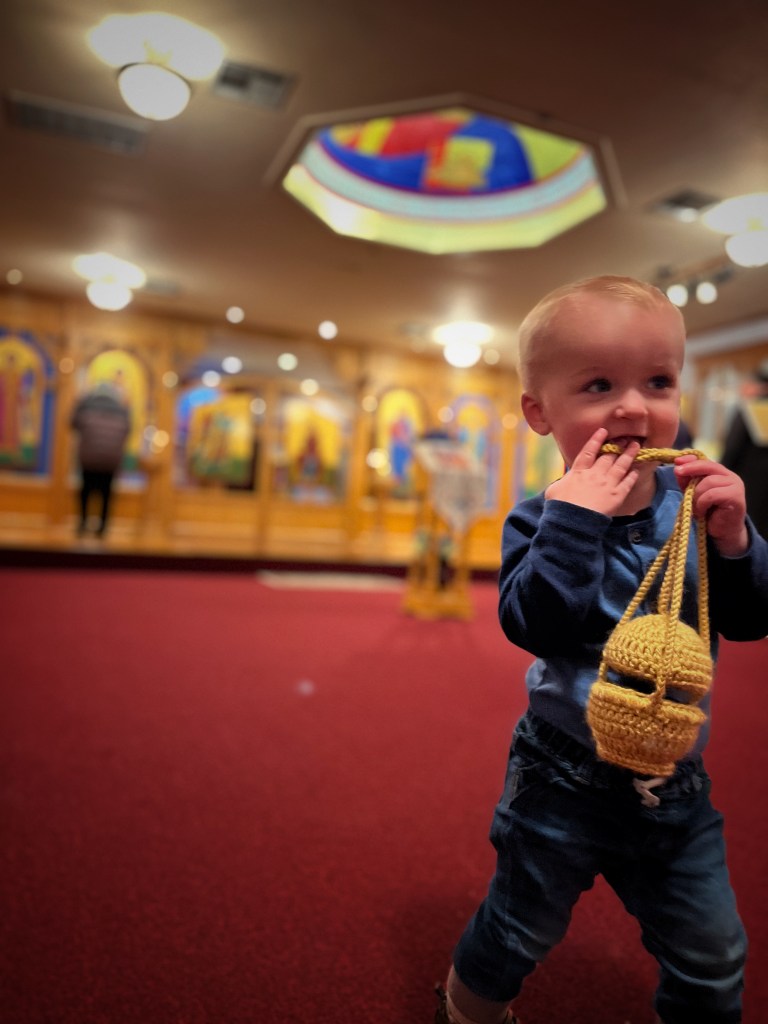
Because Jake is still on paternity leave, he was able to take Michael to almost all the weekday services. Michael did exceptionally well for a two year old, and loved standing up with the choir.

I was able to duet the Hymn of Kassiani with Jake on Holy Tuesday, which is one of my favorite pieces of music in Holy Week.

I will kiss Thy feet Whose tread when it fell on the ears of Eve in Paradise dismayed her so that she did hide herself because of fear. Who then shall examine the multitude of my sin and the depth of Thy judgment? Wherefore, O my Saviour and the Deliverer of my soul turn not away from Thy handmaiden O Thou of boundless mercy.

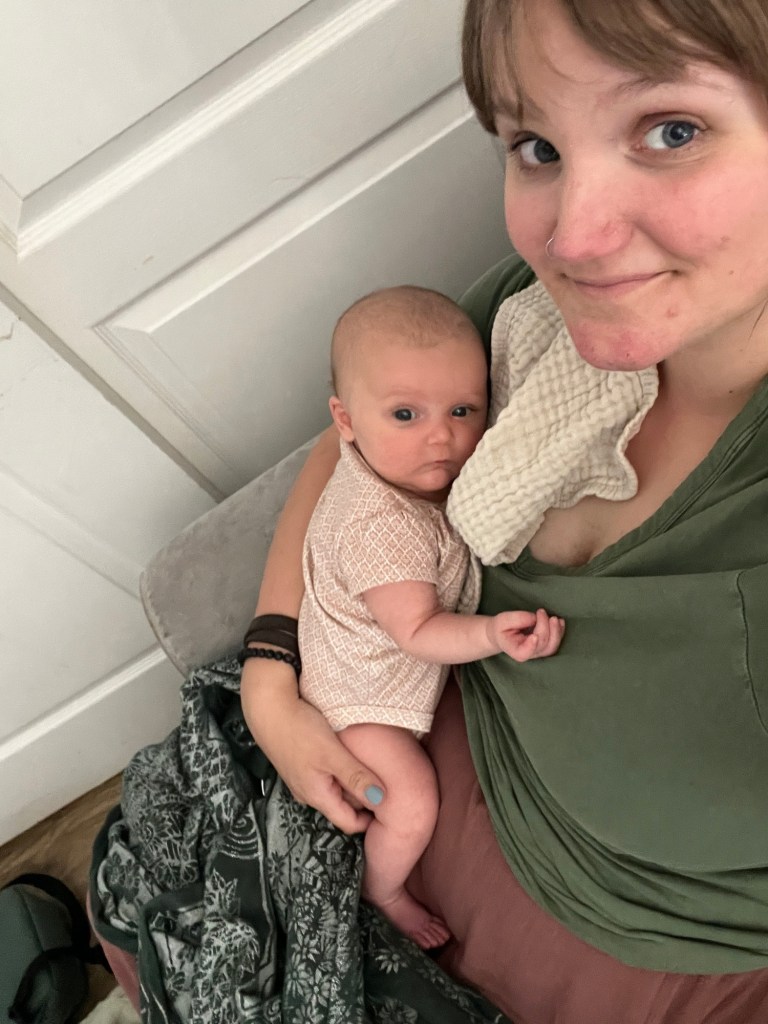
Most of the services I attended, however, I was soothing a tired and gassy baby in the cry room. I’ve written (multiple times) about the different type of ascetic service required of mothers in different seasons of life. I don’t have any new thoughts right now, but this week I sat and held close the reality that this, too, is prayer.

I loved watching Michael with Jake this week. He often asked to go to church throughout the day, even if he had just been that morning or the night before. He also began to run around singing snippets of what he’d been hearing: lots of AMENs and ALLELUIAs!

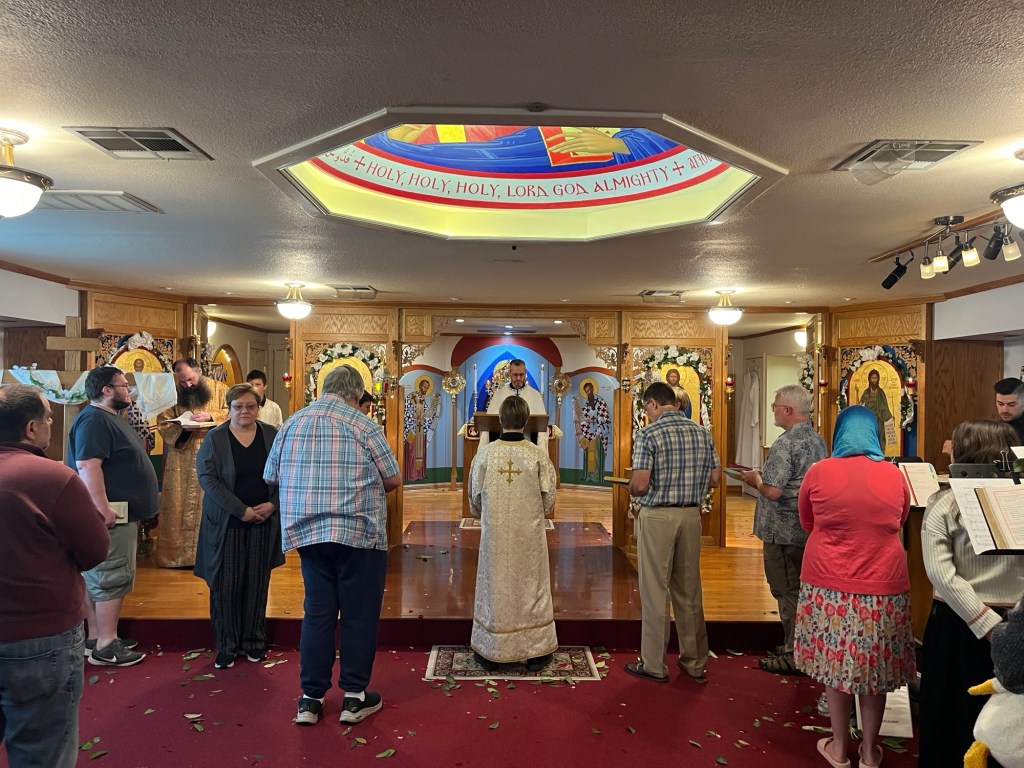
Between singing in the choir and taking care of two children (even though their godparents and grandparents both helped out so so much) I didn’t get as many photos as I wish I had. One day, I’ll borrow a nice camera and try to capture all the glorious, beautiful details of our services during Holy Week.

But for now, enjoy the small snippets I managed to capture.

Come, receive the Light that is never overtaken by night, and glorify Christ who arose from the dead.

Christ has Risen from the dead, by death trampling upon Death, and has bestowed life upon those in the tombs.

We got home around 2:30 am on Sunday morning, and went back at 1 pm for Agape Vespers and our church’s Pascha BBQ. Agape Vespers is one of my favorite services: we read the Gospel in as many different languages as we can, and also we sing another of my favorite music pieces for the evening prokeimenon:

Who is so great a God as our God? Thou art the God who does wonders!

Jake and I sang it again as a duet. One of my favorite things to do is sing beside him, and I love that Holy Week and Pascha give me so many chances to do so.

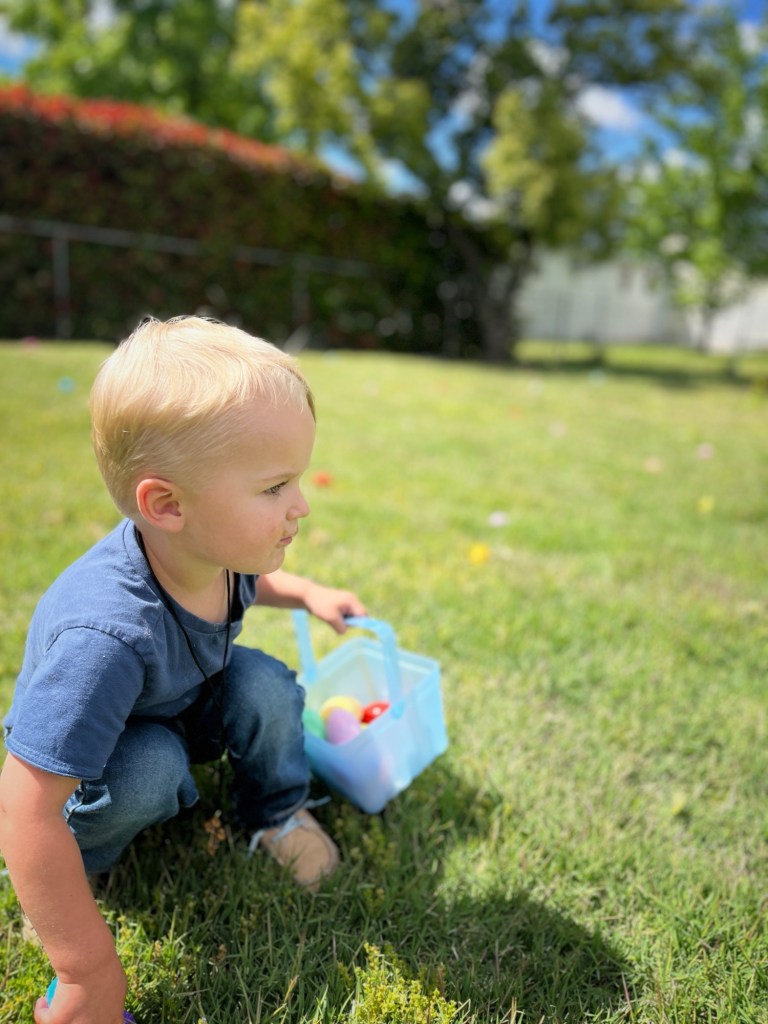
Michael loved hunting for eggs with the rest of the kids, though he was decidedly uninterested in the candy inside and just wanted to keep finding more and opening and closing them.

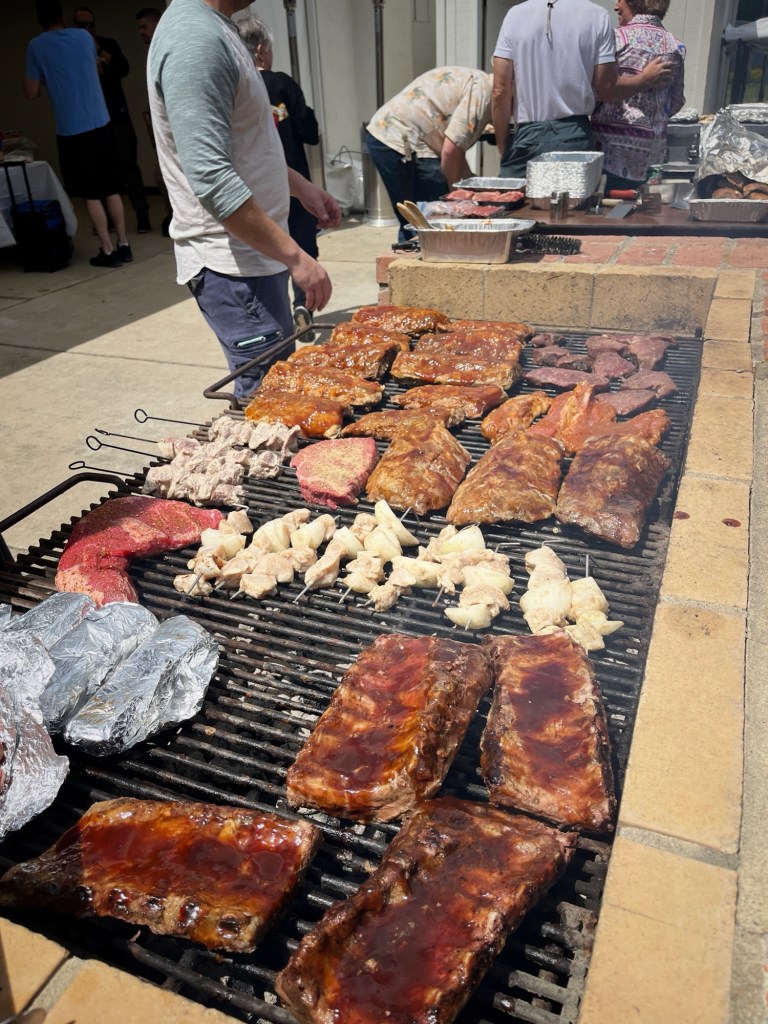
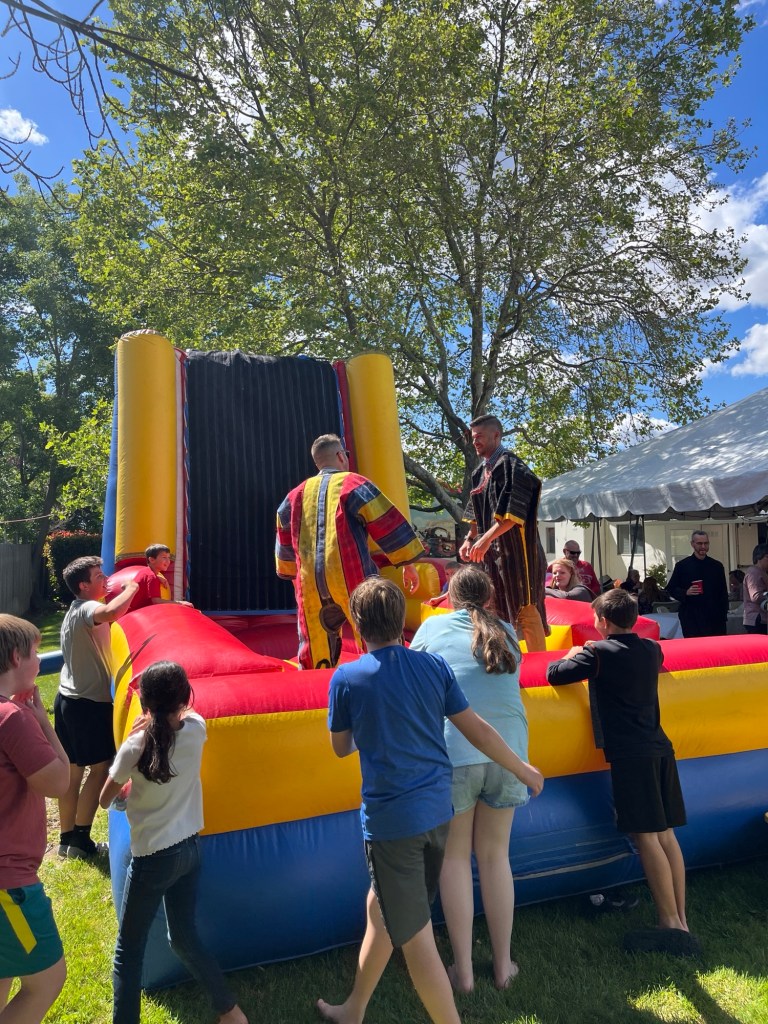
Jake and one of our subdeacons competed on the Velcro wall (Jake won, sorry Jeremy — next year!), my dad made some incredible ribs, punch and wine and beer and whiskey made their rounds, cake and chocolate and donuts and Pascha cheese were present in copious amounts. As I said on Instagram, ain’t no party like a Pascha party.

So, Christ is risen, dear friends! We have entered with joy into the Paschal season. Now for naps, enjoying good food and good drink, spending time with good friends, and more naps!

bea’s churching & baptism

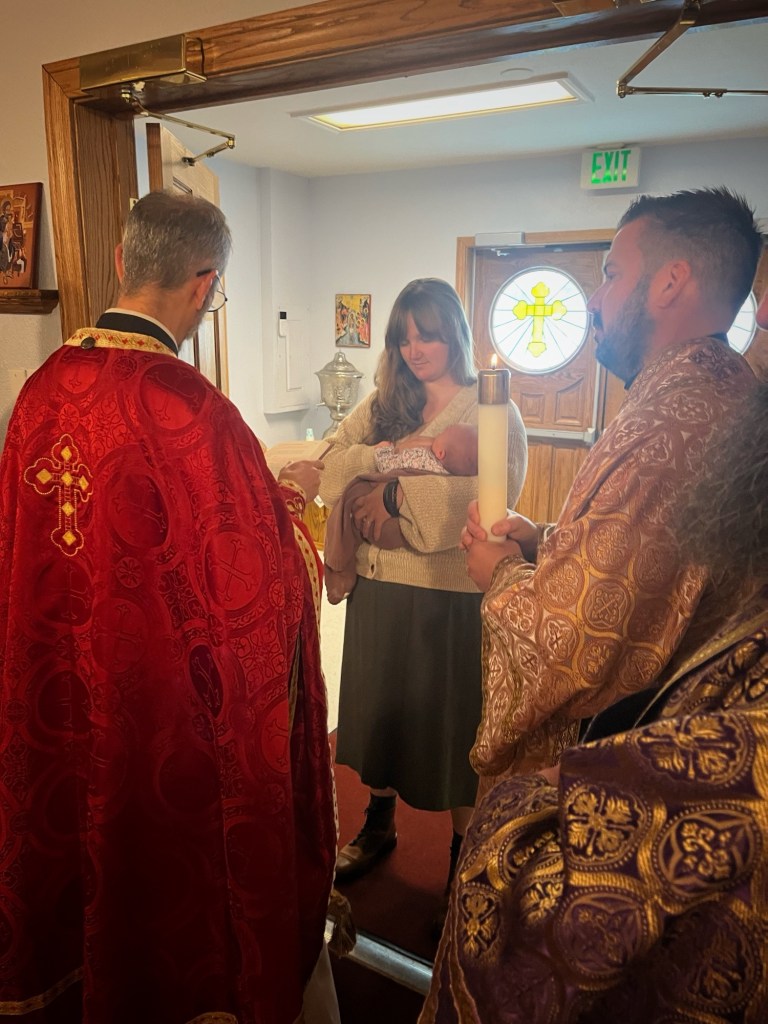
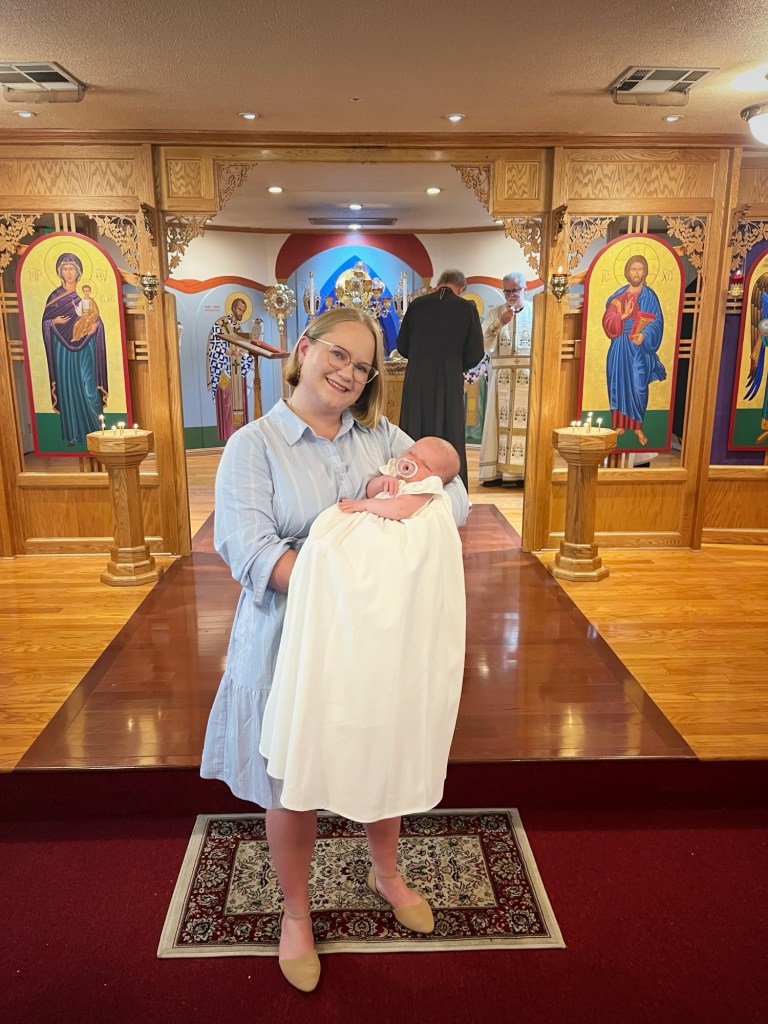
Over the past two weeks, I rejoined my church community after my period of postpartum rest (a ceremony called churching that happens approximately 40 days after birth) and Beatrice was baptized!

Churching is such a beautiful thing. On the surface it can be somewhat controversial: some people think it means the woman is barred from the church because she is “unclean” from birth or something. In actuality, it’s a blessing to rest from the rigors of church attendance (standing for 2 hour services is hard even when you haven’t just given birth) and to tend to your baby while your body recovers. Many parishes let the mother decide when to return, with the guidance also of her spiritual father.

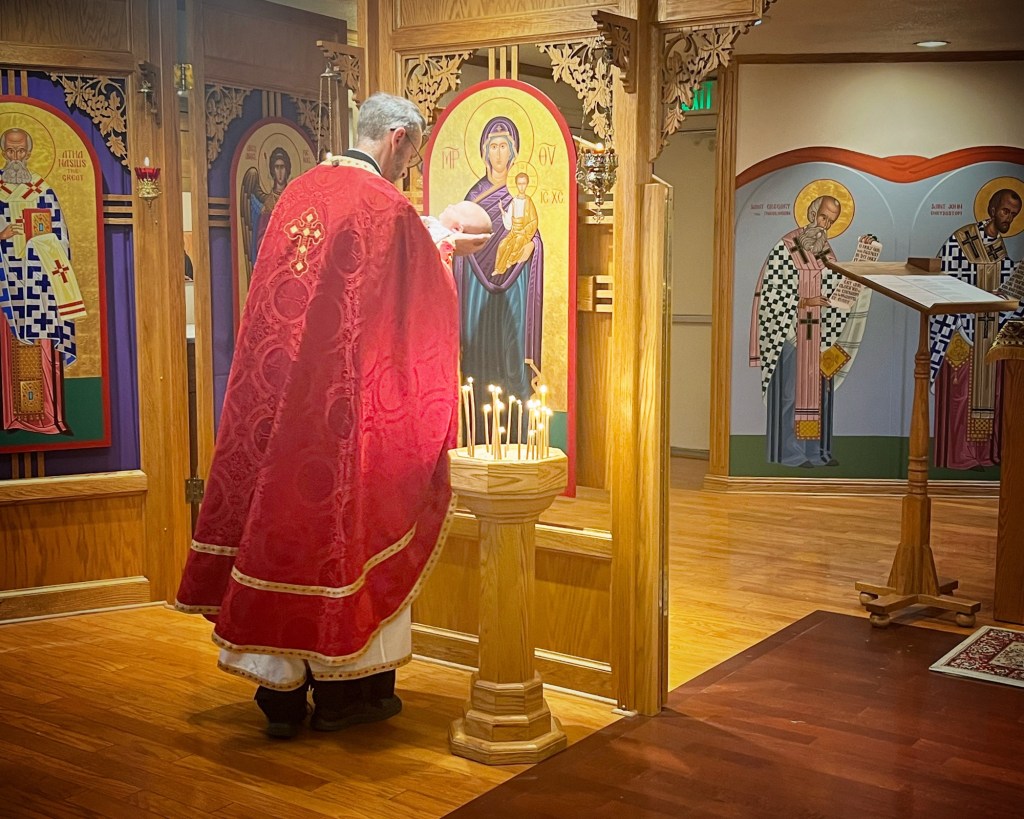
Our priest prayed over me and Beatrice, thanking God for the blessing of a baby and praying I may be fully healed from all parts of the birthing process. Then he took Beatrice and presented her to the Lord, bringing her into the church and back to the altar, and in front of the icons of Christ and the Theotokos.

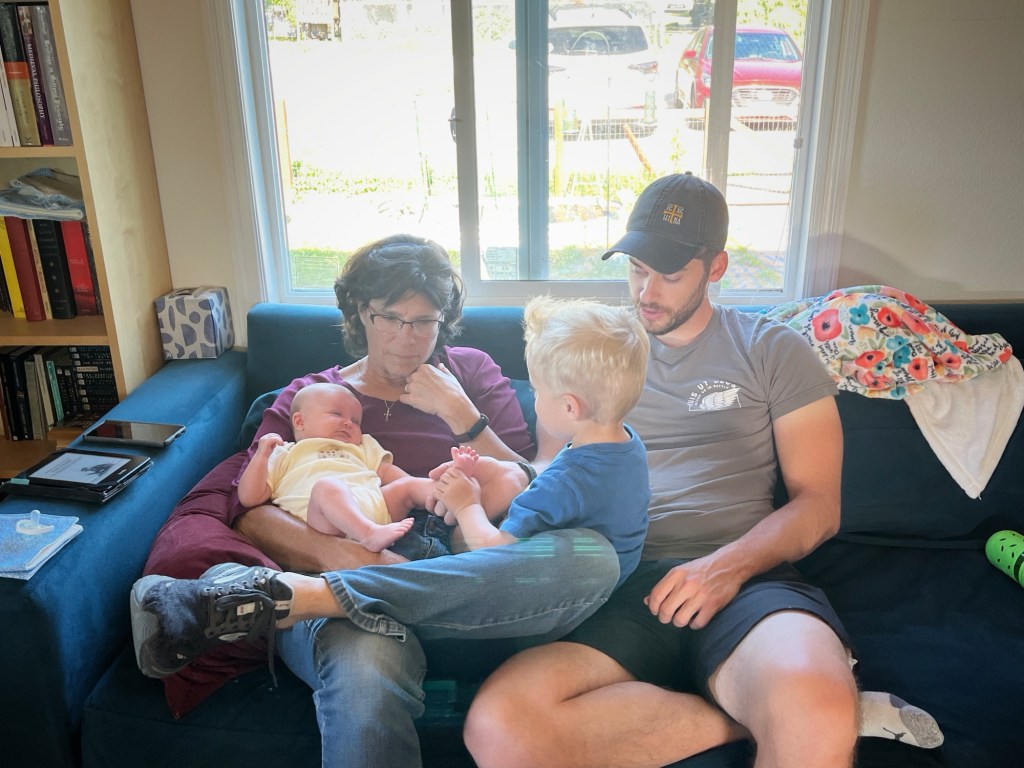
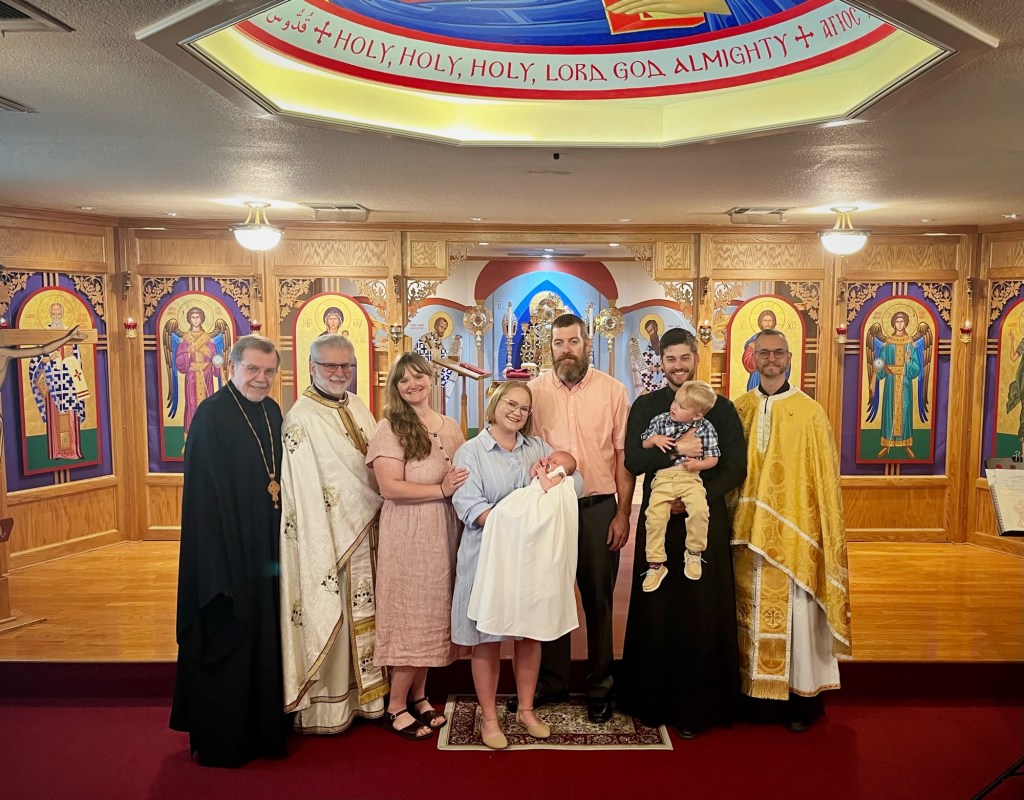
The Saturday following, April 20th, our sweet Bea was baptized! My siblings flew in for the weekend to attend: my sister Becca is her godmother, and her godfather is a dear family friend of ours. My in-laws drove up too (of course), and Father performed the baptism, along with our parish priest. Michael was so excited to see Oma and Opa, and had a blast playing with them. He was very sad when they left.

It was a small baptismal service without a party afterwards, given that we’re still in the middle of Lent and things have been quite busy. However, Pascha falls on the exact day she turns two months old: we will be sure to celebrate her heartily along with our risen Christ. Michael was fascinated by all of it. We had explained the baptism to him and two-year-old terms before hand , and so half way through the service he loudly proclaimed that Opa needed to “put her in the water”!

My brother Jon took some amazing photos of the ceremony, and they’re still being edited/transferred from the SD card to the computer. I’ll be sure to do a post with some of those photos too, when I receive them.

Beatrice’s baptismal gown was made from my wedding dress by a lovely woman I found on Etsy. It’s a keepsake I’ll be preserving for any future children we may have as well. There was something so tender and sweet seeing her wrapped in it after her baptism.

Now, we Orthodox enter into Holy Week: we will have church services every day leading up to the glory of Pascha. Pray for us, especially our priests, deacons, subdeacons, readers, and choir directors (and their families)! Lent is a long and beautiful marathon, and we all need good strength to finish well.

As many of you as have been baptized into Christ have put on Christ. Alleluia!

preparing

It’s been quite a busy few weeks. I’ve been fully in the throes of nesting, and it’s been a whirlwind of projects in and around the house.

We’ve been outside a lot as the rain clears and the temperatures linger in the low 60s. This is one of the only times I truly appreciate living in a warmer climate. It’s been wonderful being outside and working in the garden. I know when the temperatures climb to 100+ degrees in the summer I’ll be struggling once more, but for now, I’m enjoying the golden sunshine and crisp wind and moody skies.
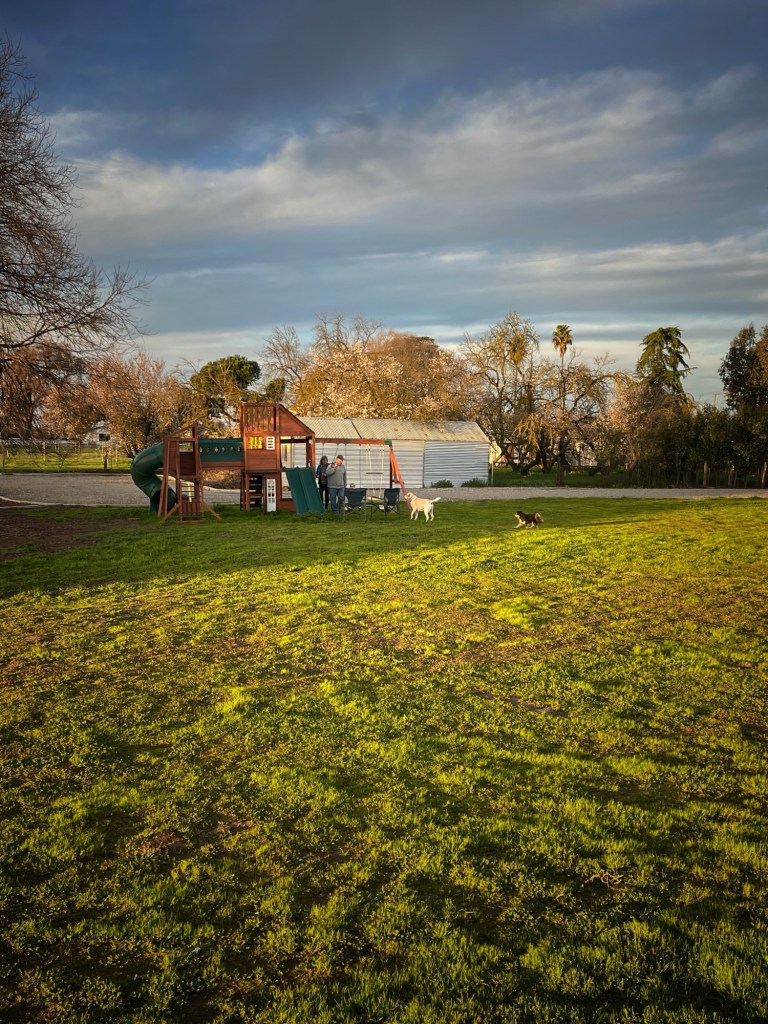
Last week I did some pretty intense work in our garden as the weather warmed up. I planted jasmine, apple trees, broccoli, tomatoes, beans, and marigolds, and reorganized furniture, cleaned the front porch, and mowed our wild lawn. It felt good to be working in the crisp February air, even though I was pretty sore for a few days afterwards.

Michael had a lot of fun hanging out with my dad while I got tips and pointers on how to work some of the power tools I borrowed.

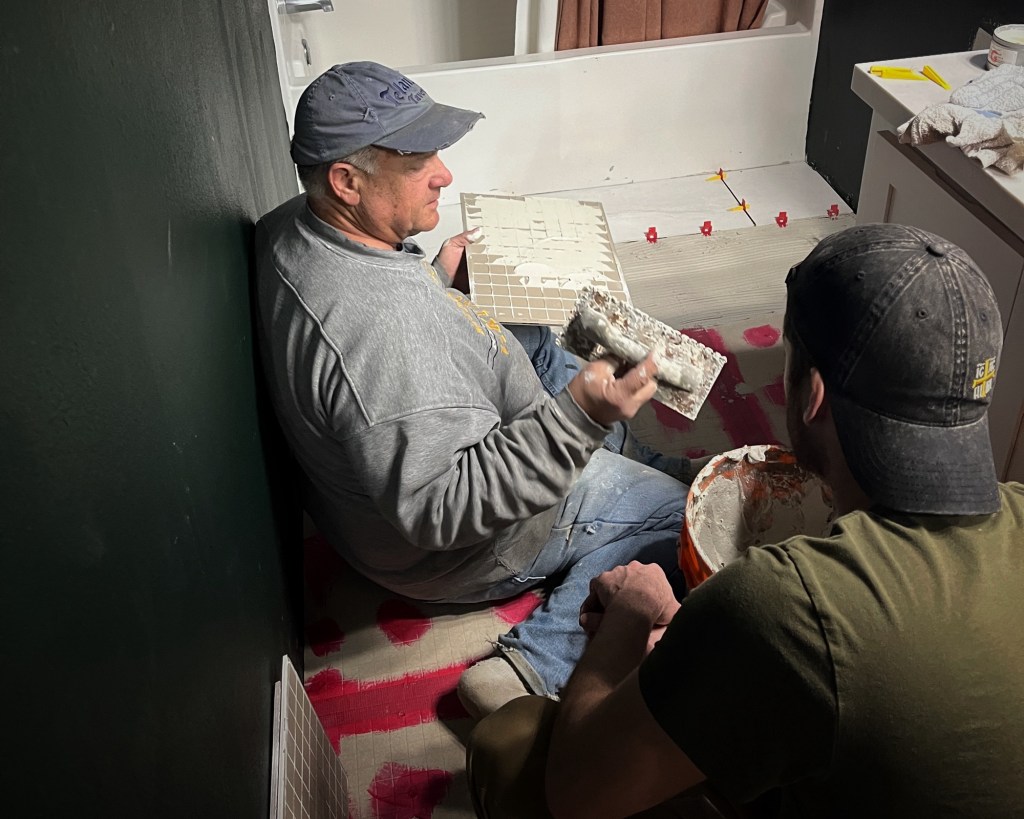
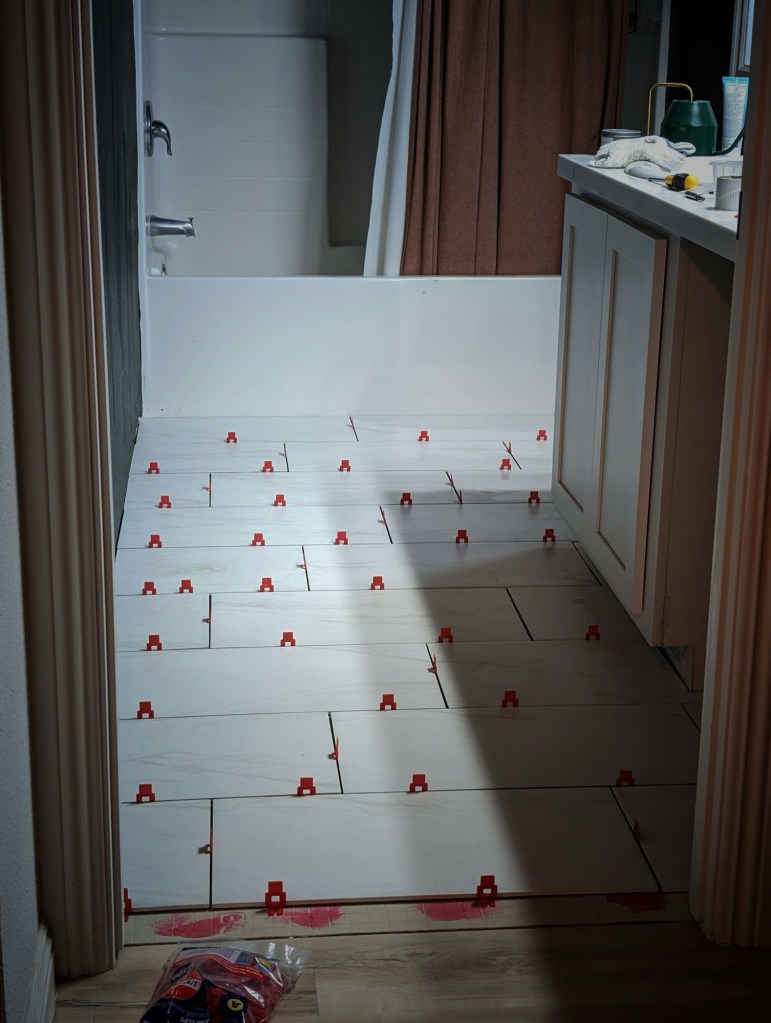
Then, Jake and my dad spent a weekend tiling our main bathroom. I was so grateful they finished it before baby girl arrived — despite the rain that made cutting tile outside a bit more difficult! It was a project we’d hoped to complete before moving in, but never actually did. Now, aside from painting touchups, the bathroom is complete.

Michael also had a blast “helping” my dad with the grouting process.

This past weekend Jake leveled out the northern section of our garden (with some help from Michael). We’ll put down some native grass seed so we have a place to sit and walk barefoot while keeping an eye on our growing veggies.
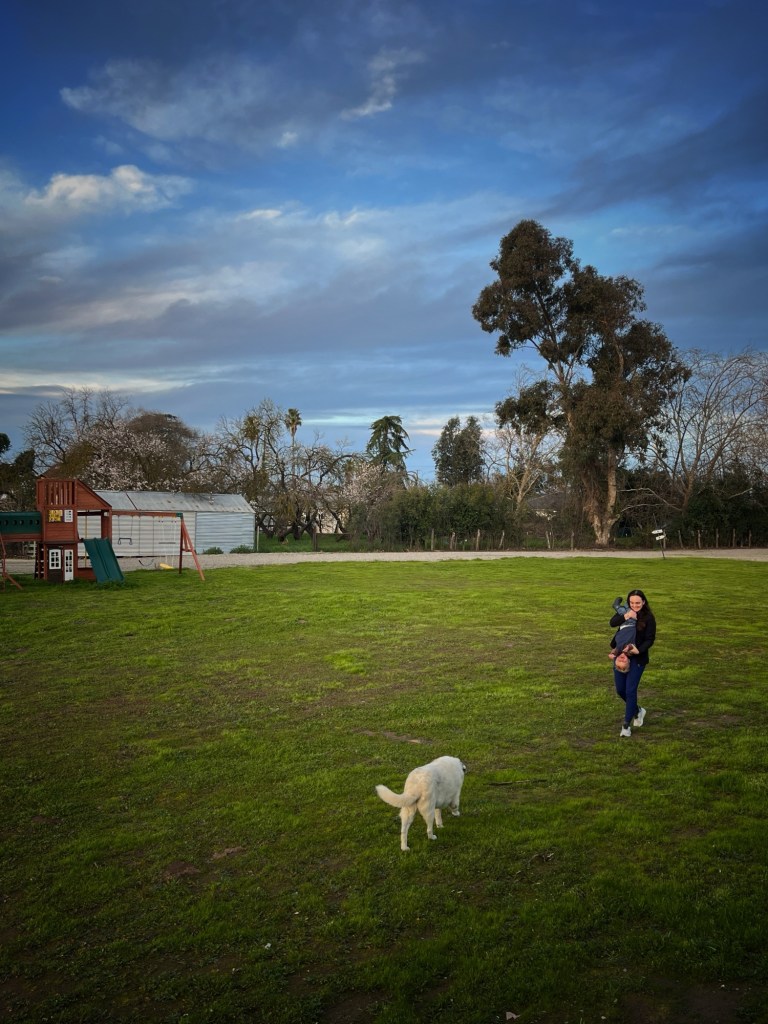
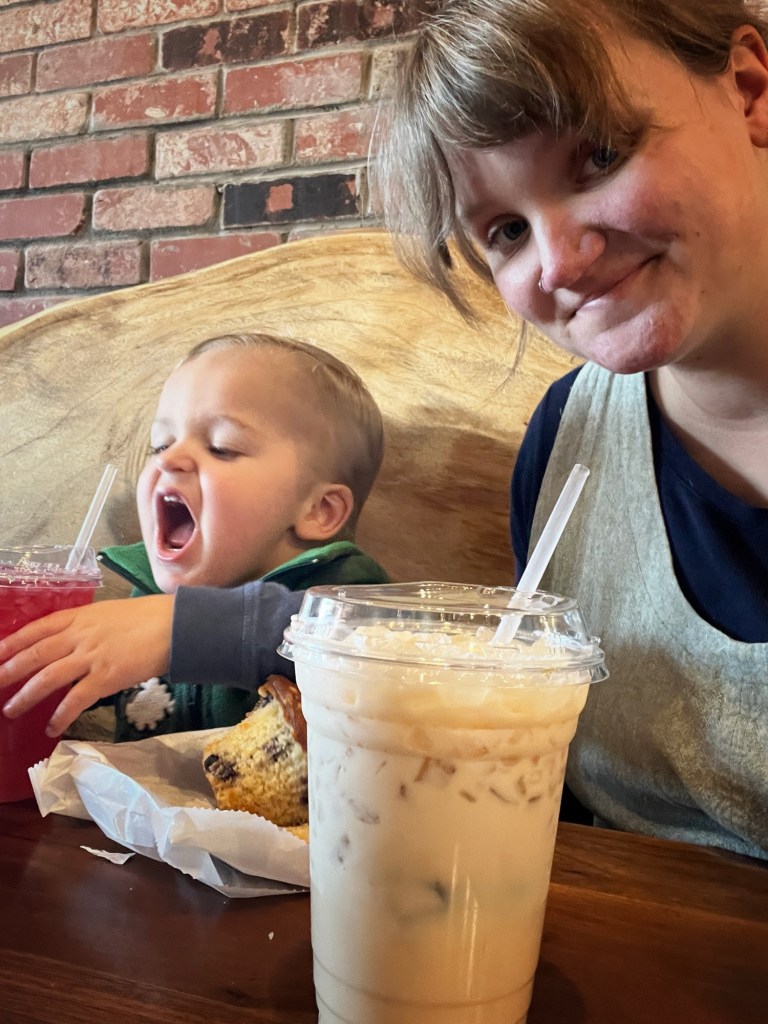
Maybe it’s because we’re drawing so close to having our second baby join us, but Michael seems to have grown up in leaps the past few weeks. He got a haircut, and we stopped to have a coffee date afterwards. He looks so much bigger and older. It makes my heart ache in a bittersweet way.
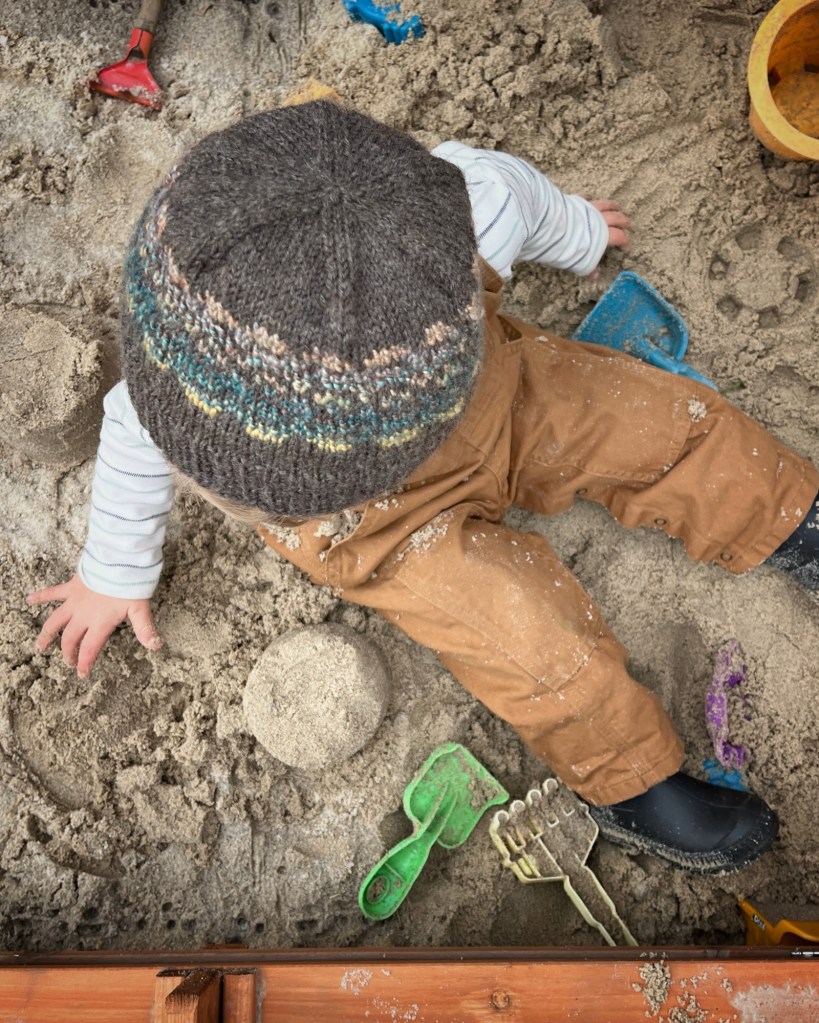
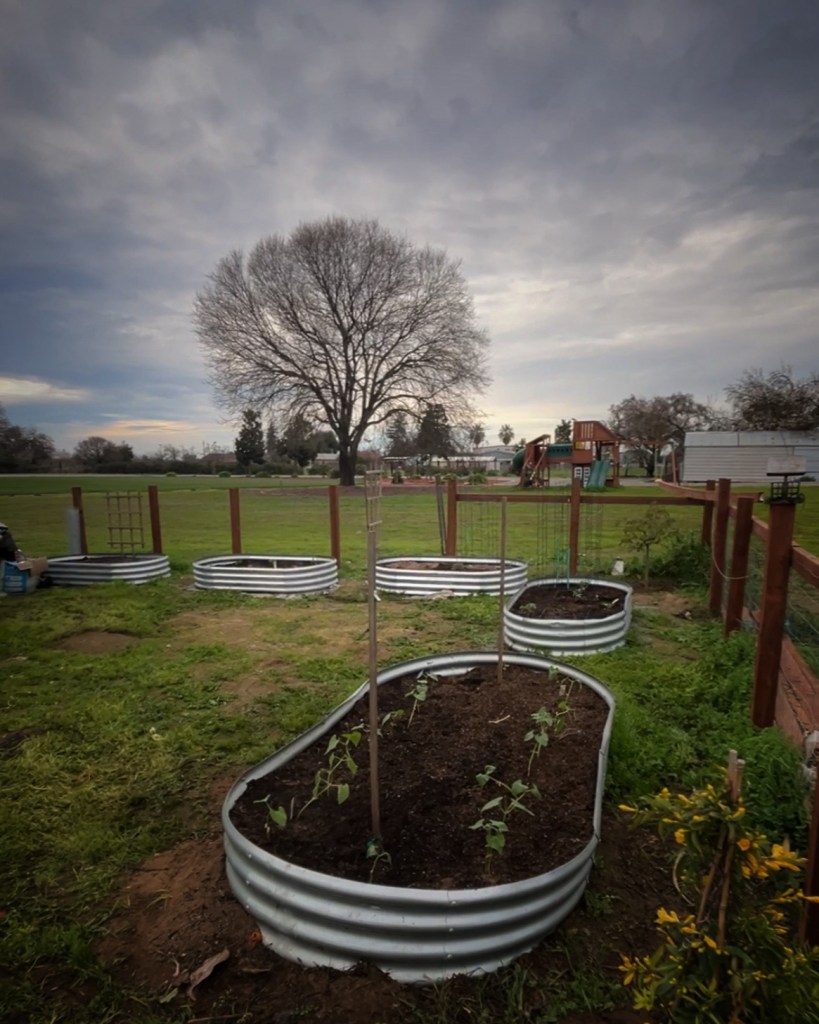
He’s such a sweet, spirited boy. He talks constantly, narrating what he’s doing or what’s going on around us. Being outside, as always, is his ultimate favorite thing. He sings quite a lot, and loves his harmonica (which I conveniently hide from time to time). He always wants to help, with whatever we’re doing: so often we load the dishwasher or sweep or make the bed together. His excitement for things I take for granted never fails to humble me.

I’m nearly 38 weeks pregnant now, and I’m feeling a slow shift in my body and mind as we draw closer to the end. Nesting has moved from cleaning and house and garden projects to more internal work: mainly handicrafts and quiet time — as much as can be expected with a toddler — and as many naps as I can manage.

We’ve been spending afternoons coloring together, or making cookies, or walking around the garden. He’s developed a new love of daffodils after all mine burst into bloom, and asks me to draw them whenever we have the crayons out. I do my best.

As for handicrafts, I finally finished the crewel work project I’ve been working on for over a year. I love the way it turned out: embroidery projects aren’t my main passion, but I do love having one to pull out when the fancy strikes. I started another: my grandmother got me an embroidery kit for my birthday from Avlea Embroidery. It’s my first time doing counted thread work, which is harder than I expected. I’m still enjoying the process and look forward to having a beautiful table linen when it’s finished.

I also completed a knitting project: a purple kitty for a dear little girl at our church.

I feel like many of my current projects are a race against the clock: how much can I finish before birth? Do I have a day to finish this sewing project, or a few weeks? There’s no way to tell. I feel suspended in a strange, liminal state: all plans have the shadow of the unknown over them. It’s beginning to feel “real” (especially when you start getting groceries that expire after your due date).

My due date is only a few days before the beginning of Lent, so God willing, I will be rejoining the church services right before Pascha (or a little before). I will miss the communal aspect of Lent where all of us undertake the sober task of focusing on prayer, fasting, and almsgiving.

As we on the Julian calendar approach Lent, I’m reminded that this will be a strange Lenten season for me: the Church sets aside 40 days of healing for mothers postpartum where they are excused from all services. These 40 days aren’t mandatory, but strongly encouraged. In a culture that idolizes the “bounce back” of mothers’ bodies and minds, I appreciate this tradition that prioritizes healing and recognizes the sacredness of labor, delivery, and postpartum.

But even in this time set aside for rest and healing, I will be undertaking the Lenten journey. My fasting will look different: prioritizing my nourishment and rest as I heal from labor and delivery. My almsgiving will look different: giving continually from myself as I sustain a baby with my body. My prayer will look different: instead of attending church services, I’ll be attending to a newborn at all hours as well as my toddler.

Pray for me, dear friends, as I watch and wait over the next few weeks, and as we enter into this new season: liturgically, and also in life.

hallowed time

Well, somehow, I’m 36 weeks pregnant.

It doesn’t quite feel real. I’ve been struggling to keep my head above water with Jake being in busy season, toddler parenting with all its milestones and meltdowns, regular homestead chores, and the aches and pains of third trimester. So nothing is prepared: I’m hoping the nesting instinct will kick in soon so I have the energy to gather all the needed supplies. If you have any recommendations for preparation for a second child — what worked or what didn’t for your family — I’d love to hear them.
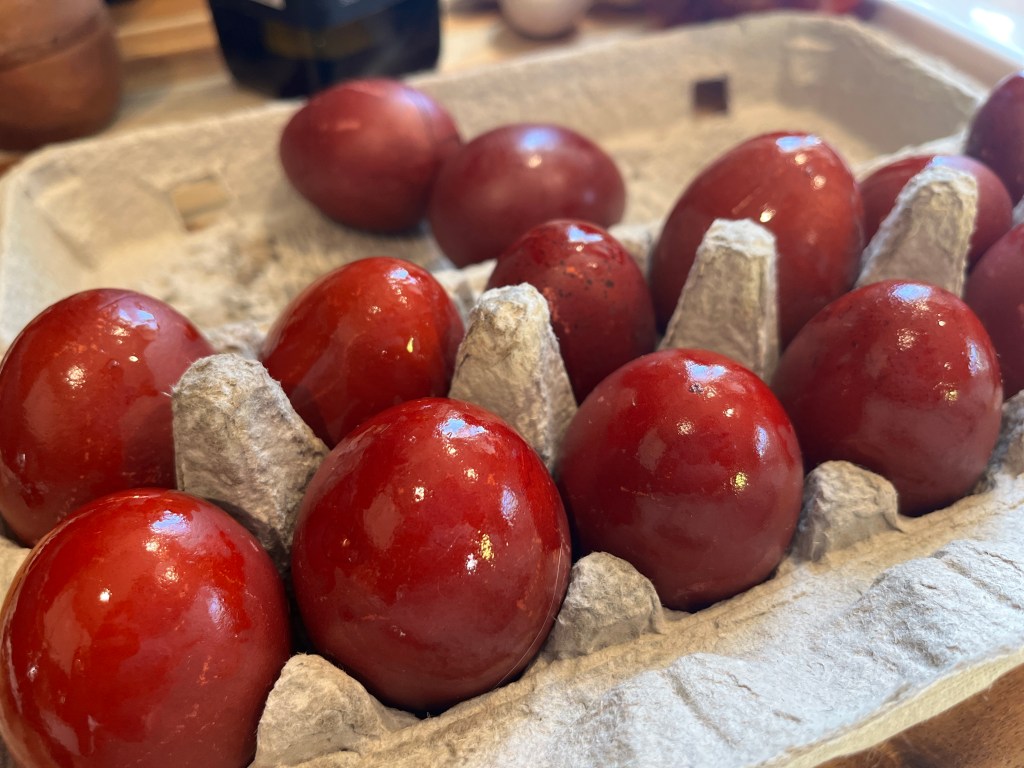
Even though I’m partially in denial over the imminent arrival of our little girl, I still am painfully aware that my days of constant one-on-one time with Michael are drawing to a close. I try to cherish the sweet moments: quilting together, making cookies, snuggling and watching Little Bear; reading truck books over and over.

Treasures from his walk with grandpa

I love our little ritual of morning prayer, and how excited he gets to hold his little wooden cross, extinguish the candles, and kiss the icons. I love our adventures to Costco to look at forklifts, and our morning snuggles in bed. I know many of these things will stay the same, and many will change. I still hold on to each of these little moments, and they help hold me through the more difficult moments.

Recently, Michael had a pretty intense meltdown when he couldn’t have one of the toy trucks at the thrift store. The thing is, Michael still struggles with pronouncing his “t”s, and often replaces them with “f”s instead. So to all the scandalized old ladies at the thrift store with me, it appeared as though I was hauling a screaming toddler out of the store as he yelled “F*CK” at the top of his lungs.

That was an interesting day. Also, a great lesson in humility and not caring about the opinions of others. Parenthood sure is sanctifying.

As a brief aside, I will not make a habit of writing about my children’s struggles: there are many things that I believe shouldn’t be used as content, even in a simple blog about a homesteading family. But this story is a little different — I think it’s one he’d want preserved so we could laugh at it when he’s older. So I’m comfortable sharing it with all of you, too.

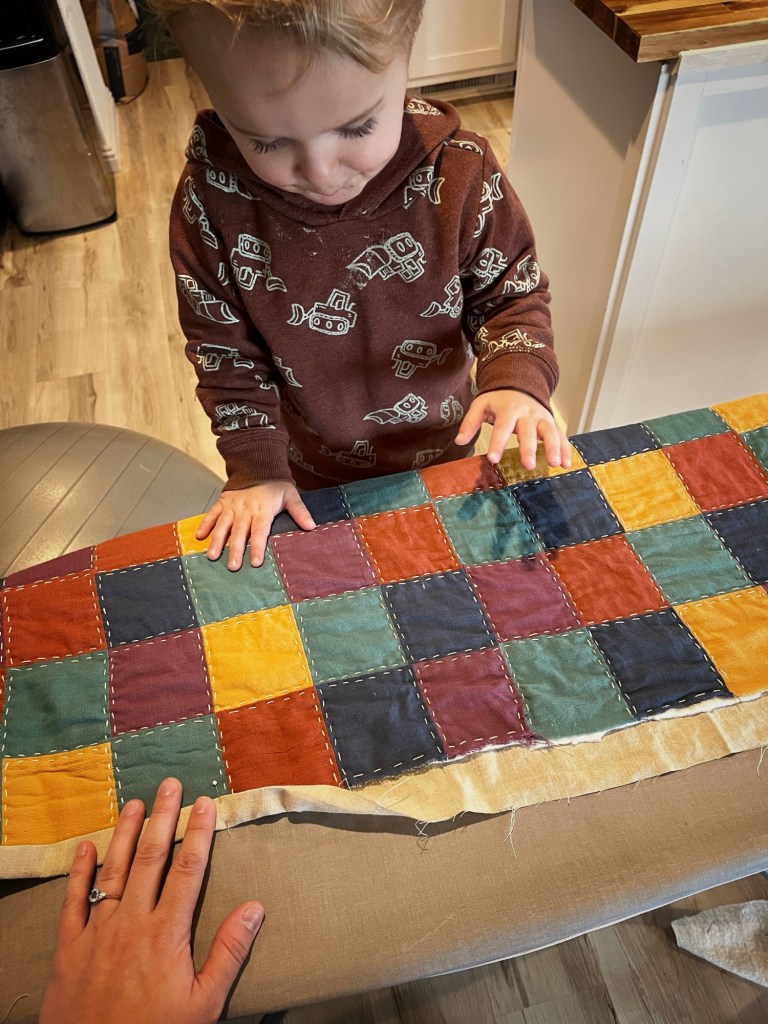
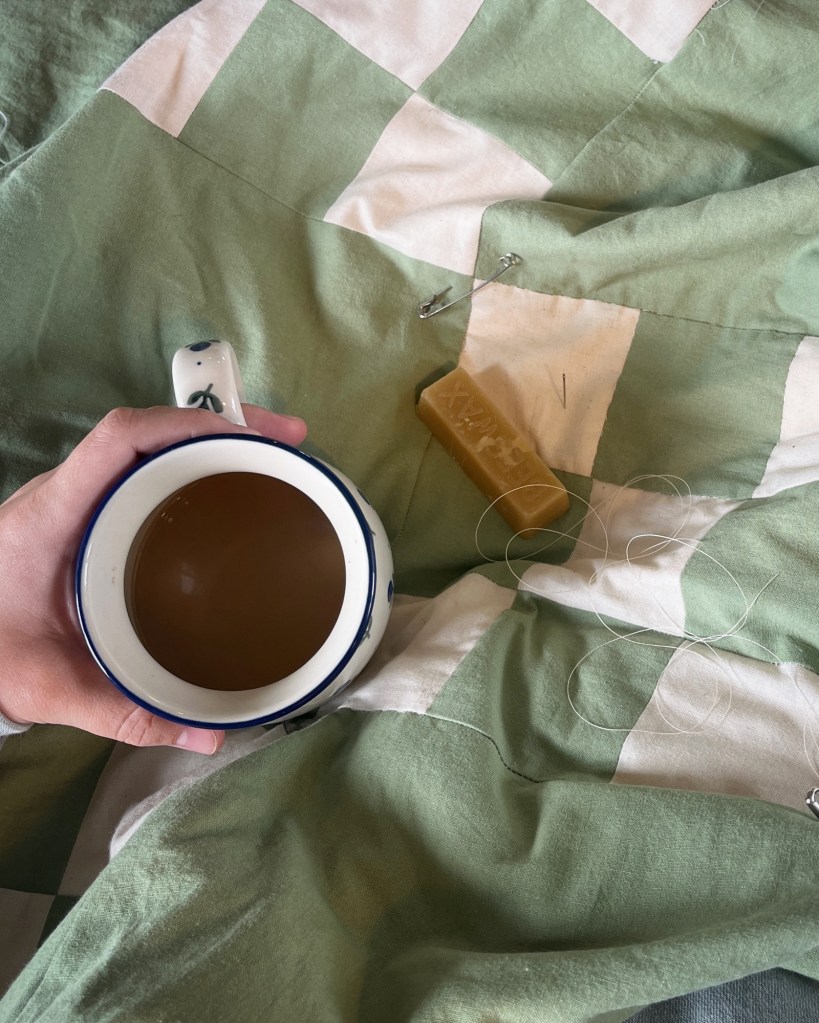
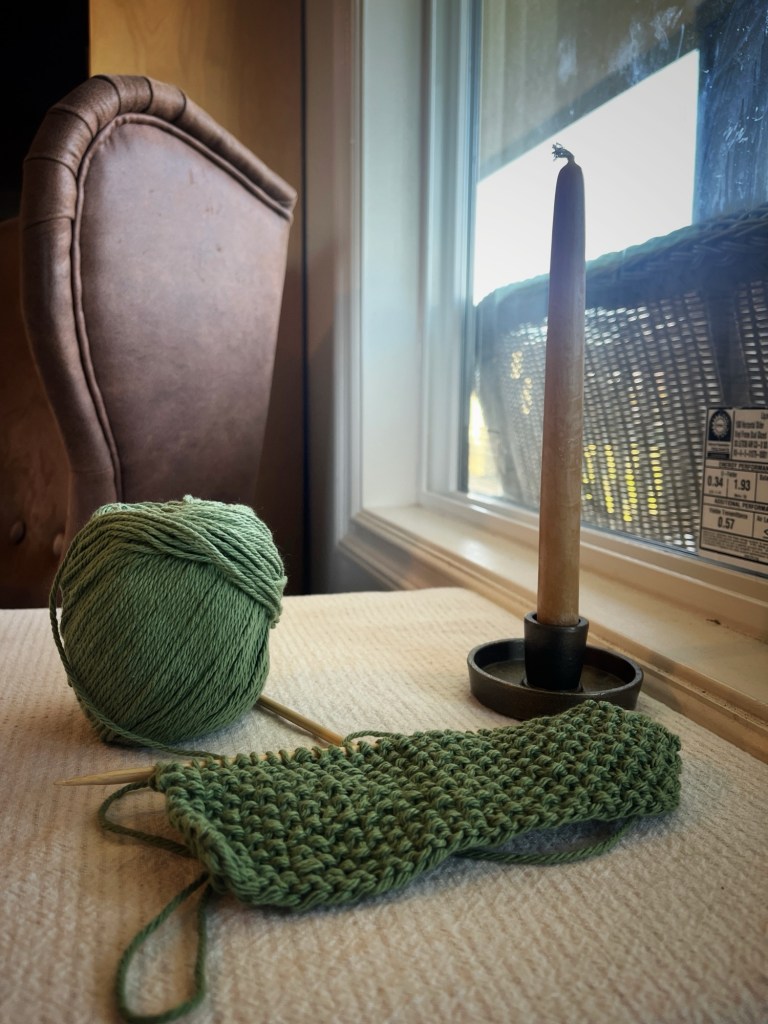
Together, Michael and I finished his quilt at last! He loves it — he’s slept with it once and drags it around the house to “hide” under. I’m pretty proud of it, even though the back looks a bit wonky. Now I’m working on hand-quilting my Irish Chain quilt. It’s very slow going — I’ll be surprised if I finish it before next winter — but I’m greatly enjoying the process.

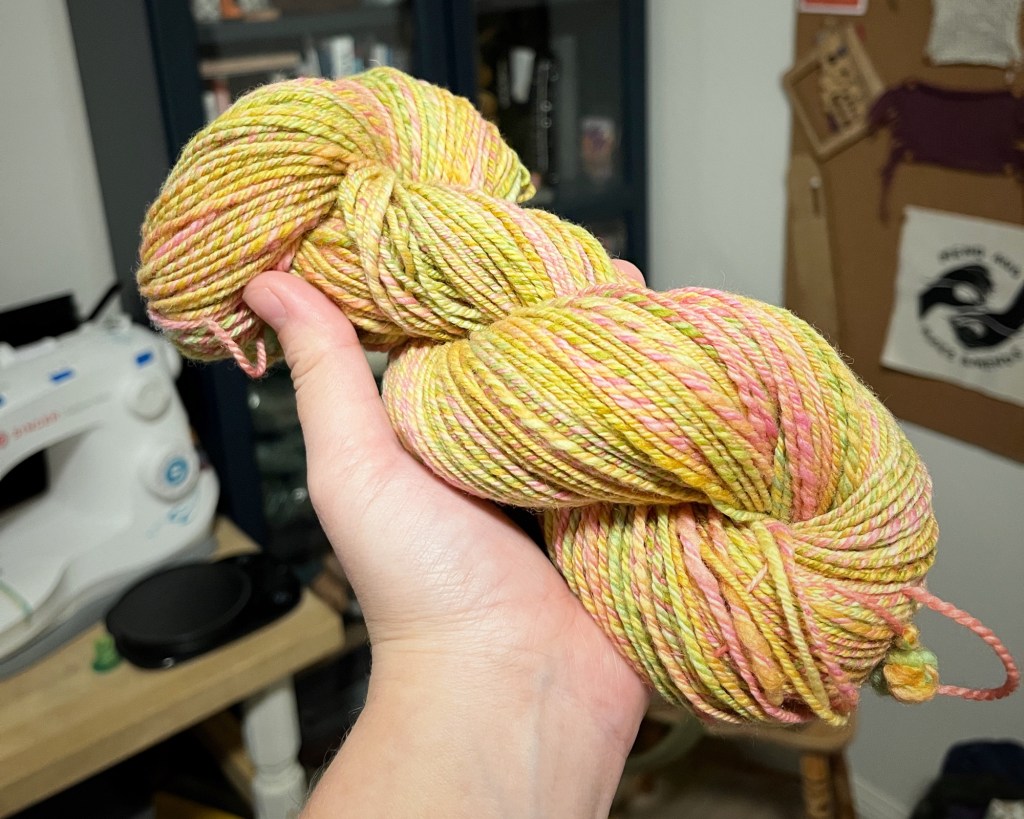
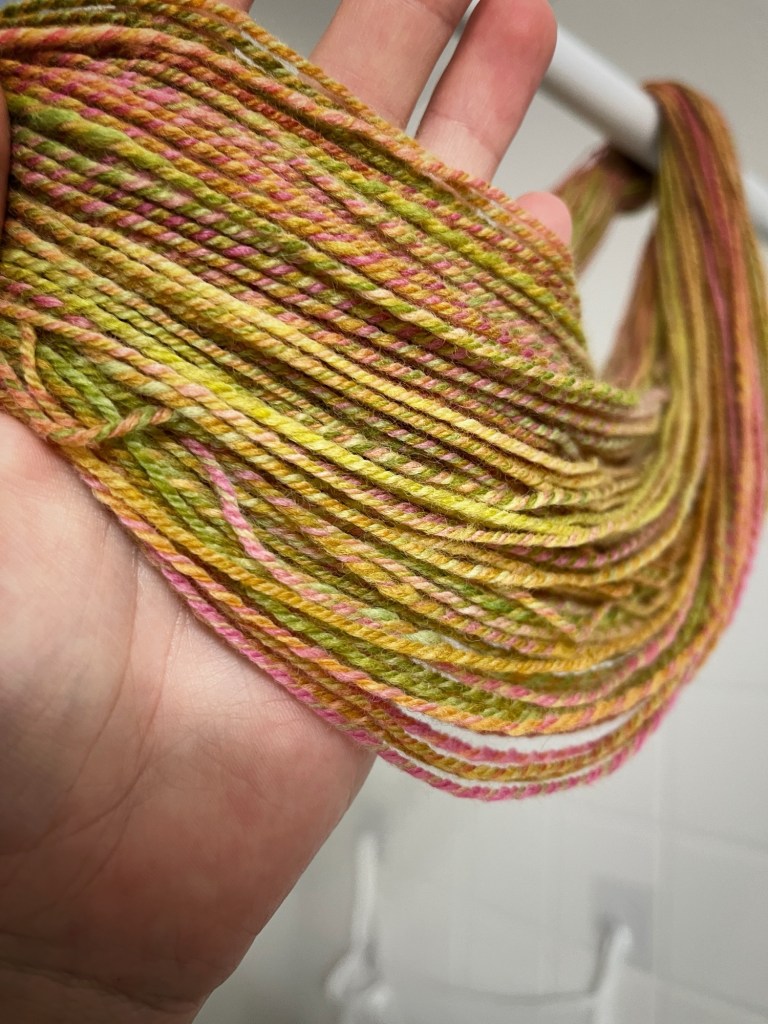
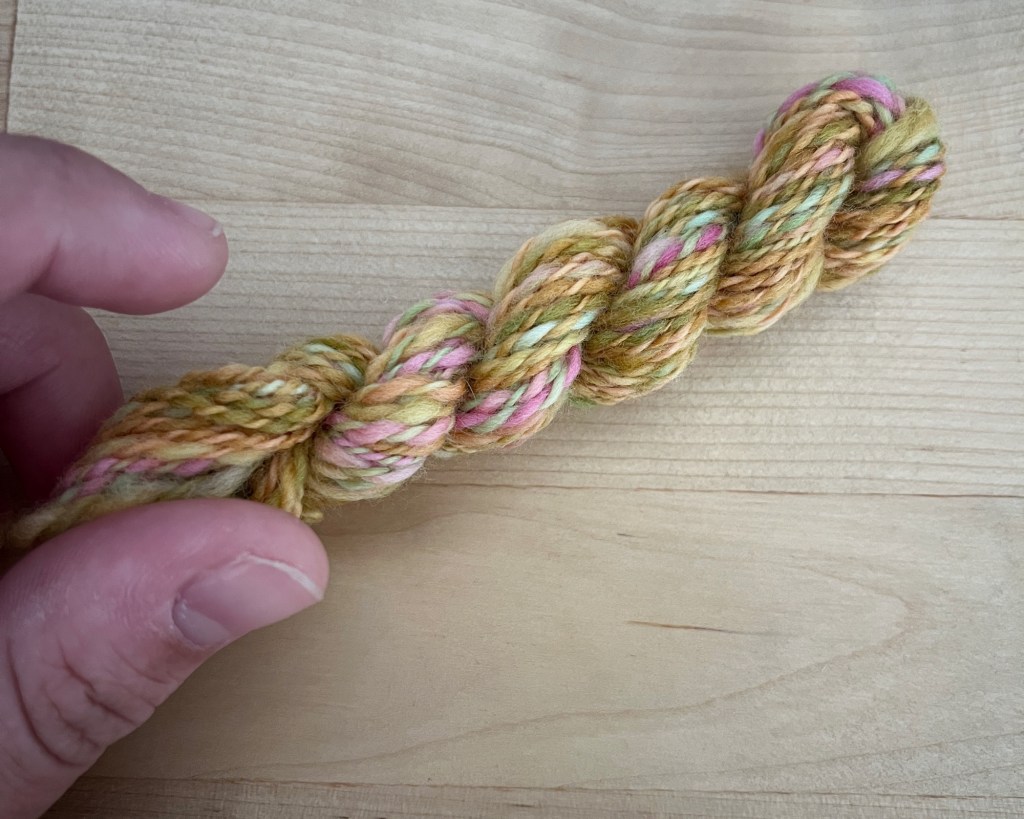
Knowing my time for making will be very limited in the upcoming months, I’ve been intentionally prioritizing spinning, quilting, and sewing over knitting in the evenings . I can knit with a newborn in my arms — it’s a bit harder to do any other craft. I finished my 3-ply spin of this Rambouillet, Knee High to a Grasshopper, dyed by Nest Fiber. It’s hard to capture the color properly because it looks so different in different light. It turned out beautifully: a DK weight, about 120 grams of yarn in all. With the remnants of singles I had left over, I made this tiny 2 ply skein for fun.

Now I’m spinning a simple 2-ply from some fiber I’ve been saving: Quiet Contrast, 100% Polwarth dyed by Three Waters Farms. I love the colors so much. I’m hoping it’ll be a nice fingering/sock weight.

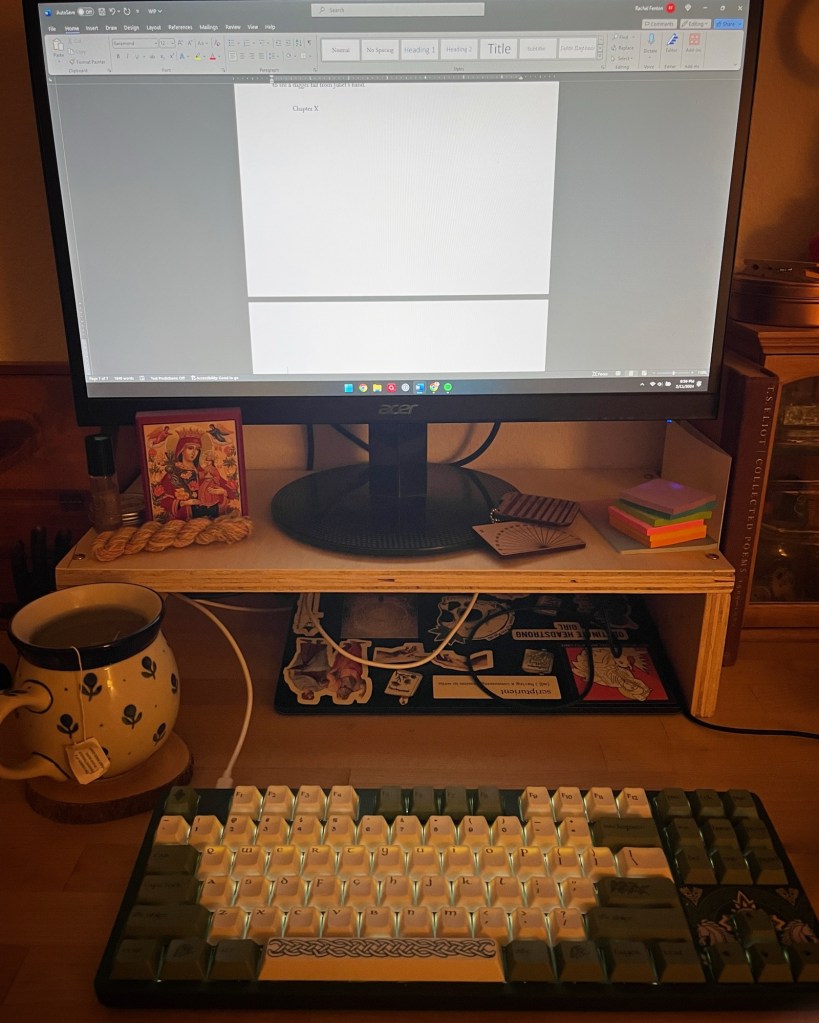
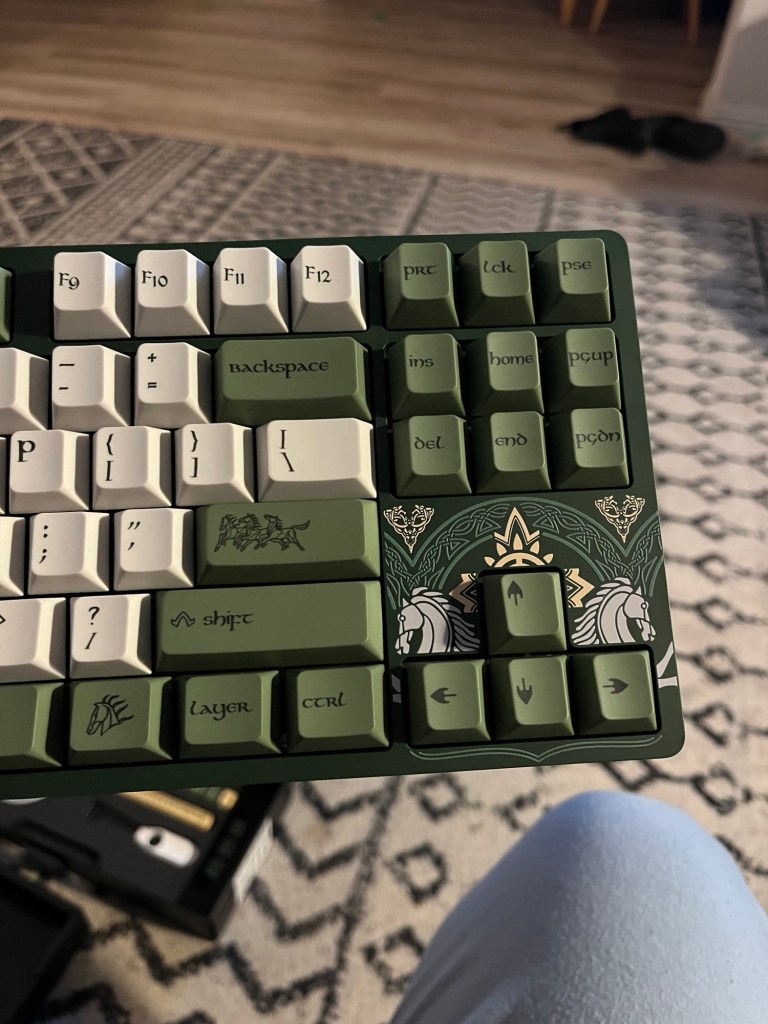
My birthday was earlier this month and my husband got me the most spectacular present: a Lord of the Rings keyboard, fashioned after the style of Rohan. It’s the best keyboard I’ve ever had, and I adore it.

Not only is it beautiful, but it’s an excellent keyboard. As a writer, I’m a bit particular when it comes to my tools: I have a favorite type of pen (nothing beats the Pilot G-2 0.38), and the way a keyboard types can make a big difference in my enjoyment of the writing experience. Usually, I write my blog posts on my phone and jot down snippets and story ideas in my Notes app. But now with such a beautiful keyboard, I’ve started writing at my desk again. It’s helped me set aside time to write, like I set aside time to craft.

This concept of setting aside time by prioritizing and marking something as special or precious has been on my mind a lot this month. It reminds me of the church calendar. Each day has some way it’s set aside, whether to commemorate a saint, or an event in the life of our Lord.

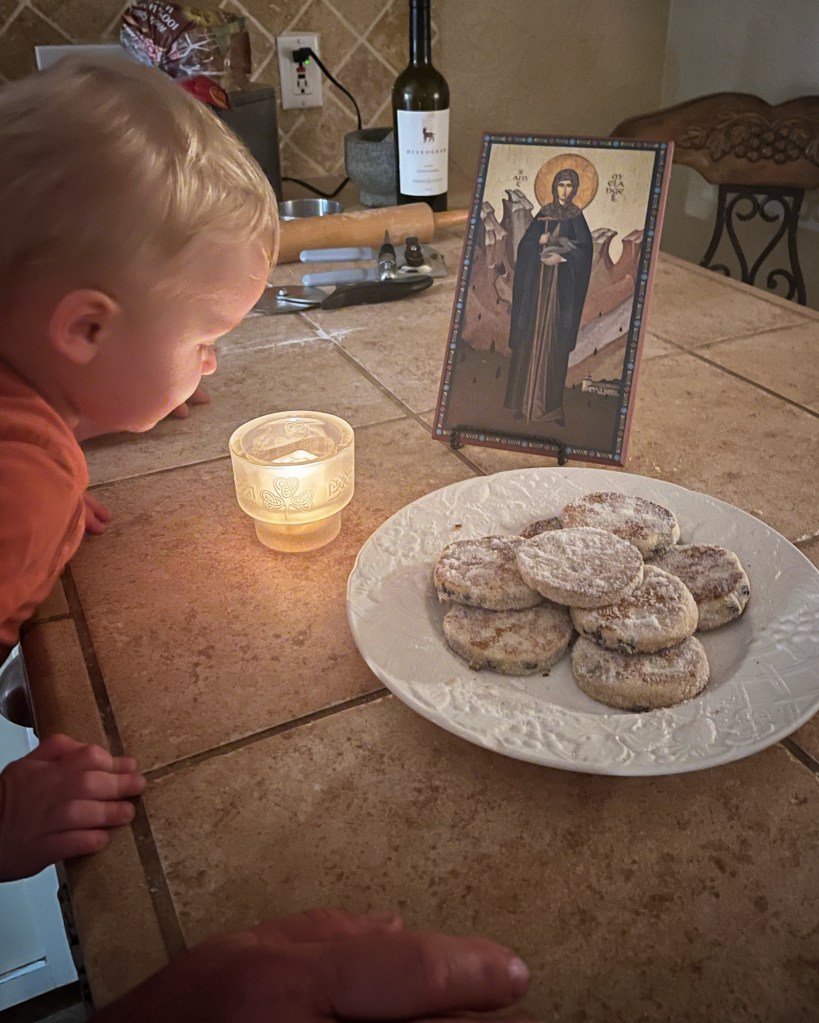
Recently, we celebrated the feast day of St. Melangell (pronounced Mel-LAN-geth). St Melangell is one of the saints very dear to us. This Western Orthodox parish claims her as their patron and has such a lovely retelling of her story, if you want to know more about her. Animals fled to her for refuge (specifically rabbits/hares), and a king was so touched by her dedication and piety he gave her land to live on, which eventually became a monastic community. She is known for making a sanctuary for animals and people, which is why she is so important to our family: our hope for our little homestead is for it to be a sanctuary to all who come.

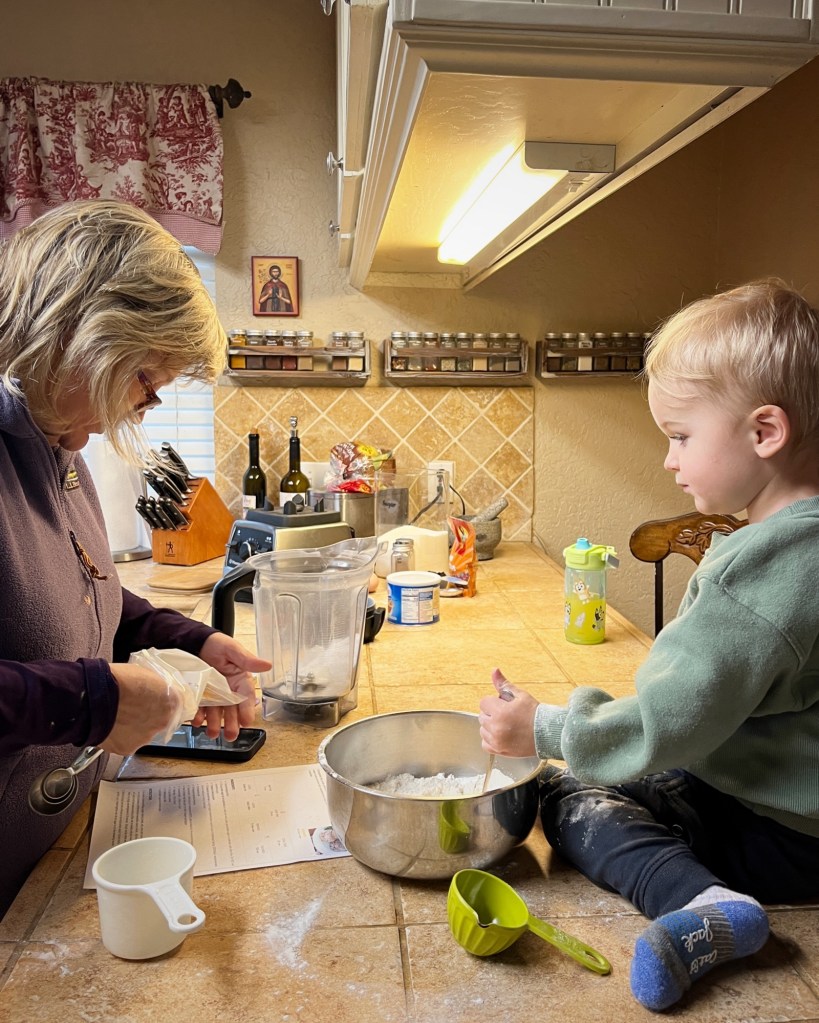
It would’ve been easier to just “remember” her on her feast day, but we wanted to set aside this time in a more intentional way. She’s a Welsh saint, so we made Welsh cakes to celebrate. Michael loved the entire process, and was most excited to roll out (and eat) the biscuit dough.

It was a lovely (and delicious!) way to set aside time to remember this holy woman and all the ways we wish to emulate her.

Holy also means “set apart”. To make something holy is to set it apart from the mundane, to offer it up. This is one of the reasons I love integrating the church calendar into daily life, not just Sundays. When we orient meals, activities, and conversations around saints and events in the life of Christ, we are setting apart our days — we are hallowing our time.

But we all have work we must do: much of which might feel like a distraction from prayer. Jobs and obligations might not allow for baking Welsh cakes. A toddler meltdown might destroy our vision for a fun activity. Illness, physical or mental, might interfere with the best of plans and intentions. And there are always things that demand to be done: meetings to attend, meals to cook, poopy diapers to change, tests to study for, emails to write, messes to clean, job obligations to complete; meltdowns to diffuse.
But we still have the ability to make our time holy, in spite of all these things. We can still integrate the life of the church into our daily lives. It brings me back to the simple phrase of Saint Benedict: ora et labora, pray and work.

Even if we don’t have the ability to do something elaborate to integrate a specific feast day into our lives, we can still use prayer to sanctify the work we are doing. A simple Lord have mercy before a meeting with a difficult coworker, or on a tiring commute. Meeting a tired child where they’re at by relinquishing our desire for picture-perfect activities. Talking about an important event in the life of Christ during bath time or dinner time. Using lunch break for a quick akathist or rosary. Doing the dishes because you love the people who will use them next (shamelessly paraphrasing St Teresa of Calcutta).

More and more often, I’m convicted by this: both what we make time for and what we make of our time, in the end, is what shapes and defines us. It’s so easy for me to tune out on my phone or rush through whatever work I have in front of me without thinking that this moment, too, could be sanctified with intention and thought. But I am increasingly aware of how finite our time is as I near my due date, as I watch my little boy grow, as I tend to my garden; as I say goodbye to loved ones.

May the Lord help me use what I’ve been given well.

alleluia

Alleluia, Christ is risen!

I feel like I’ve talked about Holy Week and Pascha without going into much detail, so I want to share the beauty of our traditions with you. We’ve just finished Lent and Holy Week and now we are celebrating Pascha! Pascha is the most important day of the liturgical year: it is the pinnacle of our faith.

Pascha is another word for Easter: it’s a transliteration of the Hebrew word for Passover: pesach. Orthodox Christians celebrate it on the Julian calendar instead of the Gregorian Calendar like Catholics and Protestants, which is why we’re celebrating this week instead of last week. (If you’re interested in the lingual history and more general information on calendars and traditions, here’s a good resource).

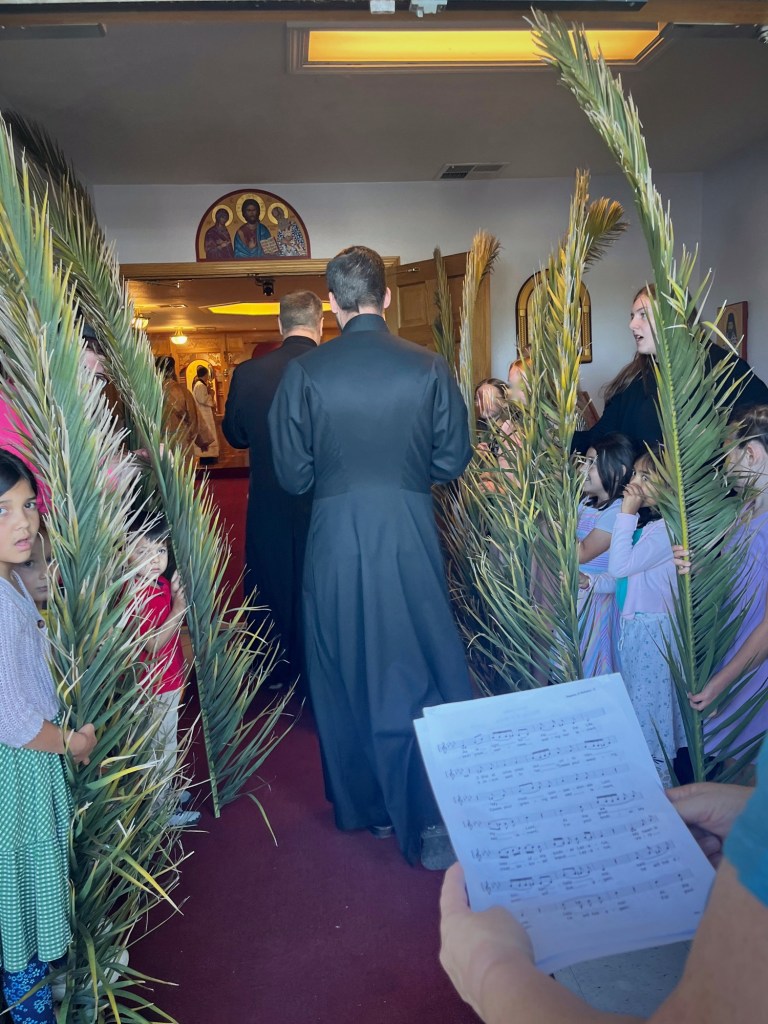
The entire liturgical year leads up to Holy Week and Pascha. Lent ends with Lazarus Saturday, and Holy Week begins with Palm Sunday, celebrating Jesus’s triumphal entry into Jerusalem. We remember that triumphal entry in our own church service, with children waving palm branches as hymns are sung.

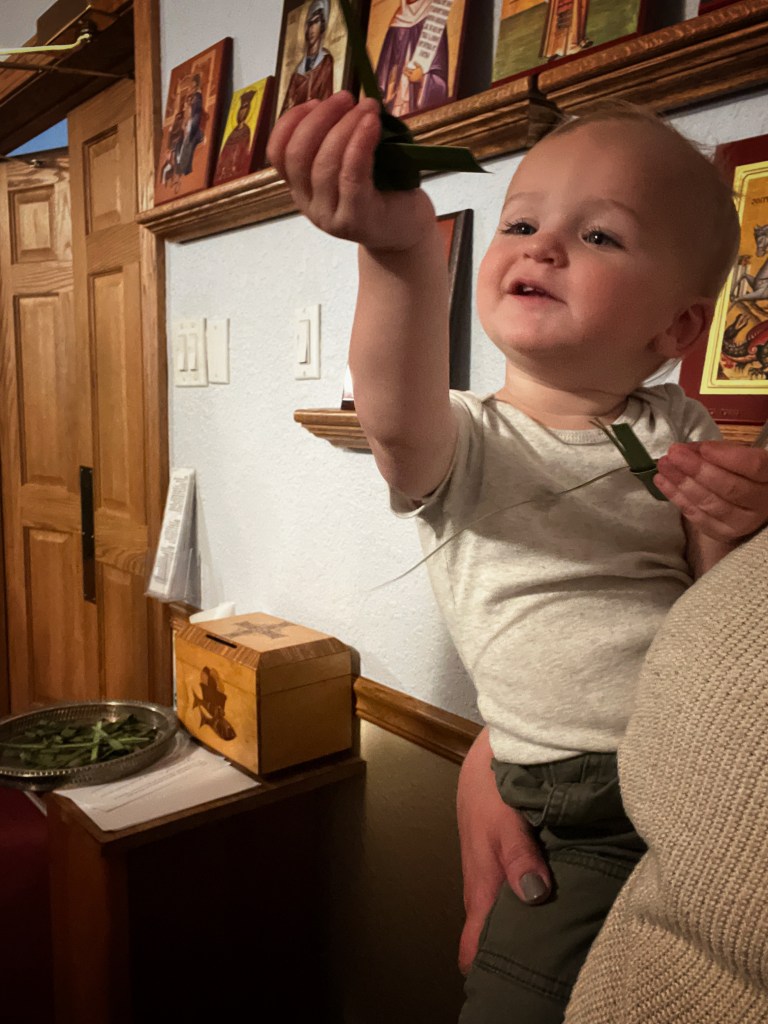
Michael having fun with his palms on Palm Sunday

There is a church service every day of Holy Week. The Holy Week services are so poignant and striking — every year I attend, I find myself pierced to the heart. Some day, I would love to write reflections for each day of Holy Week. However, this is not that day. For brevity’s sake, we’ll talk about Good Friday and Holy Saturday, leading to Pascha.

Flowers from the bier

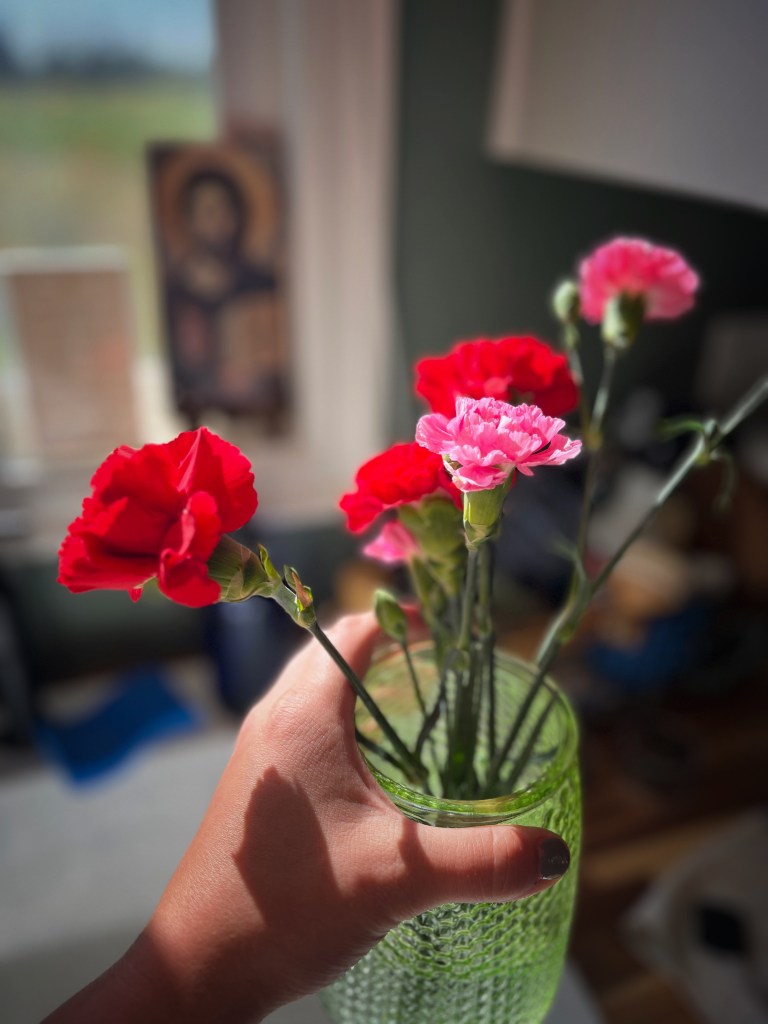
On Good Friday, (also known as Great and Holy Friday) we remember Christ’s crucifixion and sing lamentations, decorating the tomb with flowers.

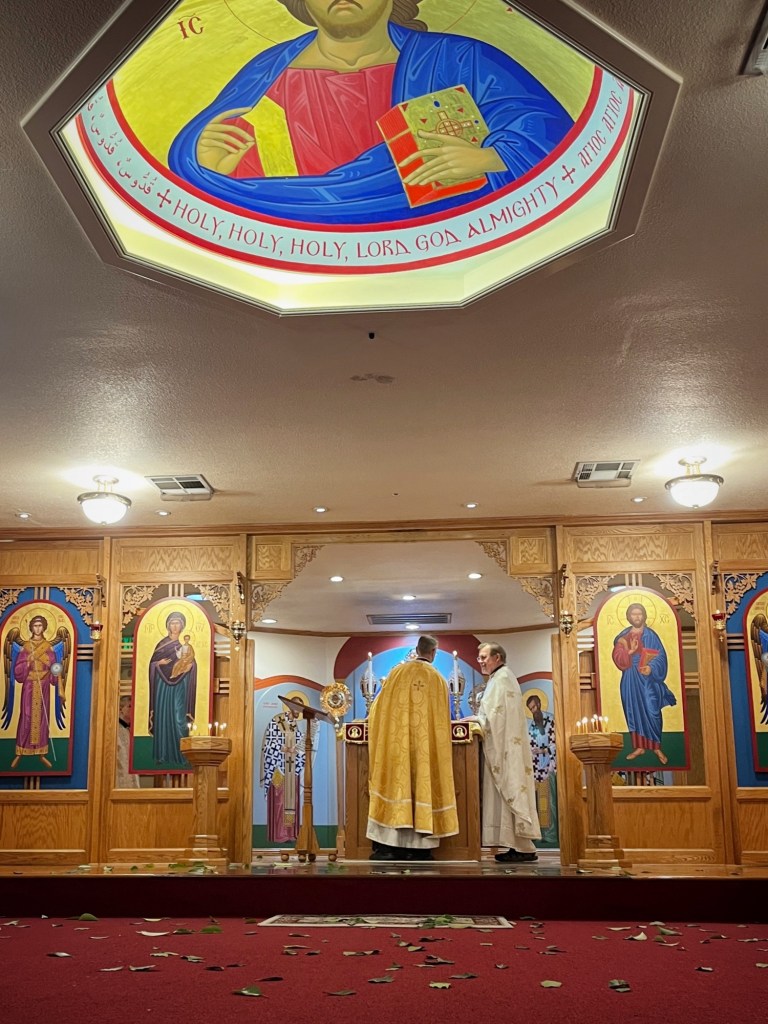
At Liturgy on Saturday morning, the priest throws bay leaves and rose petals around the church, signifying the earthquake that occurred when Christ descended into Hell. It’s a beautiful anticipation of Sunday — the lament of Friday has passed, and our grief turns to joy as Christ breaks the gates of Hell and raises up Adam and Eve and all the faithful.

Icon of the harrowing of Hell by Uncut Mountain Supply

We come back to church that evening, around 10 pm. The lights are dim, and the choir sings the Odes of Holy Saturday, one of my favorite pieces of music in the Eastern Orthodox tradition.

Today a tomb holds Him who holds the creation in the hollow of His hand; a stone covers Him who covered the heavens with glory. Life sleeps and hell trembles, and Adam is set free from his bonds. Glory to Thy dispensation, whereby Thou hast accomplished all things, granting us an eternal Sabbath, Thy most holy Resurrection from the dead.

Hymns of the Ainoi

In the Western Orthodox tradition, my favorite piece of church music is sung at the Vigil, called the Exsultet. I’ve linked a full version here but here’s a snippet of my favorite lines:

The power of this holy night
dispels all evil, washes guilt away,
restores lost innocence, brings mourners joy;
it casts out hatred, brings us peace, and humbles earthly 
pride. 

Night truly blessed when heaven is wedded to earth
and man is reconciled with God!
Therefore, heavenly Father, in the joy of this night,
receive our evening sacrifice of praise,
your Church’s solemn offering.

Exsultet

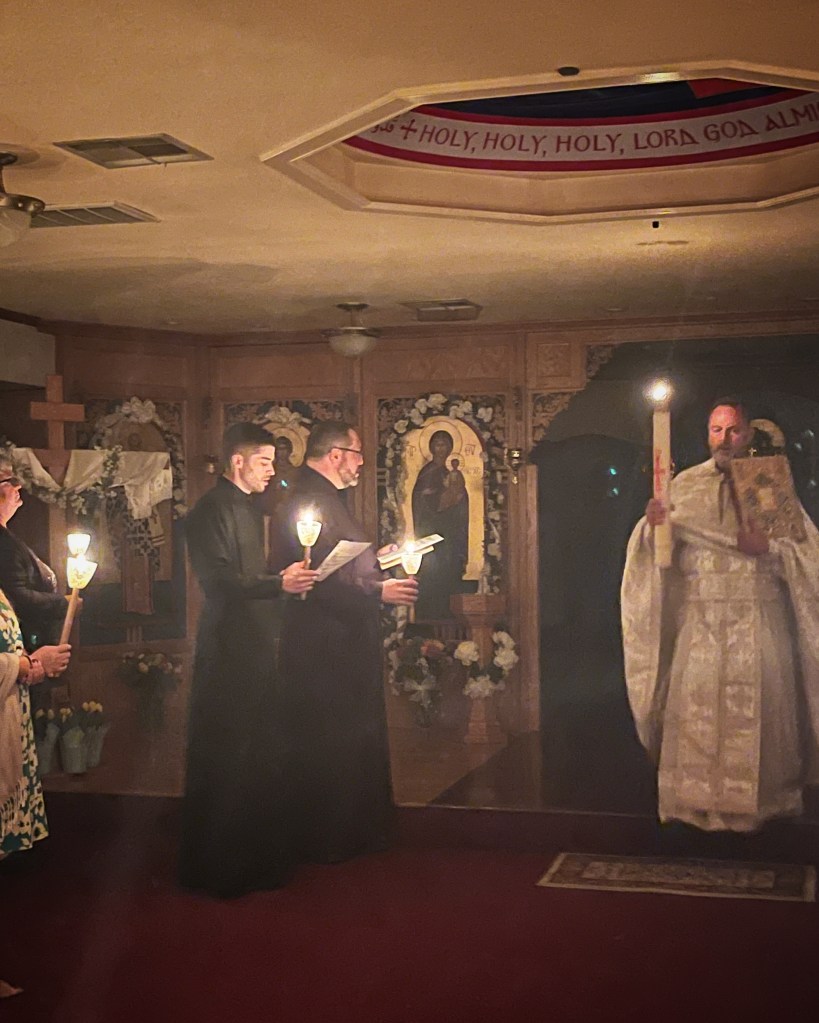
Then the lights are fully turned off, and the congregation prays in darkness until the priest brings forth a single lit candle from the altar, singing: “Come, receive the light from the light that is never overtaken by night.”

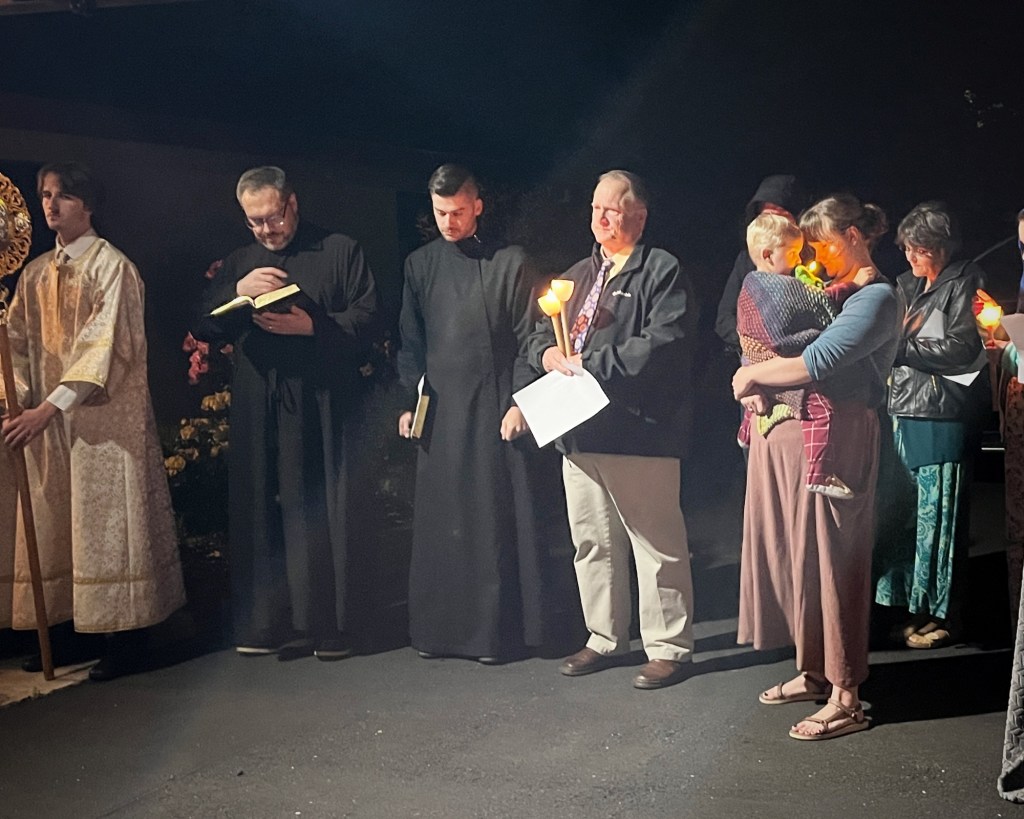
We all light our candles from this single flame, and process singing outdoors and around the church, finally stopping at the doors. Scripture is read, prayers are said, and then finally the priest approaches the doors.

The priest bangs on the doors of the church, reciting the words of Psalm 24: Open your gates you princes, and be lifted you eternal gates, and the King of Glory shall enter.

From inside the church, behind the closed doors, a voice replies: Who is this King of Glory?

The priest responds: The Lord strong and mighty, the Lord mighty in battle.

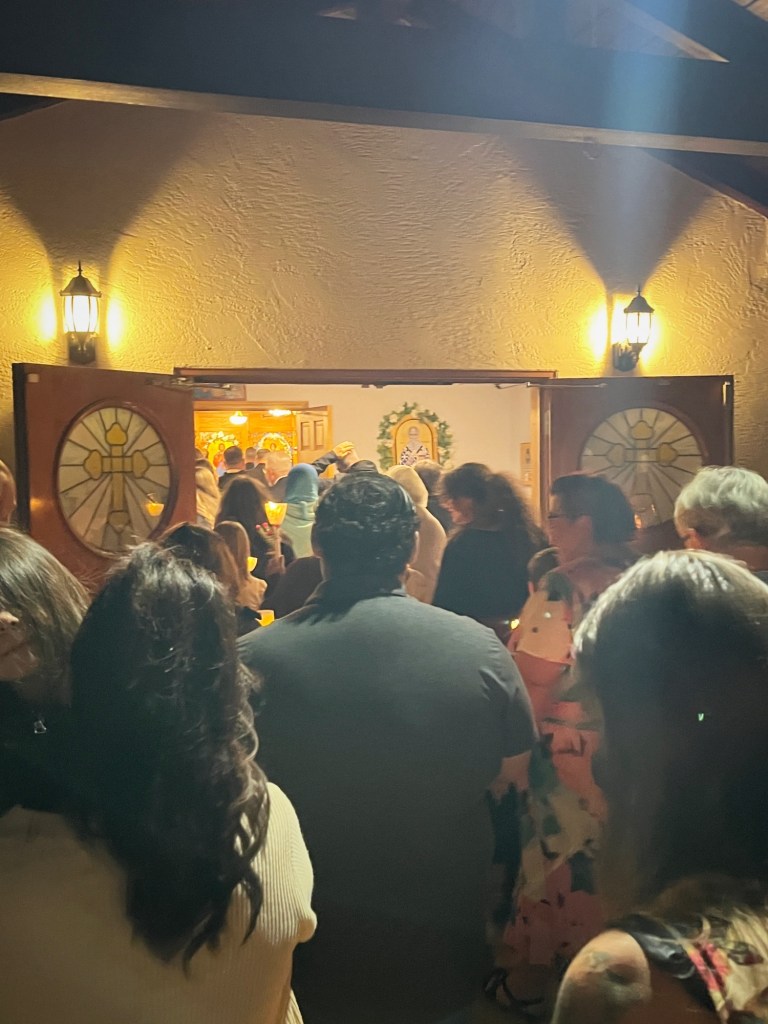
This is repeated three times, and the third time, the priest replies “The Lord of might. He is the King of Glory!”. The doors spring open, the lights blaze to life, and the choir sings Christ is risen from the dead, trampling down death by death and to those in the tomb bestowing life! as the congregation processes back into the brilliantly lit church. We then have morning prayer (Orthros) and Liturgy to celebrate Pascha!

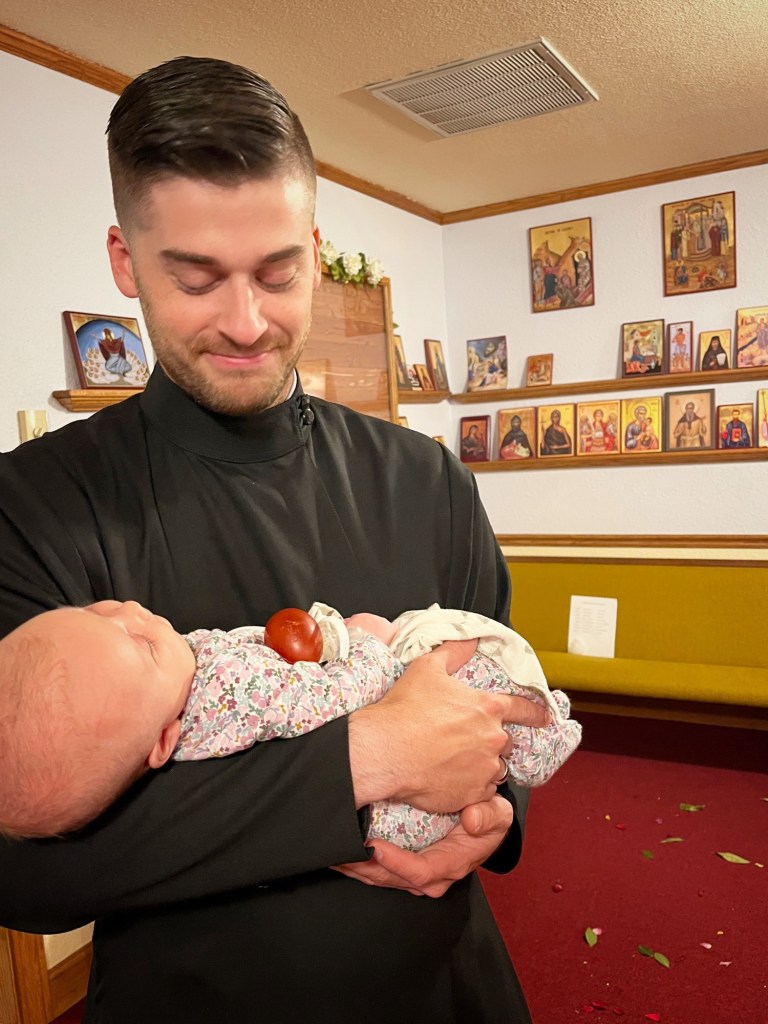
The Paschal Homily of St John Chrysostom is read: I’ve linked the full text here for anyone who’s interested. It’s one of the most profound homilies I’ve ever heard. If you haven’t read it, I strongly encourage you to. For me this year, much of the Liturgy was spent rocking a sleeping baby (given it was 1 am at the time) but I could listen to it being read in the narthex.

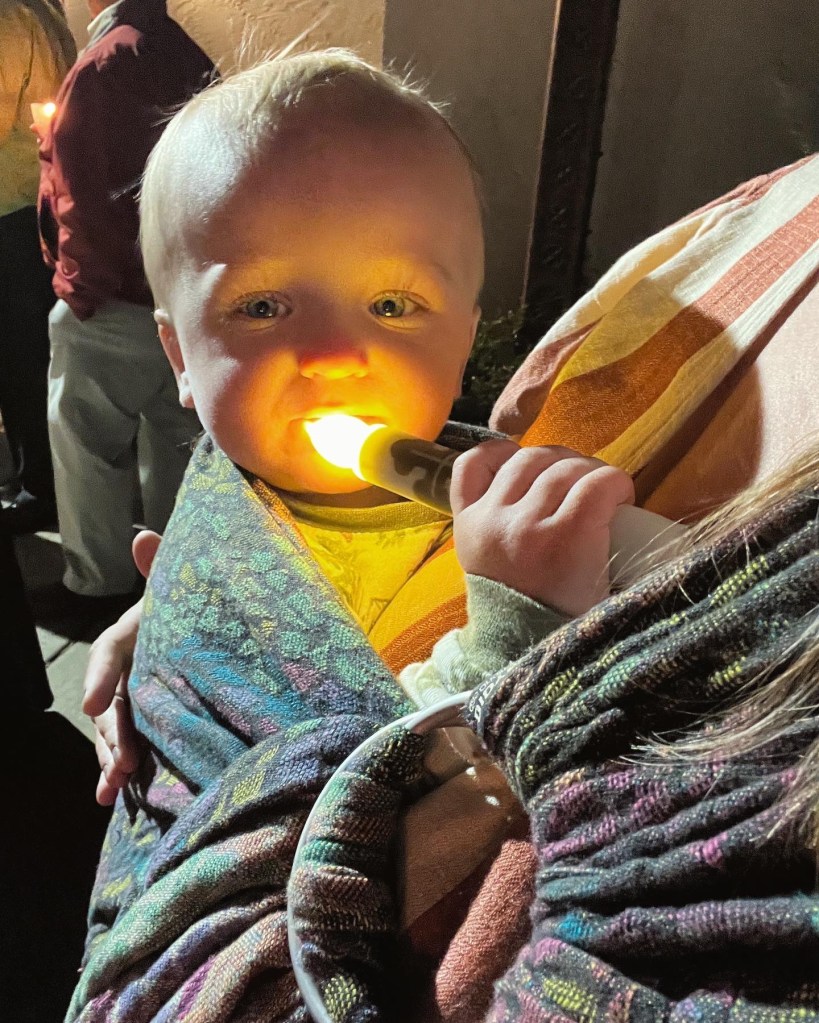
Snoozing baby during Liturgy

People bring Pascha baskets to the Vigil, all stuffed to the brim with things we’ve been abstaining from during the Lenten fast: cheeses and meats and eggs and alcohol, among other treats. The priest blesses them at the end of the service.

A peek at our Pascha basket this year

And then, after the service, we feast! The jubilation and joy is so infectious: everyone brings a Pascha treat to share, whether it’s bacon or quiche or donuts or cheesecake or sausage, and we all feast together at two o’clock in the morning. Sometimes Pascha feasts can go past four or five in the morning! Jake and Michael and I made it home and in bed by three am this year, though.

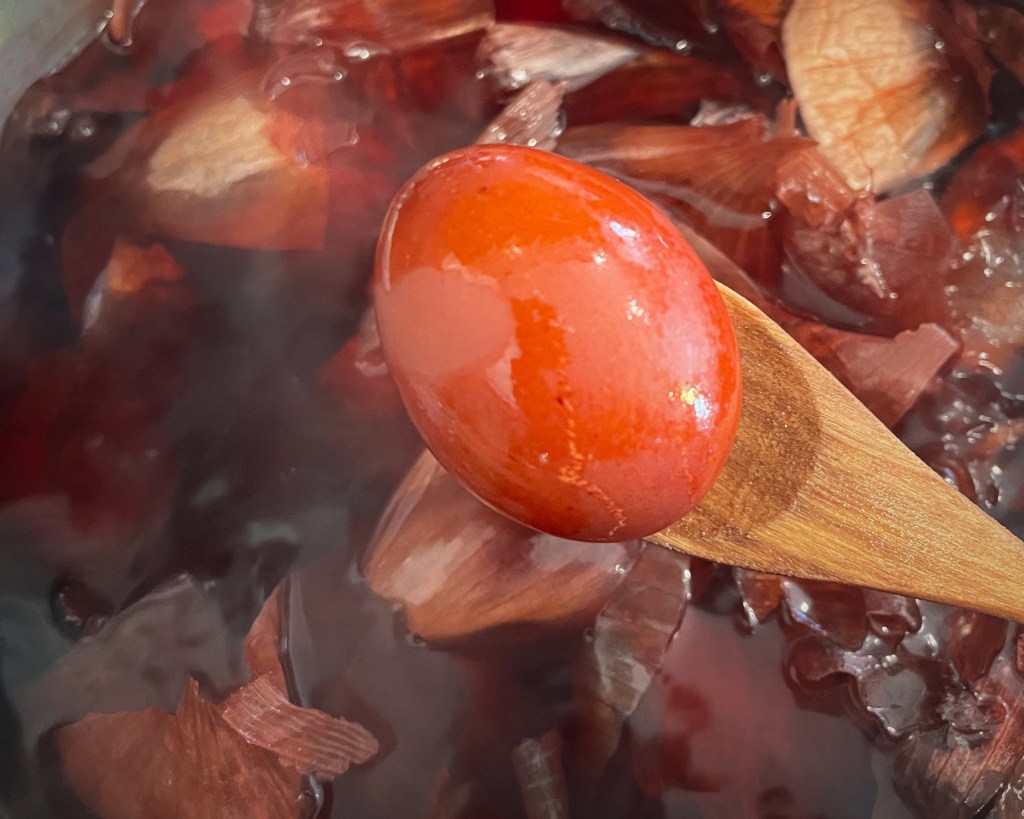
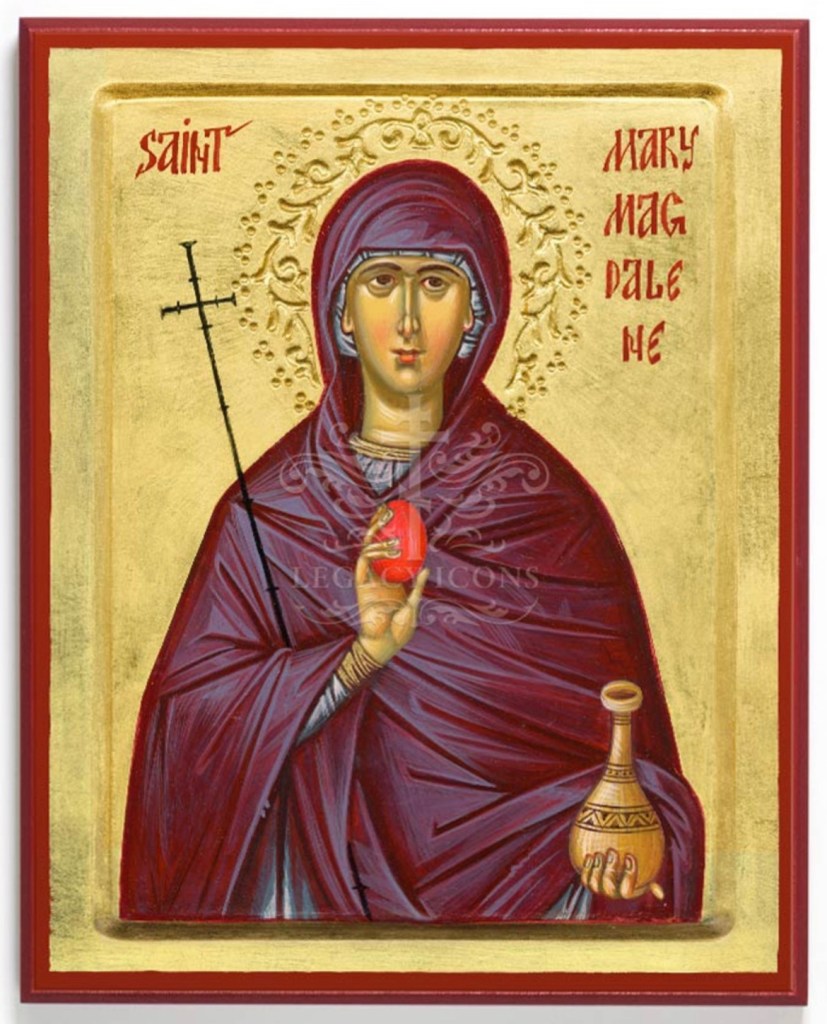
Pascha traditions vary depending on the church, but our family makes Pascha cheese (think a spreadable, delectable cheesecake like substance eaten with fruit or on bread) and dyes red eggs. Traditionally, the eggs are dyed naturally with yellow onion skins. This year I started dying them a little late, so I added some natural food dye to my pot of onion skins to help things along. (Also, as a tip: brown eggs make a deeper, more of radiant red, and if you polish them with a little olive oil once they’re cool, they shine brilliantly!)

There are many different origin stories for the tradition of red eggs at Pascha, some of which can be found here. My favorite is the one that attributes it to Mary Magdalene:

According to tradition, after the Ascension of Jesus, Mary went to the Emperor of Rome and greeted him with “Christ has risen,” whereupon he pointed to an egg on his table and stated, “Christ has no more risen than that egg is red.” After making this statement it is said the egg immediately turned blood red.

Many icons of St Mary Magdalene have her holding a red egg as a symbol of the resurrection for this reason.

A Byzantine icon from Legacy Icons

And now we head to Agape Vespers: a short church service before our parish BBQ!

It’s an exhausting, beautiful, whirlwind, poignant, joyous week, and now we celebrate! As St John Chrysostom says in his Paschal homily:

O Death, where is your sting? O Hell, where is your victory? Christ is risen, and you are overthrown. Christ is risen, and the demons are fallen. Christ is risen, and the angels rejoice. Christ is risen, and life reigns. Christ is risen, and not one dead remains in the grave. For Christ, being risen from the dead, is become the first fruits of those who have fallen asleep. To Him be glory and dominion unto ages of ages. Amen.

Blessed Pascha, dear friends! Christ is risen! Alleluia!

lent & motherhood

For us Orthodox Christians, it’s been the first week of Lent (also known as Clean Week). For my Catholic and Protestant friends, Lent began the 22nd of February with Ash Wednesday.

It’s easy to misunderstand Lent as medieval legalism, or punishment, or self-flagellation. In reality, it’s none of these things. It’s medicine for our sick souls and bodies. During Lent, we focus on prayer, fasting, and almsgiving to become more like Christ as we prepare for His Passion and Resurrection.

But, the Church spares no effort in revealing to us that fasting is but a means, one among many, towards a higher goal: the spiritual renewal of man, his return to God, true repentance and, therefore, true reconciliation.

Protopresbyter Alexander Schmemann

The upcoming weeks will be full of beautiful church services. However, I have a complicated relationship with these Lenten duties now that I’m a mother.

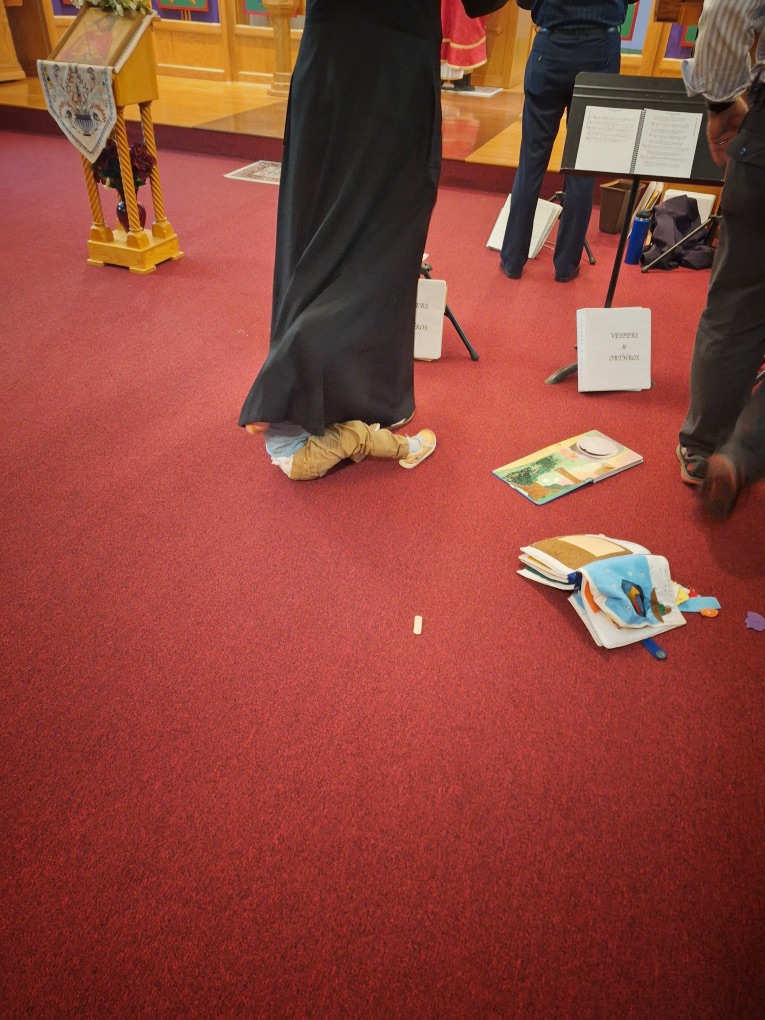
Watching Michael grow comfortable in church has been a delight. He loves pointing at the icons, or running in circles around the icon on the stand at the front, or looking to his right and brightly exclaiming “Dada!” as he sees Jake chanting the Psalms. During more sparsely-attended services the sanctuary looks like a spacious and exciting place for an active one-year old. He doesn’t stay still for a moment: I get my steps in as I follow him to the front of the church, pick him up before he can get too close to the iconostasis, walk to the back of the church again, set him down, and the cycle repeats.

But it’s also easy to fall into resentment, or self-pity, or dread. The drive is 45 minutes both ways, and usually cuts into dinner time. Michael often is exhausted and low on resources — Divine Liturgy is in the middle of his naptime, and Vespers and the midweek Lent services are during his bedtime. We made it to one service this week, and had to leave halfway through because he was melting down. My husband will be fulfilling his duties as choir director and reader, my dad singing in the choir, and my mother helping with her goddaughter, so I will be wrangling Michael by myself — either in church or at home.

One of the things I love about Lent is the sense of community. We are all undertaking this great fast together, praying together; growing in holiness together. But lately I’ve been struggling because Lent looks different for me than for the rest of the church. It’s easy to get discouraged and think I’m not good enough because I can’t make all the services, or fast completely, or even focus on the services I do attend. And it’s easy to feel isolated and alone as I stay home, or stand on the patio with a wild toddler.

But when I stop to think about it, I am indeed praying, fasting, and almsgiving: just in ways that look a little different.

My prayer looks different in this season of life. Instead of singing with the choir, I pace the church with my tired toddler, letting my mind cling to the fragments of the Psalms I hear. I nurse or rock him to sleep in the cry room, listening to the bells on the censor as the priest passes by. I offer up my frustration, my exhaustion, my distraction, as imperfect prayer.

My fasting looks different in this season of life. As a breastfeeding mother and the cook for our family, we aren’t adhering to the strict Lenten diet most of the church does, though we are abstaining from meat. Instead of carefully curated Lenten fare, I eat either standing at a counter or with a curious toddler on my lap, trying to stick his hands in my bowl. Or I forget to eat, distracted by the multiple bids for my attention that surround me every day. I fast by denying myself and my desires as I stay home from church to tend to Michael instead of going to the services.

My almsgiving looks different in this season of life. While we also look for ways to give to those around us who are in need, I also recognize that my gift of self to my family — through presence, through menial household labor, through listening and soothing and playing with a one-year old — is in itself a form of giving.

I don’t have to enjoy every moment of Lenten motherhood: in fact, I often long for the days of quiet prayer when I could focus on the words of Liturgy. But when I’m tempted towards resentment or anger or despair, I take hold of this truth: my Lenten motherhood is just as pleasing a sacrifice to God as the singing of the faithful. As He accepts the distracted, childlike love of my son toddling from icon to icon, He accepts my exhausted, scattered love as I follow my child to the patio outside with Cheerios.

Piety, piety, but where is the love that moves mountains?

Mother Maria of Paris

So if you also are entering Lent carrying the weight of distraction and frustration and imperfection — whether because of motherhood or grief or mental illness or just exhaustion from the events of life — know that you are not alone. Many of us are carrying our Lenten struggles alongside you. And your prayer, your fasting, and your almsgiving — whatever they may look like, in whatever season of life you may be in — can be just as effective tools for your sanctification as the prostrations of the most devout monk.

always we begin again

I feel like I say every room in our house is my favorite — but of all my favorites, I definitely spend the most time in the kitchen. It’s the first place I go to when I stumble out of bed in the morning, and the last place I tidy before I head to sleep.

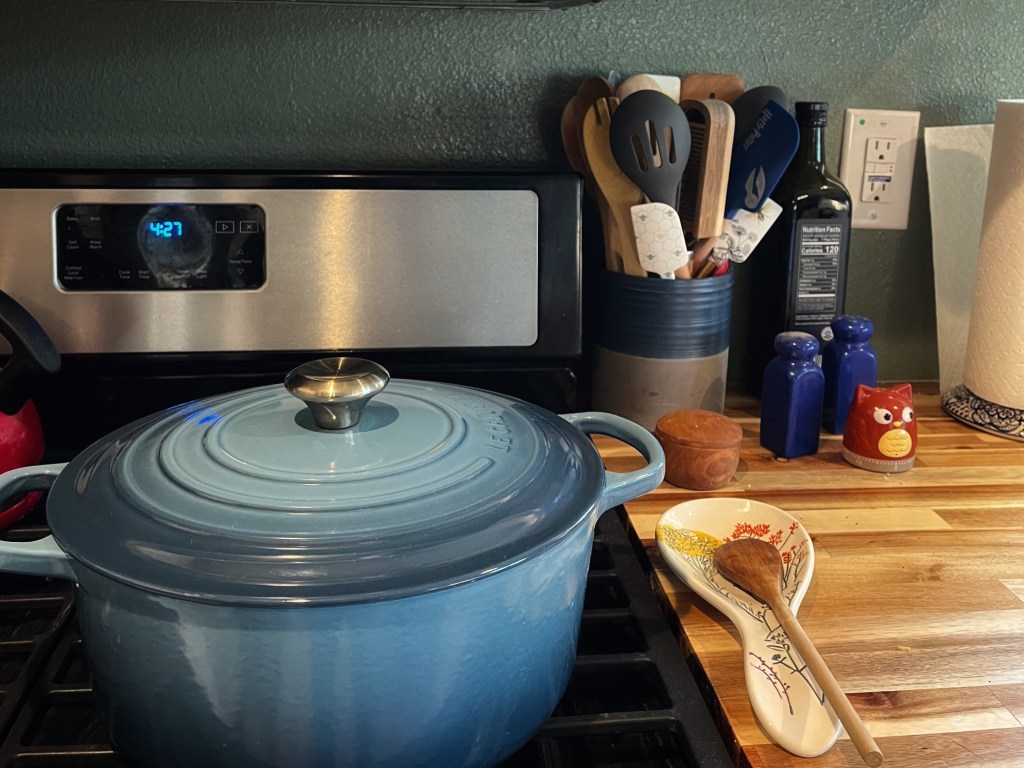
I love the sage green of the walls — a color both calming and alive. I love the hanging pots and pans. I love our counters, lovingly sealed and installed by my dad and my husband. I love the large sliding door that opens to our porch and invites the breeze to blow through our home. I love the deep sink and the window that looks west over our backyard, and how the sunset trails its fingers down our walls every evening before dinner.

As I said, I spend the greater part of my hours in the kitchen. Putting away groceries, preparing food, eating food, cleaning up after meals, preparing snacks for my little one, cleaning out the fridge, emptying the dishwasher, filling the dishwasher — the list goes on.

However, some days I don’t see the green walls or the hanging pots and pans or the sink or the sunset. I see a never-ending cycle of chores that makes Sisyphus look like a man taking his pet rock for a stroll. No matter how many dishes I wash, more will be dirty in an hour or two. No matter how many meals I make, we will all be hungry and ready to eat again shortly. Every day when I wake up, the same tasks await me.

Much of motherhood and homemaking is cyclical and repetitive: somehow both always changing and always the same. My days all look very similar to each other, but just as I feel like I have a grasp on our routine, Michael hits a new growth milestone, and it causes a domino effect on my previous schedule or routine, and I begin again.

St. Benedict, the father of Western monasticism, has a famous motto I memorized back when I studied Latin in school: Ora Et Labora, which means “pray and work”. All of our work is an opportunity for prayer and beauty and sanctification: not just the parts I enjoy like writing or knitting or gardening, but also the dishes and the laundry and the vacuuming.

I can look at my labor as drudgery (and on my worst days, Lord have mercy, I admit I do), or I can embrace the work, offering it up as prayer and sacrifice and turning it into love. Even the constant and unending chores. Especially the constant and unending chores.

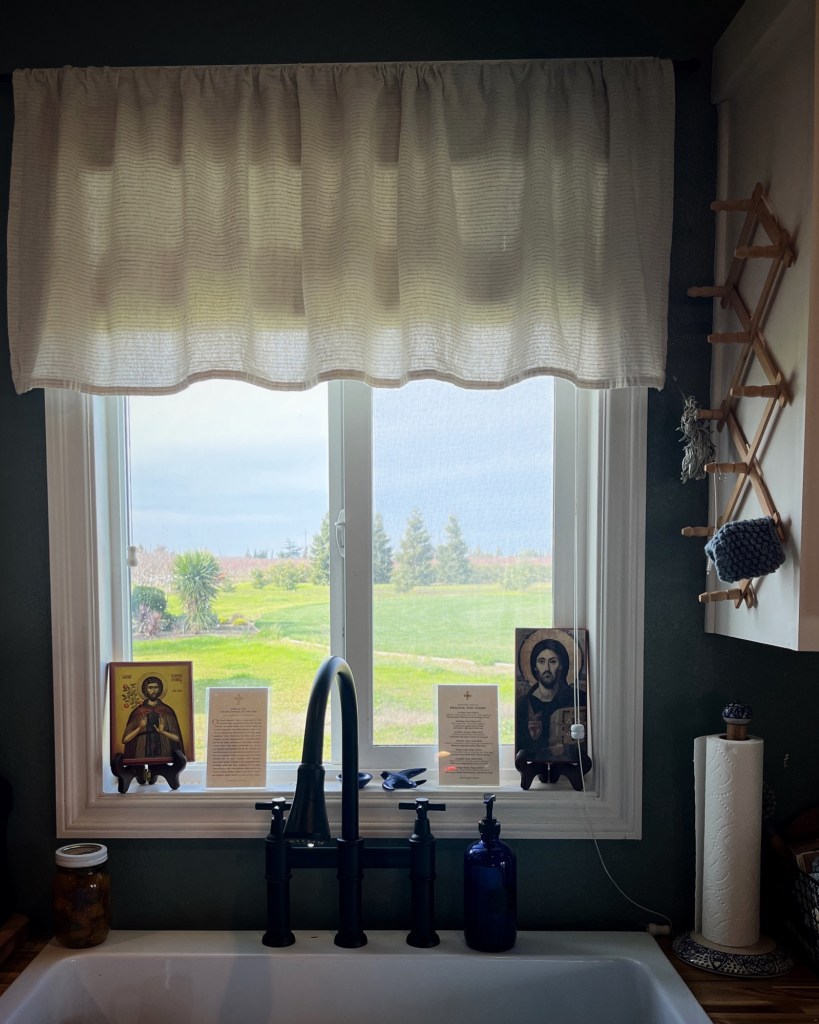
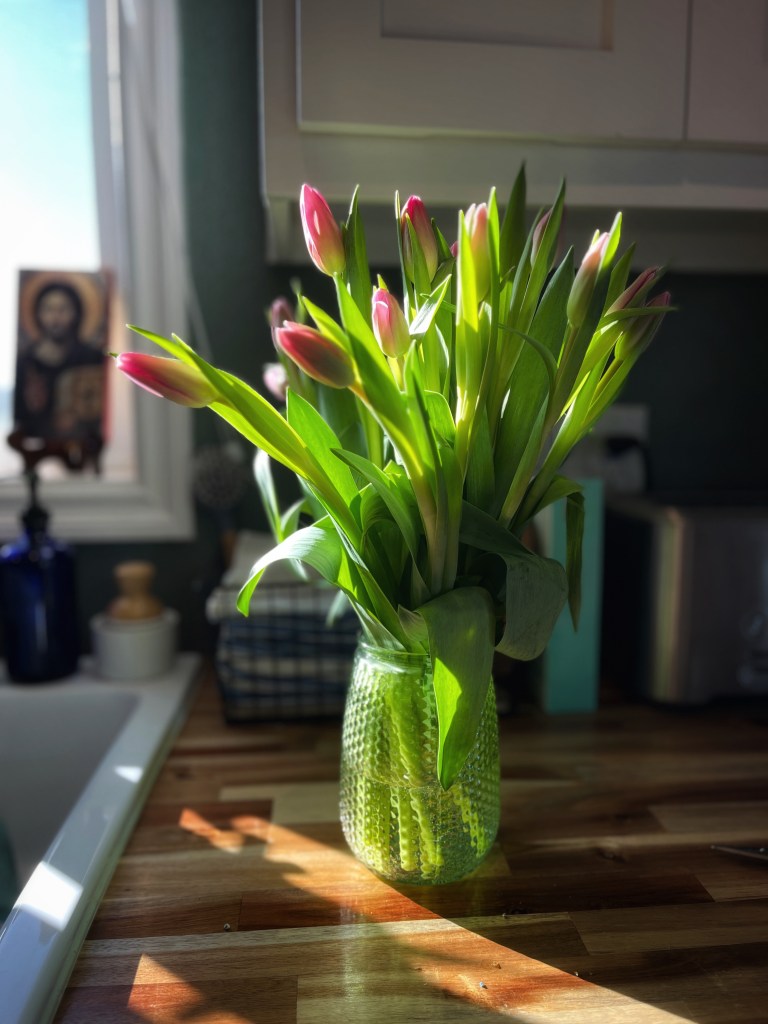
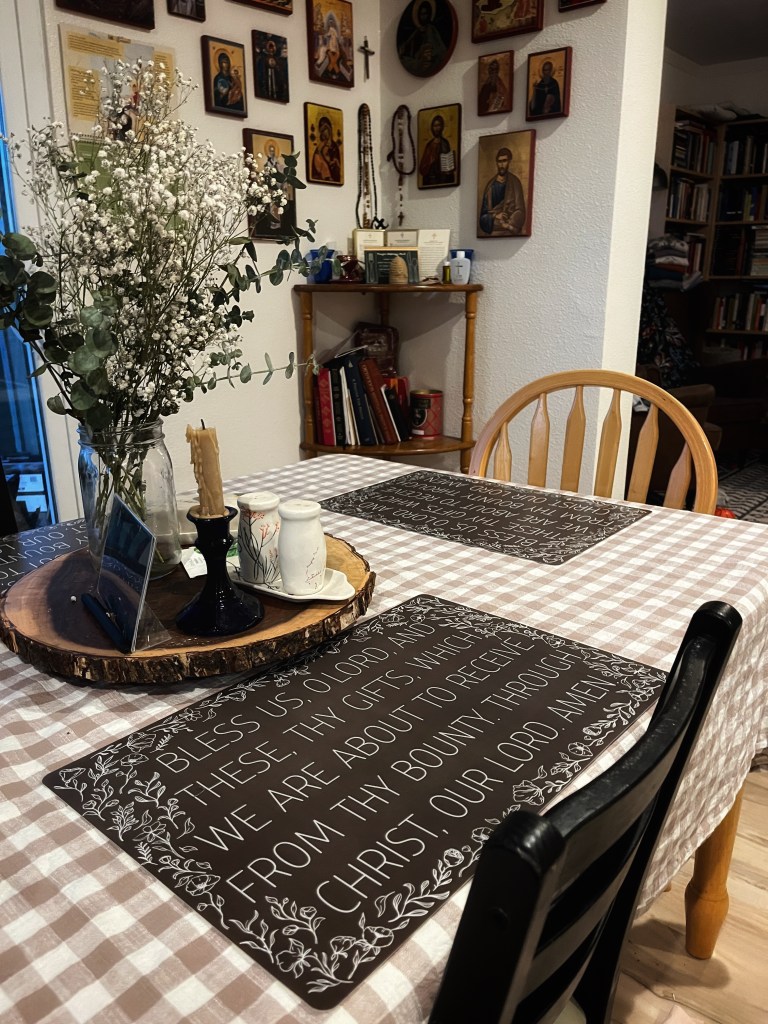
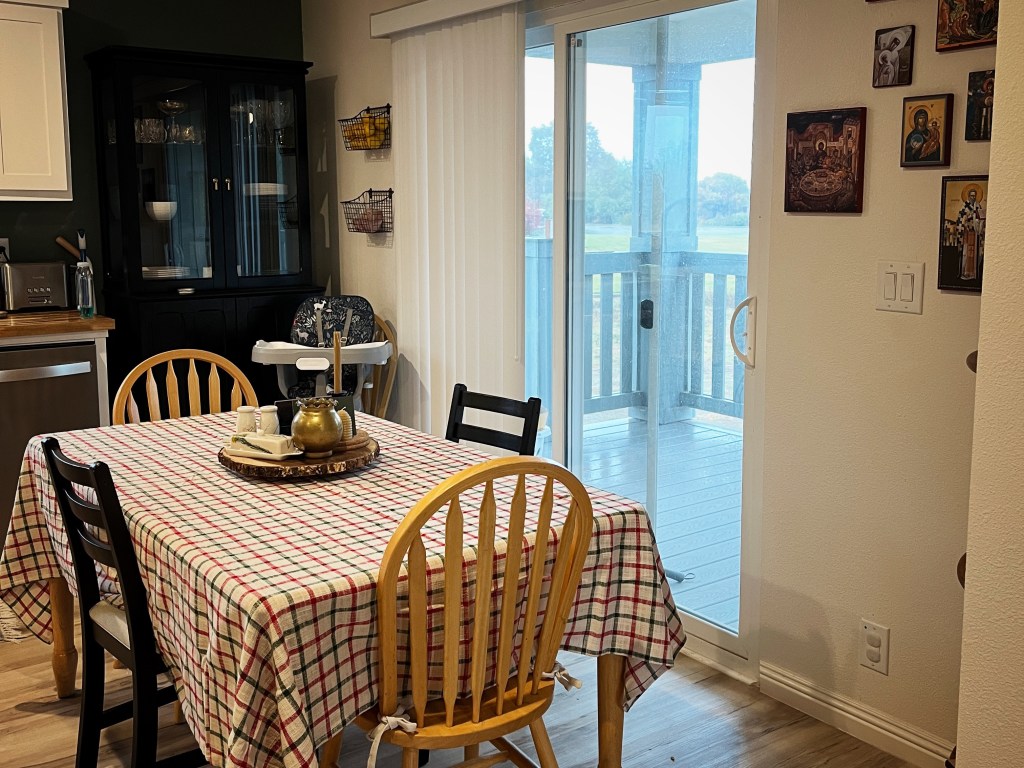
I’ve created small places in my kitchen to remind me to offer up my labor as I cook or clean. Our prayer corner is the eastern(ish) corner by the table. I have icons of Christ and St. Euphrosynus (the patron saint of cooks/kitchens) on the window sill above my sink. I also have a small card with the Hours printed on it: whenever I’m doing dishes, I try to find the closest hour and pray the corresponding Psalm.

Becoming holy is a labor that takes as much persistence as doing the dishes or laundry (if not more). No matter how many times you repent, you will have to repent again. Becoming more and more like Christ takes constant toil in the gardens of our hearts. Our faithfulness in these small, seemingly insignificant chores will translate over to our faithfulness in larger things. Luke 16:10 comes to mind: One who is faithful in a very little is also faithful in much.

Many of the venerated saints of the Church speak about this constant struggle towards holiness. St. Benedict also says, “Even when we fail, always we begin again”. And St. Anthony of the Desert says, “Everyday I say to myself, today I will begin.” It is here, in the daily struggle and daily choices, that saints are formed.

So tomorrow, when I enter my favorite room in our house and have a dishwasher to empty, meals to cook, and laundry to wash, dry, and fold, may I look at as an opportunity to begin again; taking steps toward my sanctification through work and through motherhood.

setting the table

I have a confession to make:

…I used to be an Advent stickler.

That meant no Christmas music, no Christmas tree, no decorations until well into December. The only hints of Christmas were the Advent wreath upon the table and all eight verses of O Come O Come Emmanuel playing on repeat.

I used to shake my head at the department stores with their Christmas decorations going up before our Halloween candy was gone. Thanksgiving hadn’t even arrived yet: it was much too early to even think about Christmas

Recently, though, my stance on Advent has changed. Before I explain, I want to note I’m that not scoffing at those who are self-proclaimed Advent sticklers — there is a beauty in simplicity, and in the ascetic response to the consumerism that often inundates the secular celebration of Christmas. And often it does feel like the world skips straight to the celebration without preparing for the feast.

Yet the Orthodox Nativity Fast has us preparing for the birth of Christ even earlier than many department stores. Starting on November 15th (in the New Calendar), we begin to prepare our minds and bodies and souls for the Nativity of Christ.

At first, it was difficult for me to think about Christmas “so early” (even though forty days prior doesn’t seem too early for Pascha/Easter). The Incarnation of our Lord is a major feast: and major feasts take major preparation.

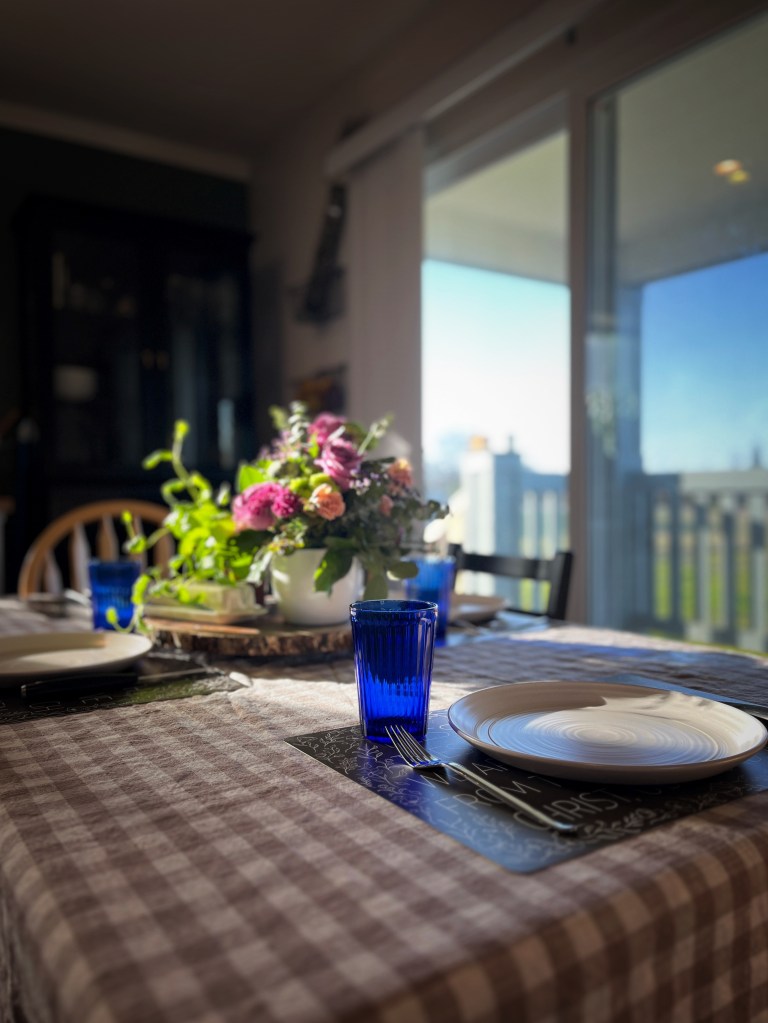
It reminds me of all of the thought and hard work that goes into throwing a party. There’s cooking and decorating and planning and cleaning and organizing — so much to do! Preparing well takes time. As much as all of us love to procrastinate, there are some things we can’t put off until the last minute. When you look at the ornate feasts thrown in movies or paintings, you see the time and care that went into every element of the table setting. The sparkling dishes, the carefully folded napkins, the decorations, the multiple-course banquet: it takes time and community and intentionality to prepare well for a feast.

I would argue preparing well also requires joy. We plan our parties with excitement and anticipation (even the introverted among us). What good is a party if all the arrangements were made grudgingly or half-heartedly?

When we let the seasons of the Church permeate our everyday life, the rhythms of fast and feast, of preparation and celebration, begin to shape and form us.

One of the glorious things about letting the seasons of the Church permeate our everyday life is the sense of “already and not yet”. In a very real way, we live at a point in time after the Incarnation of Christ. Yet in a very real way, we are also preparing for the Incarnation to occur. The season of Advent not only reminds us to prepare for Christ’s first coming, but also His second.

I’ve come to cherish these forty days before Christmas. Now I start preparing as soon as the Nativity Fast begins. I add decorations and reminders in increments throughout the weeks: placing our Nativity icon in the forefront of our prayer corner. Changing our tablecloth to the festive one. Baking gingerbread. Helping my parents and grandparents decorate their houses. Lighting our Western Advent wreath as soon as December begins. Getting our Christmas tree. Revisiting On the Incarnation by St Athanasius. Listening to Hansel’s Messiah.

(I do wait to play Christmas music til after Thanksgiving. I’m not a complete monster.)

I see each of these things as a way to “set the table” to prepare for the feast. The table is set, but we are still waiting for the arrival of our guests. The beauty of the music and decorations remind me to take joy in the preparation. The discipline of the Nativity Fast helps me to intentionally prepare the way, and make ourselves ready for the King of Kings.

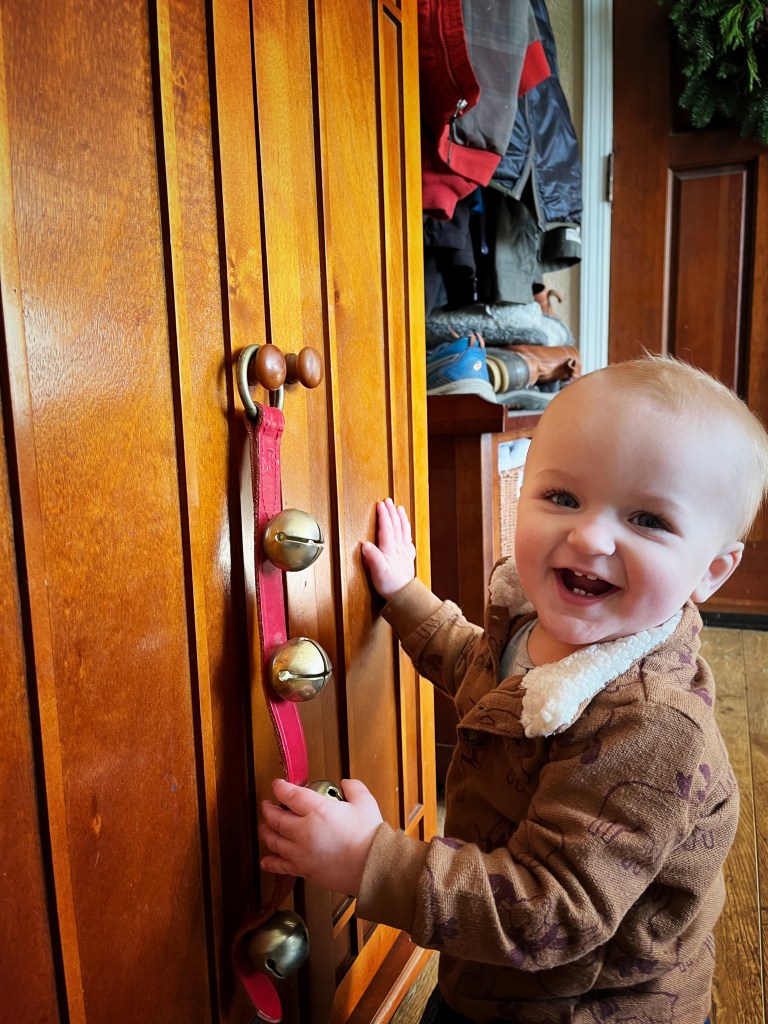
Michael’s shoes set out for St Nicholas Day

Whether you decorate before Thanksgiving, or wait til December 24th, I hope your Advent season is one of hopeful, peaceful, joyful preparation.

victory o’er the grave

The Saturday after Thanksgiving, we visited the graves of our family members and left flowers on the two new ones.

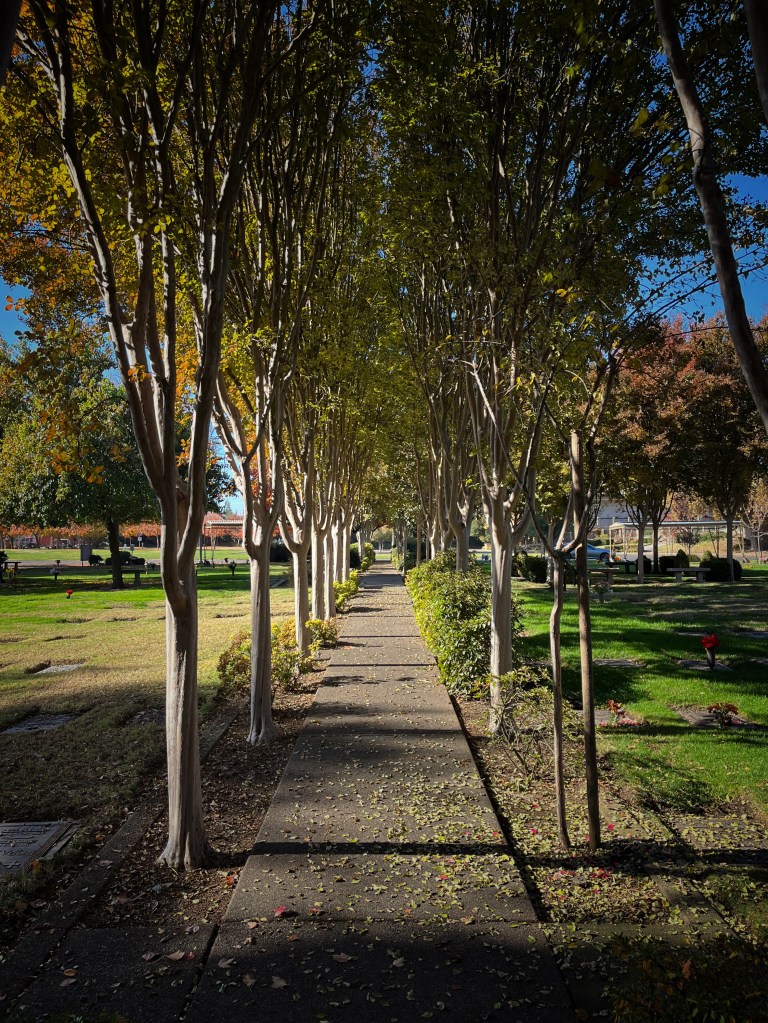
It was a crisp autumn day, and the trees in the cemetery were beautiful. Their leaves made me think of the glory of the cherubim: bright and burning and spread across the heavens.

My uncle David’s headstone still hasn’t arrived, but we found the plot where he rests and placed a lily there.

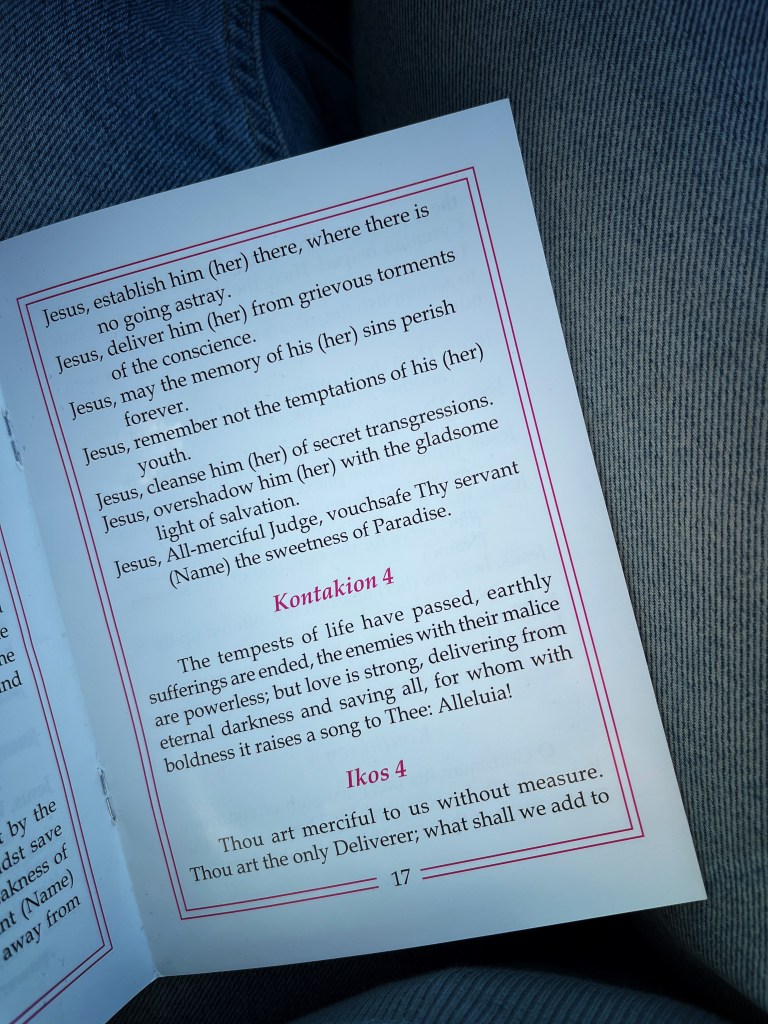
We stood together as a family, and cleaned off the headstone, and we read part of the Akathist to Christ for a Loved One Who Has Fallen Asleep. It’s one of my favorites, and I’ve prayed it many times this year. Jake and I also sang Memory Eternal, and the words of the Akathist seemed to rest with me as we sang.

But love is strong, delivering from eternal darkness and saving all, for whom with boldness it raises a song to Thee: Alleluia!

Death is ugly. Our society hides it out of sight and out of mind. It isn’t a topic of polite conversation. We’re inundated with marketing and advertisements that promise eternal youth, while the elderly and the ill are hidden in sterile buildings for others to take care of. The practice of visiting the graves of family members seems to have fallen out of style. Often we pretend death doesn’t exist, until we can’t any longer.

The Orthodox understanding both of death and our relationship to the departed is a great comfort to me. Death exists, and we prepare and pray for a holy end to our lives — but we do not fear death, knowing Christ has conquered the grave. We also pray for those who have departed this life: only God knows the state of their soul and their salvation, and so we pray for His mercy.

We also ask the saints to pray for us and our loved ones. Fr. John Breck writes in greater detail in this article, if you are interested in exploring the Biblical and traditional foundations of the communion of saints.

Prayer transcends both time and space. As the work of the Holy Spirit within us, prayer unites us in a transcendent, eternal communion with the Holy Trinity and with all the faithful who have preceded us through death and into life beyond. We can and we must pray for them, for their salvation and for our own. We pray for them and request their intercession for the same reason the Church has always offered that prayer: because even now we are united with them in the eternal bond we know as “the communion of saints.”

Fr. John Breck

These reminders of hope in the face of death are especially poignant as we continue in the Nativity fast in the East (and enter into the Advent season in the West). This entire liturgical season of the Church is rooted in hope.

The Nativity hymns of the East are full of the imagery of a barren wasteland springing into life. The words below are selected from the Advent Paraklesis:

The desert flowered like a lily at Thy coming, O Lord…

For through Thy birth Thou dost shape all things afresh, making them new once more and leading them back again to their first beauty.

Make ready, O Bethlehem, for Eden hath been opened for all. Prepare, O Ephratha, for the Tree of Life hath blossomed forth in the cave from the Virgin.

The Advent hymns from the West also highlight the theme of hope: of a barren wasteland now filled with new life, and of light dispelling darkness. The ancient hymn O Come O Come Emmanuel has several verses that speak to this hope:

O come, O Branch of Jesse’s stem,
unto your own and rescue them!
From depths of hell your people save,
and give them victory o’er the grave.

O come, O Bright and Morning Star,
and bring us comfort from afar!
Dispel the shadows of the night
and turn our darkness into light.

And of course, the refrain is not one of sorrow, but of joy: Rejoice! Immanuel shall come to thee, O Israel.

I was struck by the beauty of the cemetery as we walked through it to the graves of our family members. Everywhere we walked, trees and flowers embraced the graves around them. It was a beautifully strong image of new life overcoming death.

Hope is essential to the Christian life. It is because of this liturgical season, preparing for the Incarnation of our Lord, that we can have hope. We can see the trees and the flowers blossoming over the graves of our loved ones and pray Lord have mercy, with hope. We can ask the communion of saints to pray for us, with hope. We can face our own deaths with hope. And in the end, we can taunt death and the grave, saying with the psalmist and St John Chrysostom: O death, where is your sting? O Hades, where is your victory? Christ is risen and you are abolished.