Alleluia, Christ is risen!
I feel like I’ve talked about Holy Week and Pascha without going into much detail, so I want to share the beauty of our traditions with you. We’ve just finished Lent and Holy Week and now we are celebrating Pascha! Pascha is the most important day of the liturgical year: it is the pinnacle of our faith.
Pascha is another word for Easter: it’s a transliteration of the Hebrew word for Passover: pesach. Orthodox Christians celebrate it on the Julian calendar instead of the Gregorian Calendar like Catholics and Protestants, which is why we’re celebrating this week instead of last week. (If you’re interested in the lingual history and more general information on calendars and traditions, here’s a good resource).
The entire liturgical year leads up to Holy Week and Pascha. Lent ends with Lazarus Saturday, and Holy Week begins with Palm Sunday, celebrating Jesus’s triumphal entry into Jerusalem. We remember that triumphal entry in our own church service, with children waving palm branches as hymns are sung.
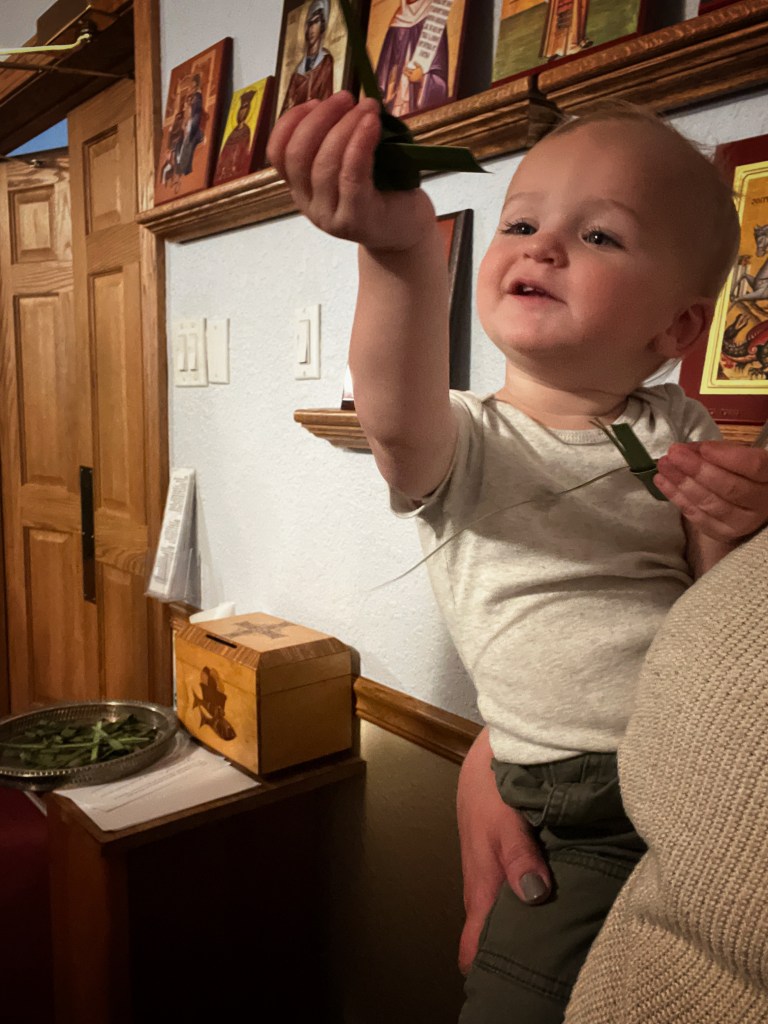
There is a church service every day of Holy Week. The Holy Week services are so poignant and striking — every year I attend, I find myself pierced to the heart. Some day, I would love to write reflections for each day of Holy Week. However, this is not that day. For brevity’s sake, we’ll talk about Good Friday and Holy Saturday, leading to Pascha.
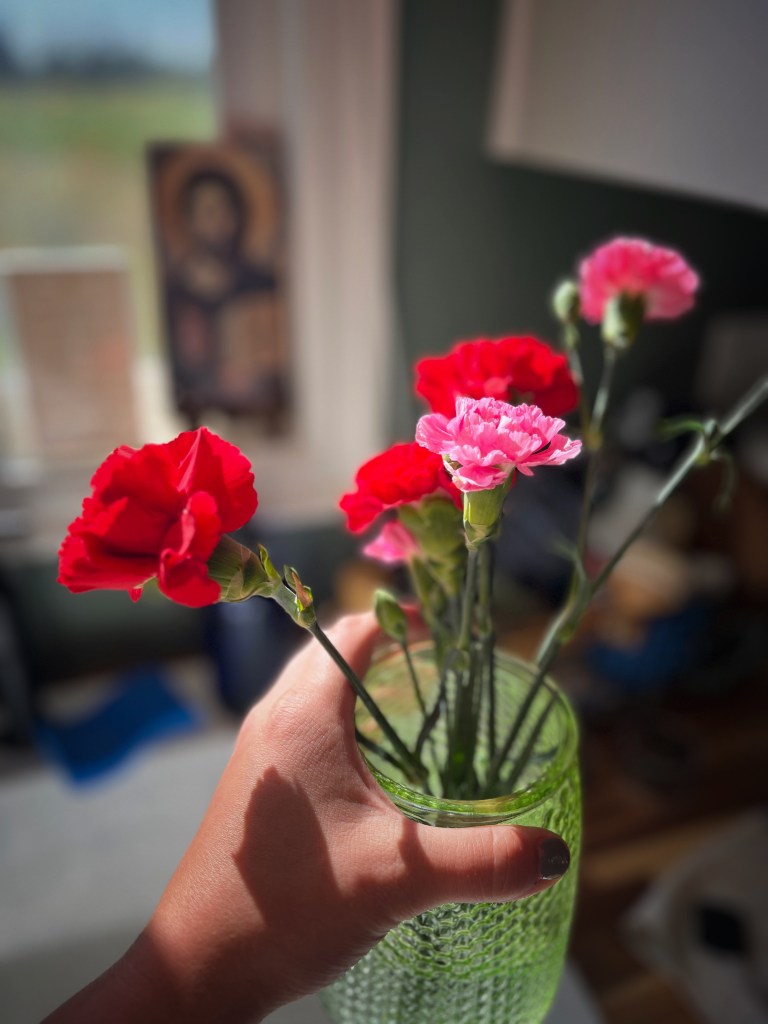
On Good Friday, (also known as Great and Holy Friday) we remember Christ’s crucifixion and sing lamentations, decorating the tomb with flowers.

At Liturgy on Saturday morning, the priest throws bay leaves and rose petals around the church, signifying the earthquake that occurred when Christ descended into Hell. It’s a beautiful anticipation of Sunday — the lament of Friday has passed, and our grief turns to joy as Christ breaks the gates of Hell and raises up Adam and Eve and all the faithful.

We come back to church that evening, around 10 pm. The lights are dim, and the choir sings the Odes of Holy Saturday, one of my favorite pieces of music in the Eastern Orthodox tradition.
Today a tomb holds Him who holds the creation in the hollow of His hand; a stone covers Him who covered the heavens with glory. Life sleeps and hell trembles, and Adam is set free from his bonds. Glory to Thy dispensation, whereby Thou hast accomplished all things, granting us an eternal Sabbath, Thy most holy Resurrection from the dead.
Hymns of the Ainoi
In the Western Orthodox tradition, my favorite piece of church music is sung at the Vigil, called the Exsultet. I’ve linked a full version here but here’s a snippet of my favorite lines:
The power of this holy night
dispels all evil, washes guilt away,
restores lost innocence, brings mourners joy;
it casts out hatred, brings us peace, and humbles earthly
pride.Night truly blessed when heaven is wedded to earth
Exsultet
and man is reconciled with God!
Therefore, heavenly Father, in the joy of this night,
receive our evening sacrifice of praise,
your Church’s solemn offering.
Then the lights are fully turned off, and the congregation prays in darkness until the priest brings forth a single lit candle from the altar, singing: “Come, receive the light from the light that is never overtaken by night.”

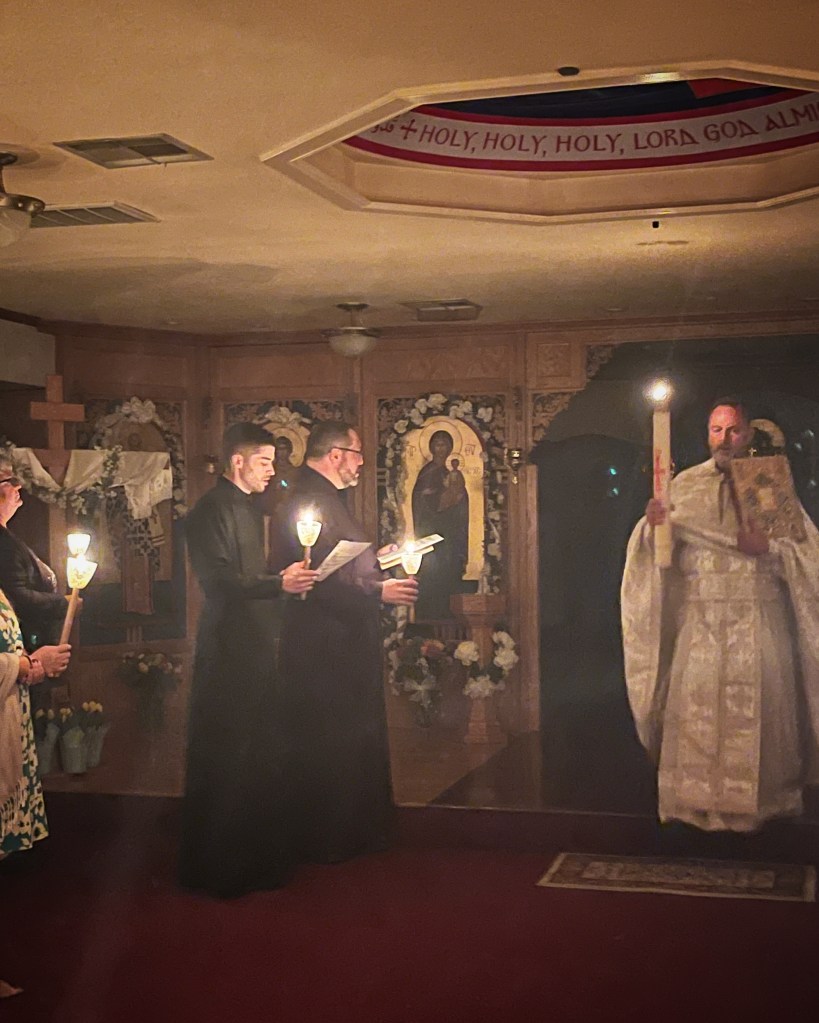
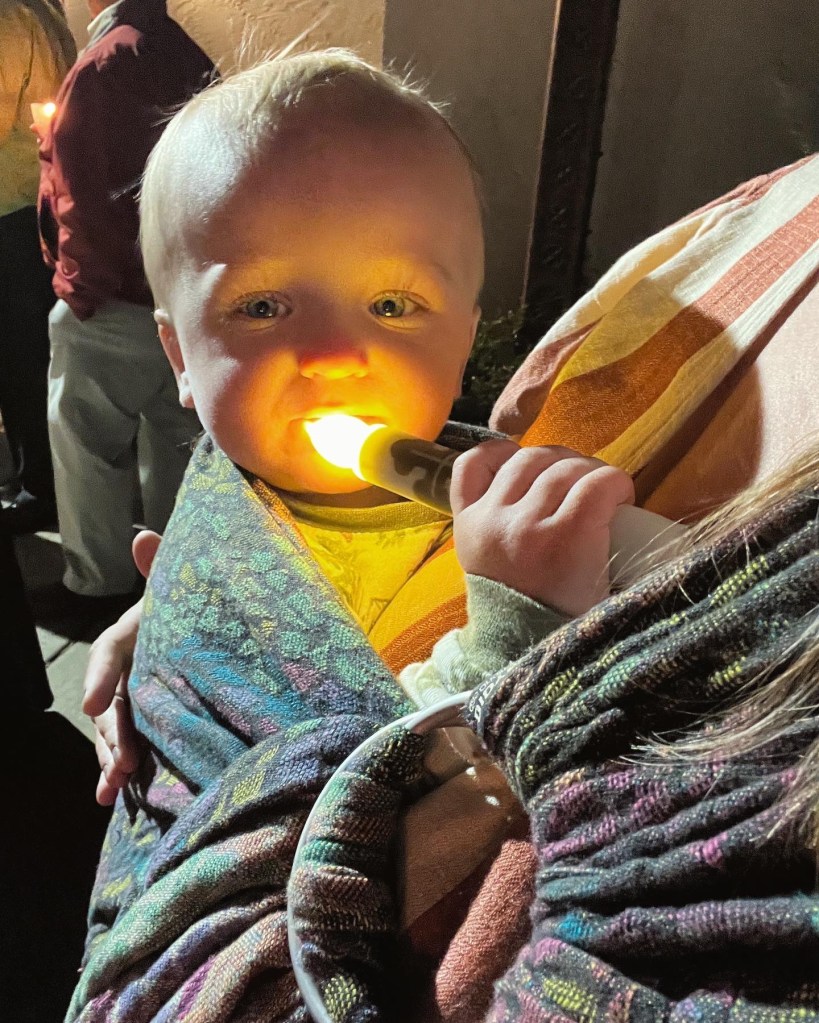
We all light our candles from this single flame, and process singing outdoors and around the church, finally stopping at the doors. Scripture is read, prayers are said, and then finally the priest approaches the doors.


The priest bangs on the doors of the church, reciting the words of Psalm 24: Open your gates you princes, and be lifted you eternal gates, and the King of Glory shall enter.
From inside the church, behind the closed doors, a voice replies: Who is this King of Glory?
The priest responds: The Lord strong and mighty, the Lord mighty in battle.

This is repeated three times, and the third time, the priest replies “The Lord of might. He is the King of Glory!”. The doors spring open, the lights blaze to life, and the choir sings Christ is risen from the dead, trampling down death by death and to those in the tomb bestowing life! as the congregation processes back into the brilliantly lit church. We then have morning prayer (Orthros) and Liturgy to celebrate Pascha!

The Paschal Homily of St John Chrysostom is read: I’ve linked the full text here for anyone who’s interested. It’s one of the most profound homilies I’ve ever heard. If you haven’t read it, I strongly encourage you to. For me this year, much of the Liturgy was spent rocking a sleeping baby (given it was 1 am at the time) but I could listen to it being read in the narthex.

People bring Pascha baskets to the Vigil, all stuffed to the brim with things we’ve been abstaining from during the Lenten fast: cheeses and meats and eggs and alcohol, among other treats. The priest blesses them at the end of the service.

And then, after the service, we feast! The jubilation and joy is so infectious: everyone brings a Pascha treat to share, whether it’s bacon or quiche or donuts or cheesecake or sausage, and we all feast together at two o’clock in the morning. Sometimes Pascha feasts can go past four or five in the morning! Jake and Michael and I made it home and in bed by three am this year, though.
Pascha traditions vary depending on the church, but our family makes Pascha cheese (think a spreadable, delectable cheesecake like substance eaten with fruit or on bread) and dyes red eggs. Traditionally, the eggs are dyed naturally with yellow onion skins. This year I started dying them a little late, so I added some natural food dye to my pot of onion skins to help things along. (Also, as a tip: brown eggs make a deeper, more of radiant red, and if you polish them with a little olive oil once they’re cool, they shine brilliantly!)
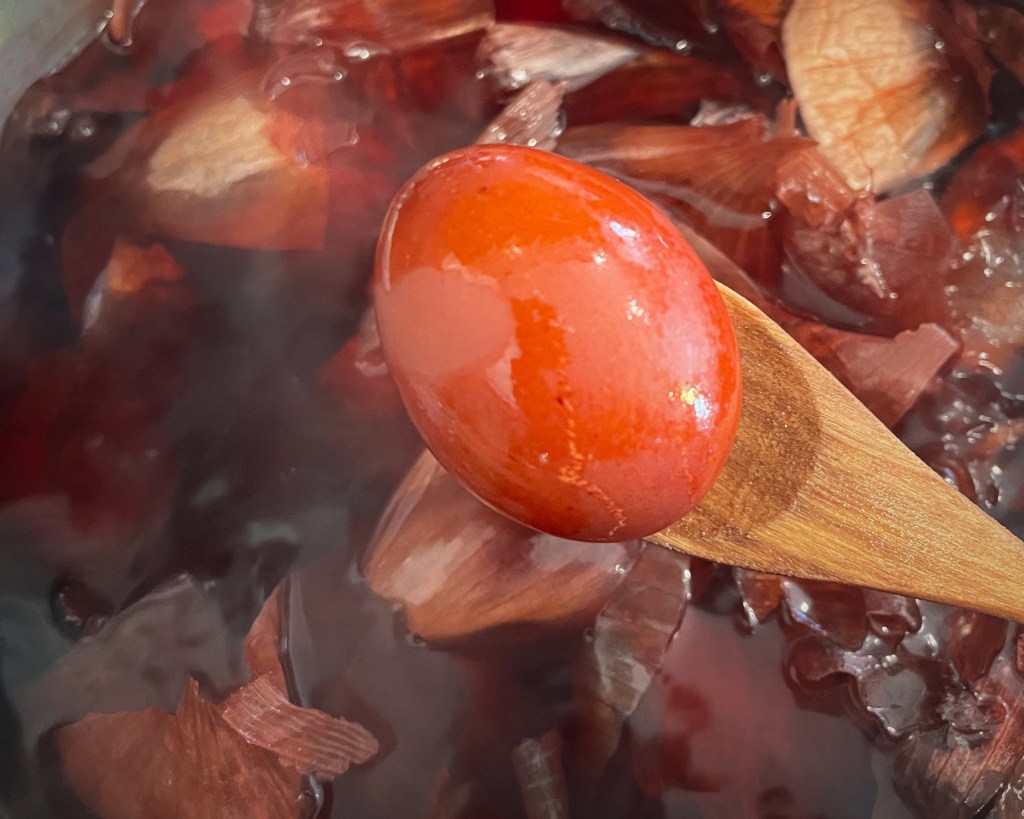
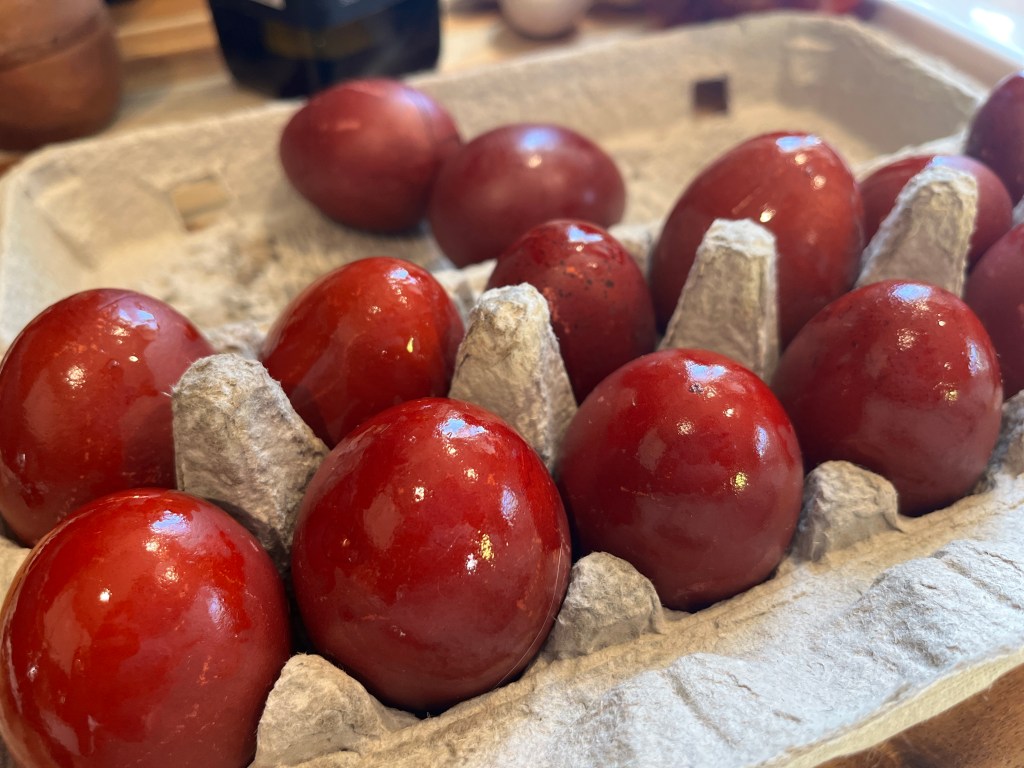
There are many different origin stories for the tradition of red eggs at Pascha, some of which can be found here. My favorite is the one that attributes it to Mary Magdalene:
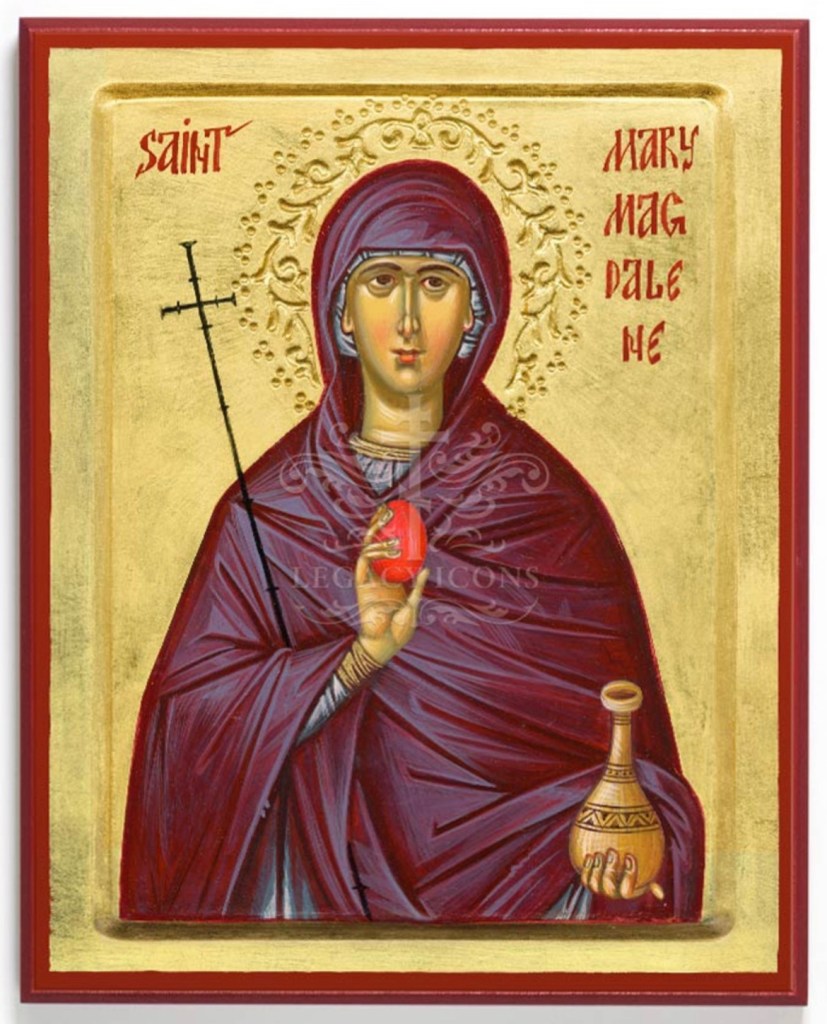
According to tradition, after the Ascension of Jesus, Mary went to the Emperor of Rome and greeted him with “Christ has risen,” whereupon he pointed to an egg on his table and stated, “Christ has no more risen than that egg is red.” After making this statement it is said the egg immediately turned blood red.
Many icons of St Mary Magdalene have her holding a red egg as a symbol of the resurrection for this reason.
And now we head to Agape Vespers: a short church service before our parish BBQ!
It’s an exhausting, beautiful, whirlwind, poignant, joyous week, and now we celebrate! As St John Chrysostom says in his Paschal homily:
O Death, where is your sting? O Hell, where is your victory? Christ is risen, and you are overthrown. Christ is risen, and the demons are fallen. Christ is risen, and the angels rejoice. Christ is risen, and life reigns. Christ is risen, and not one dead remains in the grave. For Christ, being risen from the dead, is become the first fruits of those who have fallen asleep. To Him be glory and dominion unto ages of ages. Amen.
Blessed Pascha, dear friends! Christ is risen! Alleluia!

 five acres four generations
The Lord is risen indeed! Alleluia! (So glad to have the “alleluias” back in the service!) B.
LikeLiked by 1 person
Me too!🥰💛
LikeLike
Indeed He is Risen!
Beautiful, as always 🥲
Gotta say, Michael demonstrating why he got a fake candle sent me 😩
LikeLike