Thankfully, the sinus infection that’s been raging through our household seems to have missed me. Michael is still sniffly but his energy and personality (and dislike of sleep) are back. Poor Jake is down for the count, as are both of my parents.

January 7th, the day after Epiphany (also called Theophany) is traditionally called Distaff Day, the day when spinners returned to their wheels and spindles after the Christmas festivities ended. A distaff is a tool used by spinners to hold their fiber as they worked on their spindles or spinning wheels. Heather Sleightholm (one of my favorite artists) illustrates it here beautifully.

The first Monday after Epiphany is called Plow Monday: marking when farmers returned to the fields. While researching a bit more on Distaff Day, I found this poem by the Anglican poet Robert Herrick. It’s quite delightful. It also details some of the medieval traditions around the day, including men and women playing pranks on each other.
Give S. Distaff all the right,
Saint Distaff’s Day, Or The Morrow After Twelfth Day, by Robert Herrick
Then bid Christmas sport good-night;
And next morrow everyone
To his own vocation.
I love the idea of Distaff Day: after a beautiful time of Christmas celebration, a day for communal returning to our duties. After the busyness of Christmas and illness, I (and our house) definitely needed a focused return to vocation.
The liminal time around Christmas always wreaks havoc on routine so I’ve been slowly setting the house in order, starting with the kitchen. I took inventory of my fridge and freezer and realized we had leftovers to use up or throw away, and a large grocery list of important staples.
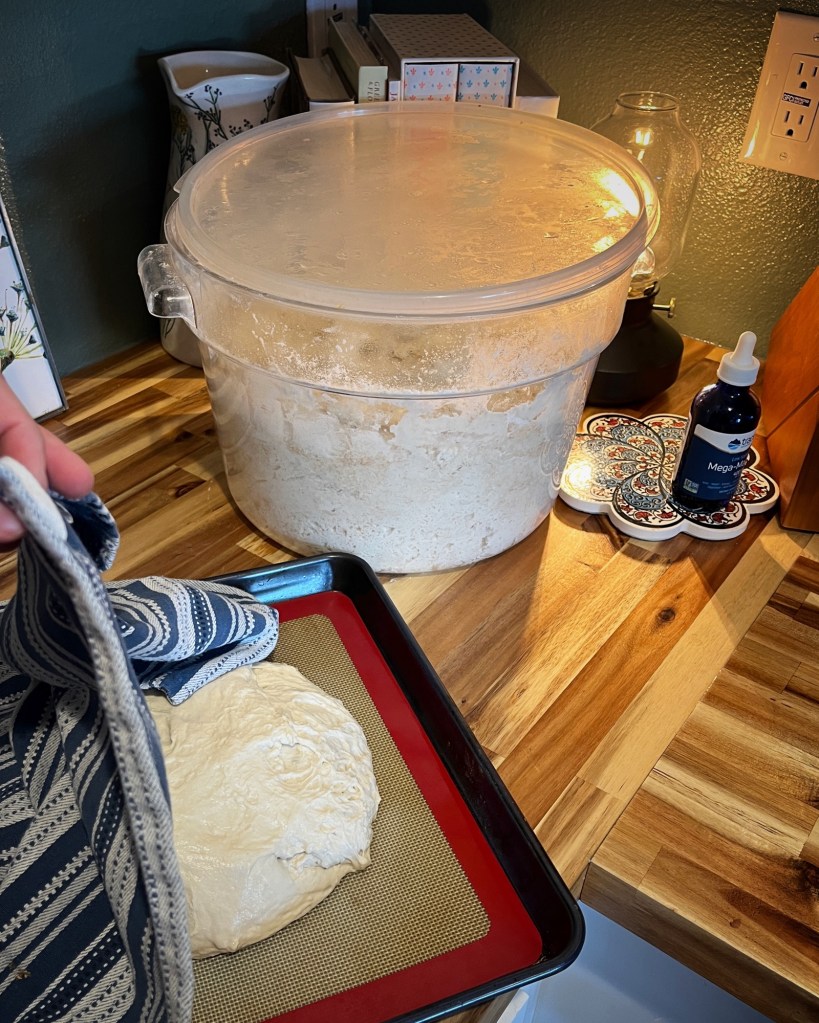
I’ve started doing the “artisan bread in five minutes a day” method for bread baking again: I’m ready to keep a sourdough starter alive (yet) and the price of bread is crazy (like everything else). It’s been nice having fresh bread with our stews and soups.
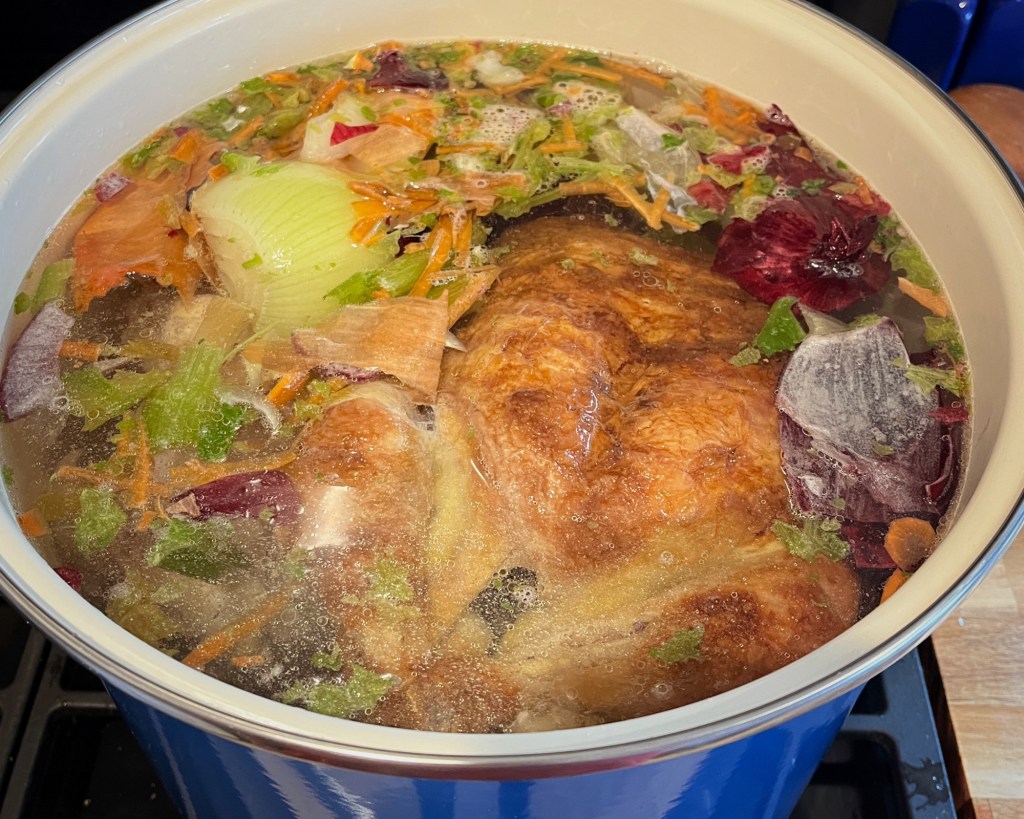
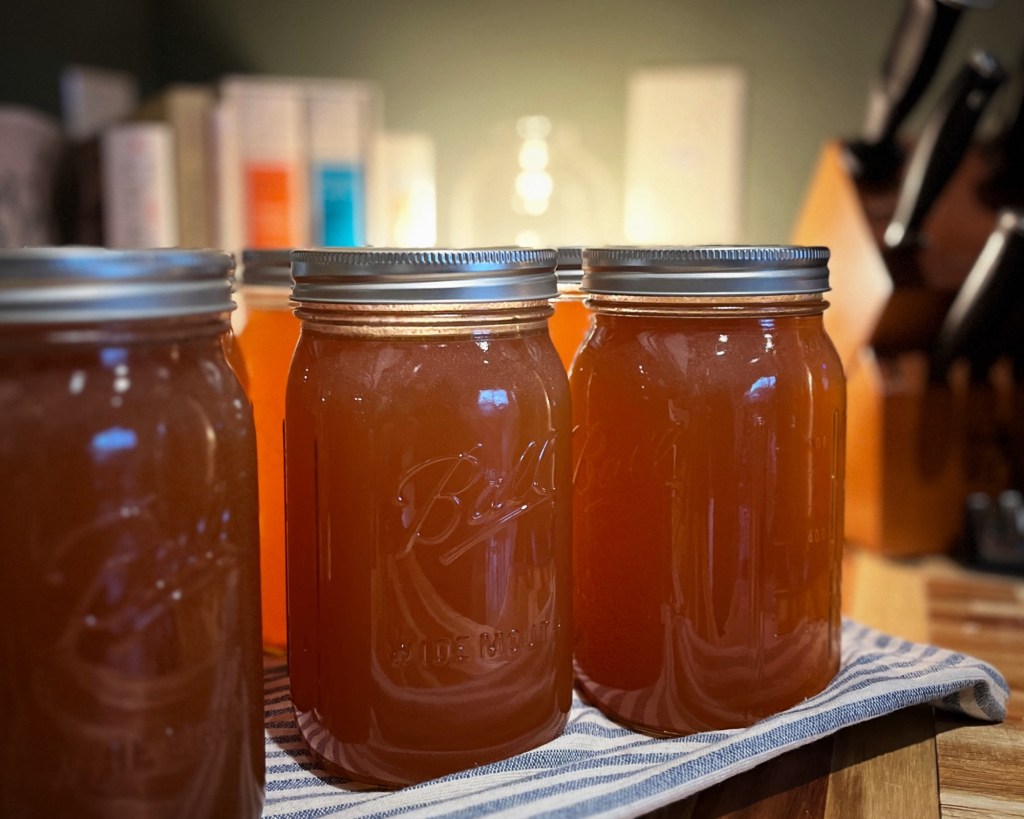
I needed to make some room in our freezer, so I pulled out some of my frozen ingredients to finally use: veggie scraps and chicken carcasses for broth, and frozen beef chuck for canned beef stew. This time, I won the battle against the pressure canner: I now have twelve quarts of stock and stew. They’ll be very useful in my postpartum stage when everything is topsy-turvy.

Now that it’s the new year, it was time to restock my vanilla. Making vanilla extract is one of the simplest and tastiest things to do, and it makes great gifts. I like to use a combination of bourbon and vodka and put in as many vanilla beans as I can into a jar to steep. Then I put it in a dark cupboard, forget about it for six months, and presto! Vanilla extract.

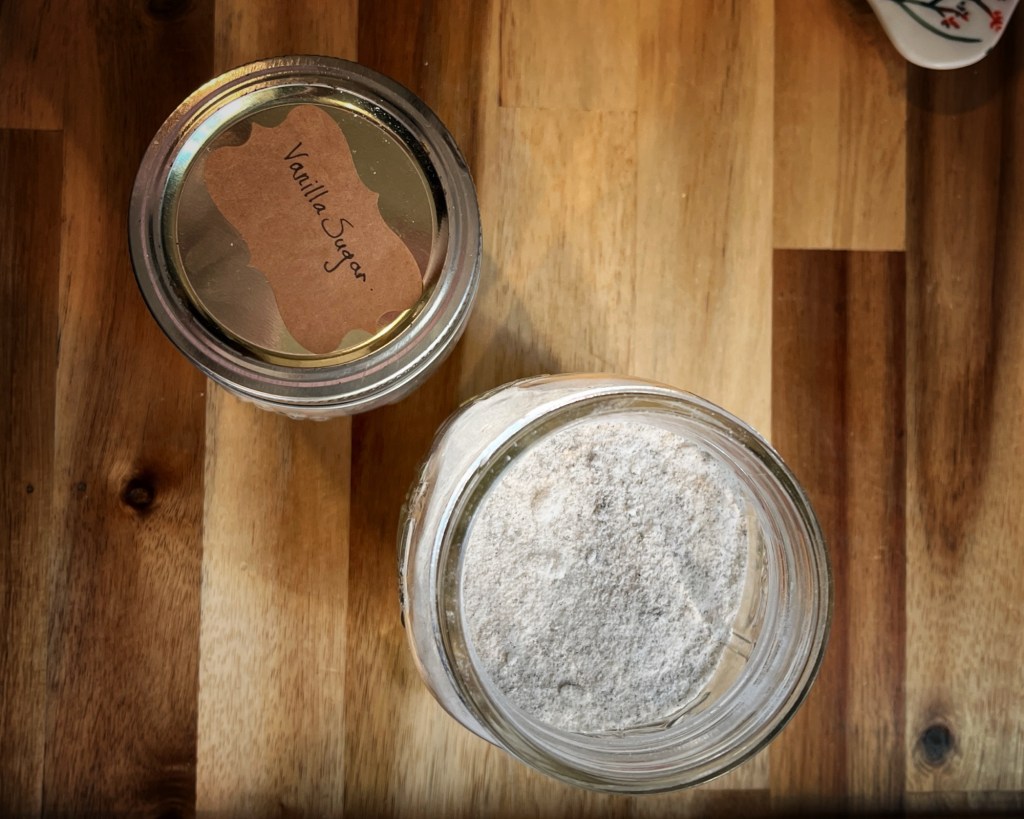
Inspired by one of my favorite blogs, A Wooden Nest, I also took the old vanilla beans from my last batch and dried them in the oven. Then I ground them up, sifted out the husks, and added the vanilla bean dust to sugar to make vanilla sugar. A spoonful is lovely in a cup of earl grey tea or in shortbread cookies.
I’ve been in a nesting mood, thanks to the third trimester. Our studio/guest room is completely transformed: I had an idea right before Thanksgiving on how to better arrange it, and in a whirlwind few days we put a full size bed in, purged unnecessary items, and moved things around. It’s not quite finished, but I’m much happier with this set up. It feels much more spacious, and is delightfully cozy.

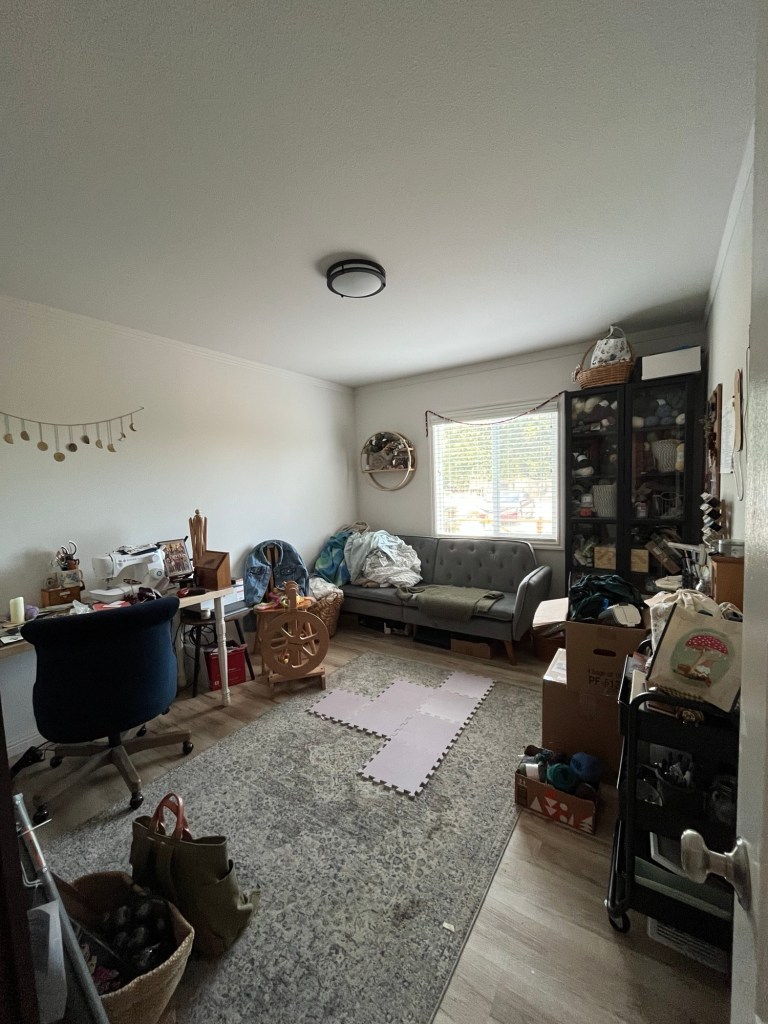
I always laughed at the memes describing pregnant women cleaning baseboards from the nesting instinct, but now I’m one of them. With Michael’s pregnancy, I didn’t really have mental or physical space to nest. Now, nothing is safe from my organizing and cleaning. Our bathroom, closets, drawers and cabinets, fridge and freezer: all organized and purged and cleaned. And I still have more to do!
As January goes on, I’ve been doing a lot of thinking about labor. Not just childbirth, though that’s been on my mind too. But mostly, I’ve been contemplating good work. Distaff Day especially brought these thoughts to the front of my mind, with the idea of a day marking a return to our vocations.

We often think of work as something to endure in order to live the life we want to live. There is indeed such a thing as bad work: not just work done poorly, but work that crushes the soul and goes against our human natures. I’m not here to argue what work is bad, but to draw our attention to the good labor we can easily overlook as a chore or inconvenience.
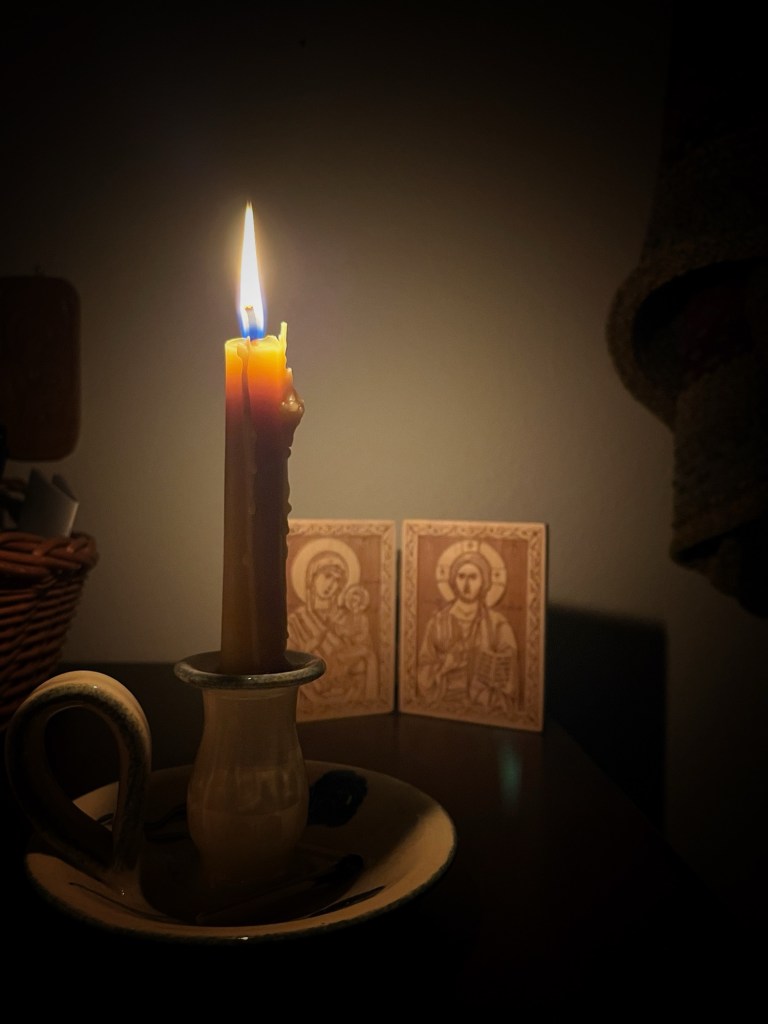
When I was young — about 5 years old — I proclaimed, “When I grow up, I’m not going to work: I’m going to be an artist” (and my family has never let me live down this story). But the older I get, the more I see the overlap between good work and art and prayer. They are intricately intertwined. Many times, folding laundry or doing dishes lead into prayer simply through presence, repetition, and offering up the work. Making dinner or mending a ripped blanket change from chore to a way to infuse beauty and color into daily life.
When I think of this overlap between work and art and prayer, I’m reminded of two quotes. The first is attributed to Martin Luther:
The Christian shoemaker does his duty not by putting little crosses on the shoes, but by making good shoes.
Martin Luther
And the second is by St Teresa of Calcutta:
Wash the plate not because it is dirty, nor because you are told to wash it, but because you love the person who will use it next.
St Teresa of Calcutta
If we properly orient our minds and our hearts, doing the dishes can become prayer. Making shoes (or dinner) can become art. The idea of this makes my heart sing: I have a long way to go, but I want to be a person whose labor is infused with beauty and with prayer, so much so that everyday tasks become art.
So with all this in mind, I guess I stand by my 5 year old self: I still want to be an artist when I grow up.
 five acres four generations
Subcreation™️ will continue to be the practical Grace the Spirit endows for us to work toward repentance and resurrection, innit?
LikeLiked by 1 person